.jpg)


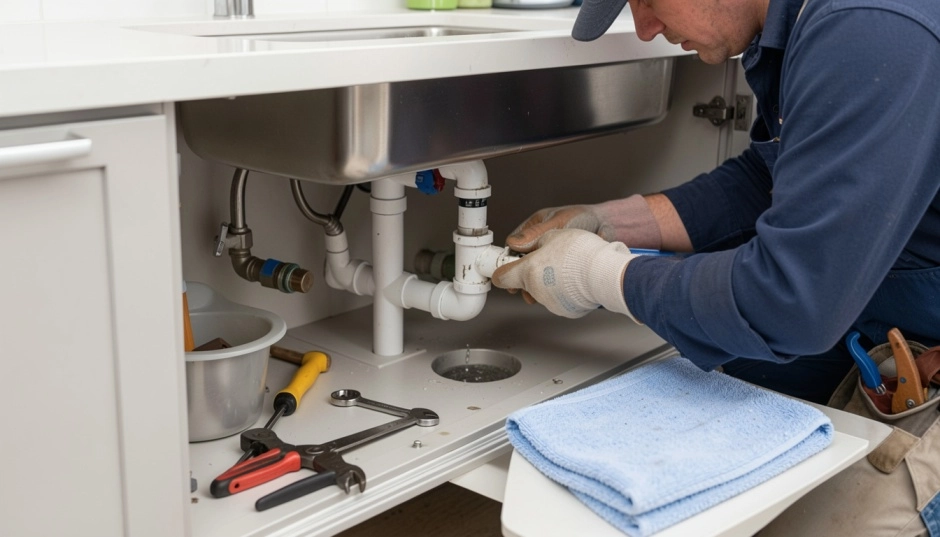
A leaking PVC pipe in a Colorado home almost always traces back to one of four causes: a freeze-thaw crack, a joint that failed under expansive soil movement, a solvent-weld connection that was never fully seated, or plain age. Find the source, stop the water with a rated repair coupling or new solvent-weld joint, and match the fix to the cause so the leak does not come back the next hard freeze.
Why Do PVC Pipes Crack in a Colorado Winter
PVC becomes more brittle as the temperature drops, and water expands by about 9% as it freezes. In an uninsulated crawlspace, garage, or exterior wall along the Front Range, a hard freeze turns a slow drip into a split pipe by morning. Denver's average January low sits in the teens, and a single cold snap below 20 degrees is enough to freeze standing water in an unheated line within a few hours.
Homes in Castle Rock, Parker, and the higher-elevation suburbs see this most on north-facing exterior walls and in detached garages that never get heat. Wrapping exposed PVC with foam pipe insulation and keeping a slow drip running from an exposed faucet during a hard freeze warning are the two cheapest ways to avoid a repair call.
Where the Water Is Actually Coming From
Before any repair, trace the leak to its exact point. Water travels along a pipe or a floor joist before it drips, so the wet spot on a ceiling is rarely directly under the crack.
- Shut off the main water valve and watch the meter. If the dial keeps moving, the leak is active and pressurized.
- Dry every joint and fitting with a paper towel, then run water again and watch for the first bead of moisture.
- Check for a stress crack along the straight run of pipe, not just at the fittings; expansive soil movement bends PVC between joints, not just at the connection.
- Look at exterior hose bibs and irrigation risers first if the leak shows up only in spring; a missed sprinkler blowout is the most common cause of a Front Range outdoor PVC break.
Can Expansive Clay Soil Crack a PVC Line Under a Slab
Much of the Front Range sits on bentonite clay soil that swells when it takes on water and shrinks as it dries out. That movement flexes a slab foundation a fraction of an inch at a time, and a rigid PVC line that crosses under the slab takes the stress at its weakest point, most commonly a fitting. Homes in Highlands Ranch, Aurora, and Castle Rock built on expansive soil see this more than homes on bedrock closer to the foothills. A sudden jump in the water bill with no visible leak is the classic sign of a slab leak from this kind of soil movement, and it calls for a licensed plumber with electronic leak-detection equipment rather than a DIY fix.
Temporary Fixes That Buy You Time
None of these repairs a pipe for good, but each one stops water long enough to shop for parts or reach a plumber.
- Pipe repair clamp: a rubber sleeve and metal band that seals a pinhole or hairline crack for weeks at a time.
- Self-fusing silicone tape: wrapped under tension, it bonds to itself and holds light pressure for a few days.
- Epoxy putty: kneaded by hand and pressed around a small crack once the pipe is dried and the water is shut off.
- Push-fit coupling: a mechanical fitting that slides over a cut pipe without glue; it holds well as a short-term repair but is not rated as the permanent fix on every application.
The Permanent Repair: Cutting Out and Re-Gluing the Section
A lasting repair removes the damaged section and replaces it with new PVC and a solvent-weld cement rated for the pipe's schedule. Cut back to clean, undamaged pipe on both sides of the crack, dry-fit the coupling and new section first, then prime and cement each joint and hold it in place for the time printed on the cement can. A joint glued while the pipe is still wet from a fresh leak will not bond correctly and fails again within days, which is why the water has to be fully shut off and the pipe dried before cementing.
PVC vs. PEX for a Front Range Repair
| Factor | PVC | PEX |
|---|---|---|
| Freeze resistance | Cracks under repeated hard freezes | Flexes and resists a single freeze better |
| Repair method | Solvent-weld cement, permanent bond | Crimp or push-fit fittings, faster repair |
| Cost per foot installed | Lower material cost | Slightly higher material cost, faster labor |
| Best use in Colorado | Drain, waste, vent lines and exterior/irrigation runs | Supply lines inside conditioned walls |
What a Leaky PVC Pipe Repair Costs in Denver
A single accessible joint repair with a licensed plumber runs $150 to $400 including the service call. A slab leak that needs leak-detection equipment and a rerouted line runs $1,000 to $4,000 depending on how far the new line has to travel. A DIY repair with parts from a hardware store costs $10 to $40, plus the time to shut off water and let cement cure. If you would rather bring in a licensed professional than tackle the repair yourself, a plumber like Whitestone Plumbing can trace the leak, confirm whether it is a single joint or a sign of wider pipe failure, and cut in a permanent repair the same visit.
Do You Need a Permit for PVC Pipe Repair in Colorado
A single leak repair on existing pipe does not need a permit in Denver, Aurora, or Colorado Springs. Replacing a full supply line, moving a drain, or repiping more than a short section does need a plumbing permit and an inspection from the city or county building department. Check with your local jurisdiction before a larger job so the work does not become a problem at resale.
How a Plumbing Leak Affects a Colorado Home Sale
Colorado's standard purchase contract sets an Inspection Objection Deadline, a specific date by which a buyer has to submit written repair requests after their inspection. A wet crawlspace, a stained ceiling, or a slab leak found during that window becomes a negotiating point that can cost far more in a credit than the repair itself would have cost before listing. Fixing a known leak, and keeping the receipt, ahead of listing removes it from the negotiation entirely. Our guide to preparing and adding value before selling and Smart Pricing Report walk through which repairs pay for themselves before a Colorado home goes on the market.
Where to Go Next
- Preparing and adding value before selling a Colorado home
- Get a Smart Pricing Report for your Denver metro home
- Sewer line repair guide for Colorado homeowners
- How to prepare plumbing before selling your Denver home
- Rental property maintenance checklist for Colorado landlords
- Search every home for sale in Colorado
Talk to the Kenna Real Estate Group
The Kenna Real Estate Group helps Colorado sellers decide which plumbing repairs matter before listing and helps buyers understand what a leak found during inspection really means for the deal. Call or text 303-955-4220. A live person answers. Not a robot, not a phone tree. Ready to look at what's on the market? Search every home for sale in Colorado.
Homes for sale that match this post
Guides
Questions about any home in Colorado? Call or text 303-955-4220. A live person answers.