.jpg)


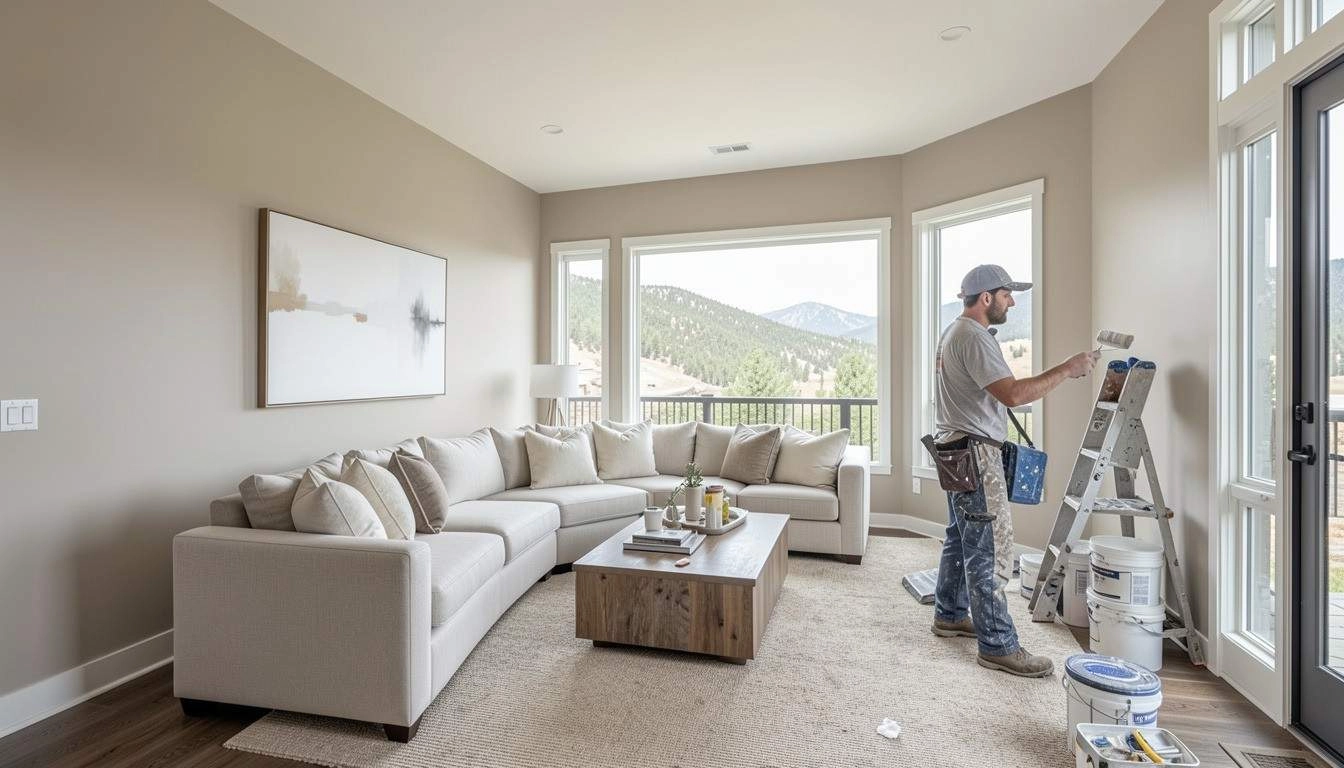
Hiring the right interior painter in Colorado comes down to reviews, a detailed written estimate, and a company that understands how the state's dry air and altitude change drying time and prep. Get those three right and you get crisp lines and a finish that holds up for years, not one that shows lap marks or peels within a season.
Why Colorado's Dry Air Changes an Interior Paint Job
Denver's indoor humidity commonly sits below 30% during heating season, and that dryness makes paint dry faster than manufacturers' labels, written for average conditions, account for. Fast drying sounds like a benefit, but it shortens the window a painter has to maintain a wet edge, which is what prevents visible lap marks where one pass overlaps the last. An experienced Front Range painter works in smaller sections and adjusts technique for this, while a painter unfamiliar with Colorado's climate can leave visible seams a coastal-climate crew would not produce with the same product.
What to Look For When Hiring
A reputable painter communicates clearly, shows up when promised, and provides documentation that protects both sides of the job. These signs tend to show up from the first phone call, and paying attention to them early tells you a great deal about how the actual work will go.
Reviews, References and Past Work
Consistently favorable reviews over time indicate reliability more than a single high rating does. Read the comments, not just the star count, for mentions of communication, cleanliness and how the company handled any issue that came up. Ask to see photos of completed projects to judge the crispness of lines and evenness of coverage, and notice whether past customers mention using the same company more than once, since repeat business is one of the strongest signals available.
Why a Detailed Written Estimate Matters
A vague verbal quote leaves room for surprise charges once work is underway. A thorough written estimate spells out the project's scope, the surfaces to be painted, the prep work included, the number of coats, and the specific products to be used. This level of detail lets you compare bids on equal footing and gives you a document to reference if a question comes up mid-project. Be cautious of a quote that comes in noticeably lower than others, since that commonly signals shortcuts in prep or lower-grade materials that will not hold up in Colorado's climate.
Questions to Ask Before Booking
- What prep work is included? Cleaning, patching, sanding and caulking determine whether the finish adheres properly and looks smooth.
- How many coats are in the price? Two coats is standard for a quality result, especially when changing colors or covering imperfections.
- What paint brand and line will you use? Better paint covers more evenly and holds color longer than a budget product.
- How do you handle Colorado's fast dry time between coats? A crew that adjusts section size and timing for low humidity produces a cleaner finish than one working at a standard-climate pace.
- What warranty do you offer? A warranty covering peeling, flaking or premature wear signals confidence in both prep and application.
A confident, experienced company welcomes these questions. Homeowners researching options commonly find that a painting service like Venture Painting is straightforward about walking through its process step by step; you are free to use any licensed painting contractor who answers these questions clearly and provides Colorado-specific references.
What Interior Painting Costs on the Front Range
| Scope | Typical Colorado Cost |
|---|---|
| Single room (walls only) | $400 – $1,000 |
| Whole-home interior (2,000 sq ft) | $4,000 – $9,000 |
| Trim and ceiling add-on | $1.50 – $3.50 per linear/sq ft |
Pricing runs on the lower end for a single accent wall and climbs with ceiling height, trim detail, and the number of color changes across a Denver, Aurora or Colorado Springs home.
Choosing Colors in Colorado's Strong Natural Light
Colorado's 300 days of sun a year and altitude UV make interior colors read brighter and cooler than the same swatch would in a dimmer climate. A color that looks warm and neutral in a paint store's lighting can read stark or cold in a south-facing Front Range living room. Test swatches directly on your walls at different times of day before committing, and ask your painter whether they offer color consultation, since many professional crews do.
Does Fresh Paint Help a Colorado Home Sell?
Fresh, neutral interior paint is one of the most consistent pre-listing upgrades for Front Range sellers, since it reads as move-in ready and photographs cleanly for listing photos. It is also one of the lower-cost items on a pre-listing checklist relative to its effect on buyer impression. Review it alongside other upgrades in the Preparing and Adding Value Before Selling guide, and check what your specific updates are worth with a Smart Pricing Report before booking a full repaint.
Timing an Interior Painting Project Around Colorado's Seasons
Interior painting can happen any time of year in Colorado since it is not weather-dependent the way exterior work is, but scheduling around the Front Range's busiest painting seasons, spring and early fall, can mean a longer wait for a reputable crew. Booking two to four weeks ahead during those windows gives you more choice of contractor than calling the week before a listing goes live. Winter commonly has more open scheduling availability, and closed-window painting works fine indoors regardless of the outside temperature, unlike exterior painting which needs a dry, moderate-temperature surface.
Ventilation and Indoor Air Quality During the Job
Low-VOC and zero-VOC paint lines have become standard with most professional Front Range painters, which matters in a tightly sealed Colorado home where windows stay closed during a winter project. Ask whether the crew plans to run fans or crack windows during application and drying, and how long before the space is comfortable to fully re-occupy. This is a reasonable question for anyone in the household with respiratory sensitivities, and a professional painter should have a clear answer rather than a vague assurance.
What a Smooth Project Looks Like Start to Finish
A well-run job starts with the painter protecting floors, furniture and fixtures, moves into thorough prep addressing holes, cracks and rough spots, and only then begins the actual painting in the agreed number of coats. A thorough painter finishes with a walkthrough, checking for touch-ups and confirming the result meets expectations, then cleans up completely before leaving. This is your chance to flag anything that needs attention while the crew is still on site.
Where to go next
- Preparing and Adding Value Before Selling
- Get a Smart Pricing Report for your Colorado home
- The Colorado Home Seller's Guide
- Explore homes for sale in Denver
- Explore homes for sale in Colorado Springs
- Search every home for sale in Colorado
Talk to the Kenna Real Estate Group
The Kenna Real Estate Group helps Front Range sellers decide which cosmetic upgrades, like a full interior repaint, are worth the cost before a listing goes live. Call or text 303-955-4220. A live person answers. Not a robot, not a phone tree. Ready to see what's on the market instead? Search every home for sale in Colorado.
Homes for sale that match this post
Guides
Questions about any home in Colorado? Call or text 303-955-4220. A live person answers.