New - 6 Hours Ago

.jpg)


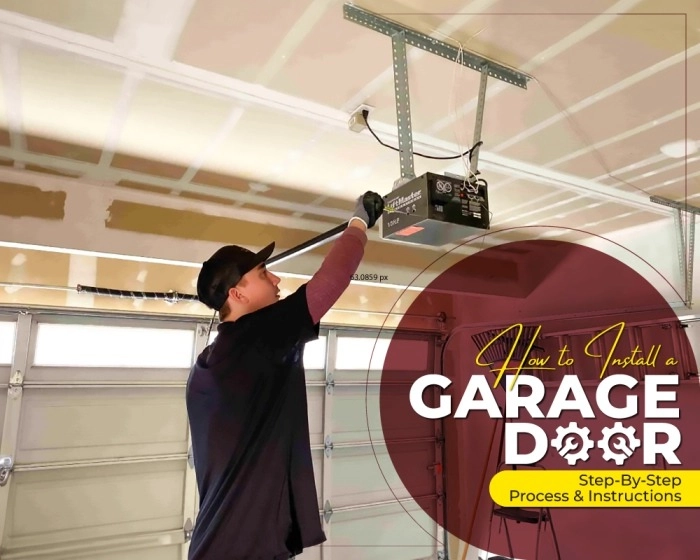
Garage door installation on the Front Range runs $1,200 to $3,200 for a single door and $2,200 to $5,000 for a double, fully installed, and most crews finish the swap in 4 to 8 hours. Here is the step-by-step process a Colorado installer follows, when a permit applies, and which specs matter for hail, wind, and 40-degree temperature swings.
A standard steel single door installed runs $1,200 to $2,200 in the Denver metro. A double door runs $2,200 to $3,800. Add $300 to $800 for a wind-rated or impact-rated panel and $200 to $600 to upgrade insulation to an R-16 or R-18 core. A new opener adds $350 to $650 if the old one is not being reused.
| Upgrade | Front Range cost | Why it matters here |
|---|---|---|
| Standard steel door, single | $1,200 - $2,200 | Baseline panel, track, and hardware |
| Wind-rated or impact door | +$300 - $800 | Front Range wind gusts and Colorado's hail alley |
| Insulated core, R-16 to R-18 | +$200 - $600 | 40-degree daily swings between garage and outside air |
| New opener | +$350 - $650 | Older openers rarely match a new door's reversal sensors |
A straight swap in the same opening, at the same size, does not need a permit in most Front Range cities, including Denver, Aurora, Lakewood, Colorado Springs, and Fort Collins. Widening the opening, changing the header framing, or converting a carport into an enclosed garage does require a building permit, and a county review if the property sits in unincorporated Jefferson, Arapahoe, or Douglas County. Confirm with the local building department before ordering the door if the opening size is changing at all.
Panel installation is within reach for a handy homeowner with a helper and a weekend. Spring work is not: a torsion spring under 150 pounds or more of tension can cause a serious injury if it releases while being wound or unwound. Most manufacturers and installers recommend a professional specifically for the spring step, even on an otherwise DIY project. A local garage door installation service can handle removal, framing checks, and spring tensioning in one visit while you do the rest.
Torsion springs mount horizontally above the door and wind up to store energy; they last longer, roughly 15,000 to 20,000 cycles, and are the standard on most new installs. Extension springs run along the horizontal track and stretch instead of twist; they cost less up front but wear out faster and need a separate backup cable in case one snaps.
Steel is the standard on the Front Range because it resists warping through freeze-thaw cycles and holds up to hail better than wood or fiberglass without extra reinforcement. Wood and wood-composite doors need a fresh coat of finish every 2 to 4 years to hold up against 300 days of sun a year and intense UV at 5,280 feet; a factory-baked finish on steel or aluminum skips that maintenance.
Colorado sits in one of the most hail-prone parts of North America, and the Front Range corridor from Colorado Springs through Denver to Fort Collins sees damaging wind gusts several times a year. A wind-rated door with reinforced struts and an impact-rated panel, tested to UL 2218 Class 4, costs $300 to $800 more than a standard door and avoids the dents and cracked panels that come with a direct hail strike during hail season, which runs from spring through September.
Most Front Range HOAs and metro districts, including HRCA-governed communities in Highlands Ranch, require architectural review approval for garage door style, color, and window inserts before installation. Check the community's design guidelines and submit an application before ordering; see the Kenna Real Estate Group's Denver HOA rules and fees guide for what a typical review process looks like.
Front Range days that start near freezing and climb 40 degrees by afternoon stress weatherstripping and seals more than steady climates do. An insulated core with a full perimeter seal and a bottom astragal keeps the temperature swing from reaching stored items and any living space that shares a wall with the garage.
Yes, if the opener is less than 10 years old, rated for the new door's weight, and already has rolling-code security and photo-eye sensors. An opener older than that commonly lacks the auto-reversal sensors required on current doors, so most installers recommend replacing it at the same time.
A garage door replacement is consistently one of the higher-returning exterior projects on the Front Range because it is the first thing most buyers see from the street. See the Kenna Real Estate Group's guide to preparing and adding value before selling for how it stacks up against other exterior projects, and request a Smart Pricing Report through pricing your Colorado home to sell to see what a new door is worth in your specific neighborhood.
Colorado's Seller's Property Disclosure form asks about known material defects, and a garage door that does not open, close, or reverse without damage qualifies. Under the standard Colorado contract, buyers raise issues like this by the inspection objection deadline set in their contract, so fixing a known problem before listing avoids a renegotiation later in the transaction.
The Kenna Real Estate Group at Keller Williams DTC helps Front Range sellers decide which garage door and exterior repairs are worth making before a home goes on the market, and helps buyers budget for a replacement after closing. Call or text 303-955-4220. A live person answers. Not a robot, not a phone tree. Ask for the printable pre-listing exterior checklist in the form below and we email it the same day. search every home for sale in Colorado at kennarealestate.com/homes.
Questions about any home in Colorado? Call or text 303-955-4220. A live person answers.
Most single-door installs take 4 to 6 hours and double doors take 6 to 8 hours, plus another hour if the opener is being replaced at the same time.
A single-car opening is commonly 8 or 9 feet wide by 7 feet tall, and a double-car opening runs 16 feet wide by 7 feet tall; older Denver-area homes sometimes have narrower 7-foot-wide singles.
Torsion springs last roughly 15,000 to 20,000 open-close cycles, which works out to about 7 to 12 years of average household use before replacement.
Standard steel panels can dent in a heavy hail event; an impact-rated panel tested to UL 2218 Class 4 resists denting and cracking through a typical Front Range hailstorm.
An R-13 to R-18 insulated core is a reasonable target for an attached garage on the Front Range, higher if living space sits directly above or beside it.
No, in most Front Range cities a same-size replacement does not need a permit; changing the opening size or header framing does.
Most manufacturers cover the panel finish for 10 to 20 years and hardware for 5 to 10 years; installers commonly add a separate 1- to 2-year labor warranty.
Yes. Submit the door style, material, and color to the architectural review committee before ordering to avoid a repaint or replacement after installation.


