New - Just Now

.jpg)


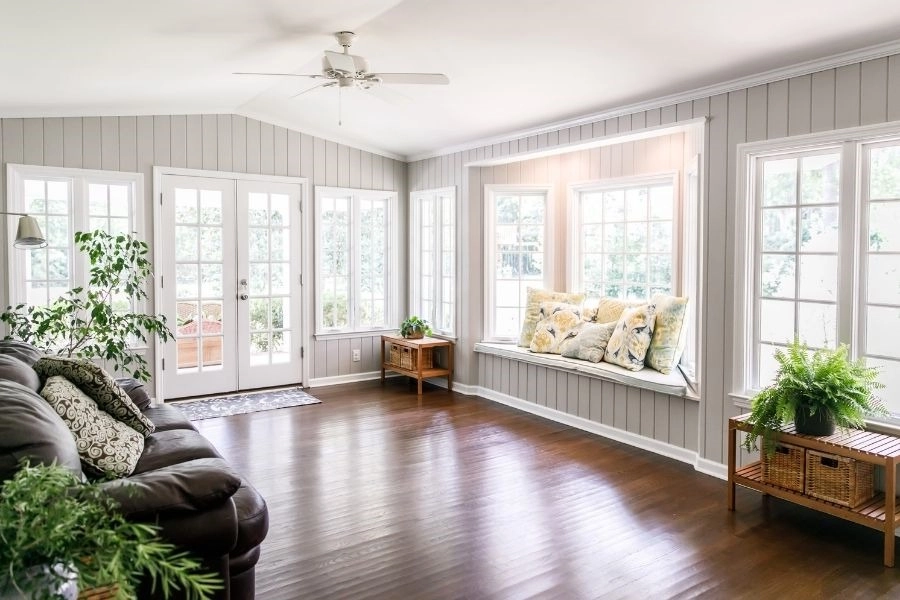
A Colorado sunroom loses heat fast because most are built with more glass and less insulated wall area than the rest of the house, and Front Range winters pair cold overnight temperatures with intense daytime sun that swings the room's temperature more than a typical living space. The fix is almost always a combination of better insulation, a dedicated heat source, and window upgrades, not any single change alone.
Glass insulates far worse than a framed, insulated wall, so a sunroom with windows on three sides has dramatically less thermal resistance than an equivalent bedroom or living room. Add Colorado's wide day-to-night temperature swing — a 40-degree afternoon can drop into the teens by midnight — and a sunroom without supplemental heat and good insulation cools well below comfortable within hours of sunset.
For most Front Range sunrooms, yes. A mini-split gives independent temperature control for a room that runs hotter than the house in full sun and colder than the house after dark, without forcing the main system to compensate for both swings. Installed cost runs $3,500 to $6,500 for a single-zone system sized for a typical sunroom, and the unit also handles summer cooling in a space that otherwise overheats under direct glass exposure.
Walls and roof should hit at least the same R-value as the rest of the house — R-13 to R-21 in walls and R-30 or higher in a roof or ceiling section, depending on the home's build era. A sunroom built as a lighter-frame addition sometimes shipped with less insulation than code minimum for living space; a thermal camera inspection during a winter evening shows exactly where the heat loss is worst before spending on upgrades.
Single-pane or older double-pane windows are the single biggest heat-loss point in most sunrooms, and upgrading to a low-E, argon-filled double or triple-pane window cuts heat loss meaningfully while also reducing the intense UV that fades furniture and flooring at altitude. Where full window replacement isn't in the budget yet, a cellular shade with a UV-blocking backing adds a real insulating layer for a fraction of the cost.
Yes, in nearly every Front Range jurisdiction. A sunroom that adds heated, conditioned square footage requires a building permit and, for electrical or gas heating work, a separate trade permit, while a simple three-season room without permanent heat sometimes has a lighter permit path depending on the city or county. Check with the specific city or county building department before starting work, since requirements differ between Denver, Aurora, Jefferson County and Douglas County.
A three-season room is built for spring through fall use without insulated walls or a dedicated heat source, while a four-season sunroom is insulated, permitted as conditioned living space, and heated and cooled like the rest of the home. Converting a three-season room to four-season use means adding wall and roof insulation, upgrading the windows, and installing a heat source — effectively redoing the room's building envelope.
Dry air at altitude makes a heated room feel colder at the same thermostat setting, which is the same effect that hits the rest of a Front Range home, but it's more noticeable in a sunroom because the room already runs colder near the glass. A small humidifier in the sunroom keeps the space feeling warmer without raising the thermostat setting further, and protects wood furniture and flooring from the cracking that low humidity causes over a winter season.
Full conversion — insulation, window upgrades and a heat source — runs $15,000 to $35,000 on the Front Range depending on the room's size and how much of the existing structure can stay in place. That is meaningfully less than a full new addition of equivalent square footage, since the roof, foundation and framing already exist.
A tile or stone floor absorbs heat from direct winter sun during the day and releases it slowly after sunset, which softens the evening temperature drop compared to a room with carpet or a lightweight floor covering. Pairing a thermal-mass floor with radiant heat underneath amplifies the effect, since the floor holds both the sun's heat and the radiant system's output.
Yes. Running a ceiling fan clockwise at a low speed in winter pushes the warm air that collects near the ceiling back down toward the floor, which matters even more in a sunroom with a vaulted or high ceiling where heat stratification is worse than in a standard room. It's a no-cost adjustment that pairs well with any of the heating options above.
Most Front Range HOAs require architectural review for any addition that changes the home's exterior footprint or roofline, including a sunroom. Submit plans early, since HOA approval and city permitting run on separate timelines and both need to clear before construction starts — see the Denver HOA rules and fees guide for how that review process works.
A properly permitted, insulated four-season sunroom counts as finished square footage and adds real value at appraisal, while an unpermitted or uninsulated three-season addition does not count toward the home's official square footage in most appraisals. Keep permit records and any HVAC installation paperwork, since a buyer's lender and appraiser will ask for them during a sale.
Whether a sunroom upgrade is for your own comfort or aimed at adding real square footage before a sale, the Kenna Real Estate Group can tell you what buyers in your area will credit at appraisal. Call or text 303-955-4220. A live person answers. Not a robot, not a phone tree. Or search every home for sale in Colorado today.
Questions about any home in Colorado? Call or text 303-955-4220. A live person answers.
Glass insulates far worse than a framed wall, and Front Range winters pair cold nights with wide day-to-night temperature swings, so a sunroom with heavy glass cools well below comfortable within hours of sunset without supplemental heat.
A ductless mini-split heat pump gives independent temperature control for most sunrooms, running $3,500 to $6,500 installed for a single-zone system, and also handles summer cooling in a room that overheats under direct sun.
Yes, in nearly every Front Range jurisdiction, a sunroom adding heated square footage needs a building permit and separate trade permits for electrical or gas heating work. Requirements differ by city and county.
A three-season room lacks insulated walls and a dedicated heat source and is built for spring through fall use. A four-season sunroom is insulated, permitted and heated and cooled like the rest of the home.
Full conversion with insulation, window upgrades and a heat source runs $15,000 to $35,000 on the Front Range, less than an equivalent new addition since the structure already exists.
Yes. Dry air at altitude feels colder at the same thermostat setting, and it's more noticeable in a sunroom because the space already runs cooler near the glass. A small humidifier helps without raising the thermostat further.
A properly permitted, insulated four-season sunroom counts as finished square footage and adds value at appraisal. An unpermitted or uninsulated three-season room does not count toward official square footage in most appraisals.
Most require architectural review for any addition that changes the exterior footprint or roofline. Submit plans early, since HOA approval and city permitting run on separate timelines and both must clear before construction.


