Open: Sat 4:00 AM - 6:00 PM

.jpg)


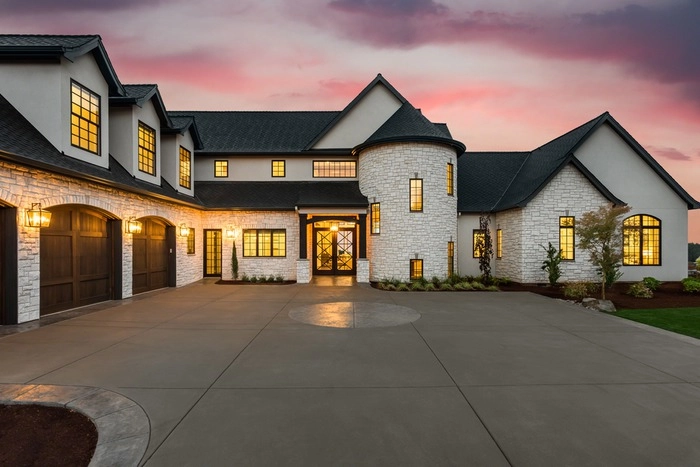
A home reads as high-end in the Denver area when its location, construction, and systems all clear a higher bar at once: a sought-after lot, finishes built for Colorado's climate, and mechanical systems sized for the altitude. Price alone doesn't make a house luxury; the combination does.
Four things separate a high-end Front Range home from an expensive one: a location that can't be replicated (a mountain-view lot, a Cherry Creek-adjacent site, an acre-plus parcel), construction built for Colorado's weather rather than a mild climate elsewhere, systems the owner controls from a phone, and outdoor space that functions through a 300-day-sun climate with a real winter. A house can have granite counters and still miss high-end status if the roof isn't rated for hail or the yard fights the water budget every July.
Cherry Hills Village and Greenwood Village carry the metro's highest concentration of large-lot luxury homes, with Boulder, Castle Pines, and parts of Douglas County close behind. Each has its own character: Cherry Hills Village runs large equestrian-zoned lots, Greenwood Village mixes newer construction with mature trees, and Boulder trades lot size for proximity to the foothills. Compare current inventory on the Cherry Hills Village and Greenwood Village area pages.
Yes. A 6,000-square-foot house on a standard suburban lot sells for less per square foot than a 4,000-square-foot house with an unobstructed mountain view or direct trail access, because the lot itself can't be added to inventory the way square footage can. Buyers shopping the top of the Front Range market pay for the location first and the finishes second.
App-controlled lighting, zoned HVAC, video-monitored entries, and irrigation systems tied to a weather feed so sprinklers skip a run after a storm. The irrigation piece matters more in Colorado than in wetter states, since it ties directly to the household's water budget under most Front Range utility rate structures.
Front Range hail season runs spring through September, and a high-end roof here is a Class 4 impact-rated roof, standing-seam metal, or concrete tile rather than a standard asphalt shingle. Several Front Range insurers apply a premium credit for a Class 4 rating, which offsets part of the upgrade cost over the life of the roof.
Denver metro soil contains expansive bentonite clay that swells and contracts with moisture, and a large custom home spreads that risk over more foundation length than a standard house. Builders use post-tension slabs or deep pier-and-grade-beam foundations engineered against a soils report specific to the lot, not a generic foundation plan.
Most do now. Front Range water providers, including Denver Water, restrict landscape watering days and hours through the summer, and a high-end yard built around turf alone fights that restriction every season. Xeriscape and low-water native plantings around a smaller functional lawn area are now standard on new luxury builds rather than an add-on.
Full-overlay custom cabinetry, a professional-grade range, a secondary prep kitchen or butler's pantry, and natural stone or quartz counters with a waterfall edge. What separates a true custom kitchen from a builder-grade luxury package is the cabinetry: stock cabinets with upgraded hardware read differently to a buyer's eye than a fully custom box built to the room.
Denver's dry air and roughly 5,280-foot elevation mean a wine room needs active humidity control, not just temperature control, to keep corks from drying out. HVAC systems also need to be sized and commissioned for the altitude; equipment rated at sea level underperforms here without adjustment, and a commissioning report from the installer confirms the system was set up correctly for the elevation.
A covered patio with radiant heat for shoulder-season use, a gas fire feature, and a kitchen built to run through the sunny months. Because Front Range weather swings from sunny to a fast-moving hailstorm, retractable or louvered covers see heavier use here than in climates with more predictable weather.
Most newer luxury communities in Douglas County and parts of Arapahoe County sit inside a metro district that funds infrastructure through a mill levy separate from an HOA fee, while older luxury neighborhoods like Cherry Hills Village run light or no HOA rules on an individual lot basis. A buyer should get the HOA or metro district's financial disclosures before writing an offer, since the fee and mill levy stack directly onto the monthly payment.
Most Front Range luxury purchases need a jumbo loan once the price crosses the conforming loan limit for the county, and jumbo underwriting looks harder at reserves and documented income than a standard conforming loan. Mike Oswald at Rate (NMLS 261003, Equal Housing Lender) walks Kenna buyers through jumbo qualification and reserve requirements before they write an offer on a high-end property; buyers are free to use any lender. Start at Kenna Financing or Kenna Credit Care.
Entry-level luxury in the Denver metro means a newer build with upgraded finishes on a standard suburban lot; true high-end adds an irreplaceable location, full custom construction, and systems built specifically for the site rather than selected from a builder's options list. The entry-level luxury amenities guide breaks down where that line sits in today's Front Range inventory.
Both move, but new construction dominates in Douglas County's newer luxury communities while resale dominates in established neighborhoods like Cherry Hills Village and Hilltop, where lots rarely turn over and the home's history carries its own value. A buyer set on a specific established neighborhood should expect a resale search; a buyer set on the newest systems and finishes should expect to look at new construction further south along the Front Range.
Xcel Energy runs rebate programs for high-efficiency HVAC, heat pumps, insulation upgrades, and electric vehicle charging equipment, and a new or renovated luxury home can stack several of these rebates during construction. Rebate amounts and programs change year to year, so confirm current offers directly with Xcel Energy before budgeting a specific credit into a build.
Custom construction in the Denver metro runs $350 to $600 per square foot depending on finish level, lot difficulty, and foundation engineering, with true high-end finishes and a challenging lot pushing well past $600. That range sits well above standard new-construction tract pricing, which reflects the site work, custom foundation engineering, and finish selections a high-end build requires.
The Kenna Real Estate Group tracks the Front Range's high-end inventory by neighborhood, lot type, and build quality, not just list price. Call or text 303-955-4220. A live person answers. Not a robot, not a phone tree. Ready to look at what's available? Search every home for sale in Colorado.
Questions about any home in Colorado? Call or text 303-955-4220. A live person answers.
A combination of an irreplaceable location, construction built for Colorado's climate, app-controlled systems, and outdoor space that works through hail season and winter alike.
Cherry Hills Village and Greenwood Village lead, with Boulder, Castle Pines, and parts of Douglas County close behind.
Front Range hail season runs spring through September, so high-end roofs use Class 4 impact-rated shingles, standing-seam metal, or concrete tile instead of standard asphalt.
Yes. Denver's expansive clay soil calls for a post-tension slab or a pier-and-grade-beam foundation engineered against a site-specific soils report.
Most purchases above the conforming loan limit need a jumbo loan; Mike Oswald at Rate (NMLS 261003, Equal Housing Lender) walks buyers through jumbo qualification, and buyers are free to use any lender.
Most new builds do. Front Range water providers restrict watering days and hours in summer, so xeriscape and native plantings around a smaller lawn area are now standard.
$350 to $600 per square foot depending on finish level and lot difficulty, with challenging lots and full custom finishes pushing past $600.
Yes. HVAC needs to be sized and commissioned for roughly 5,280 feet, and a wine room needs active humidity control because of Denver's dry air.


