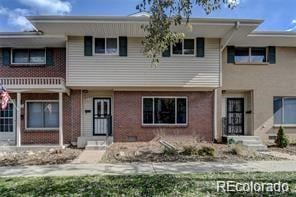
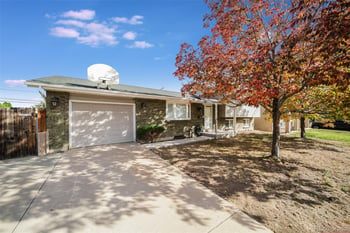
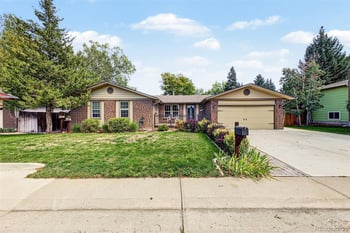
New - 30 Mins Ago

$220,000
Coming Soon
1
Beds
1
Baths
605
Sqft
--
Acres
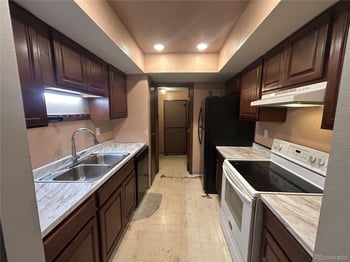
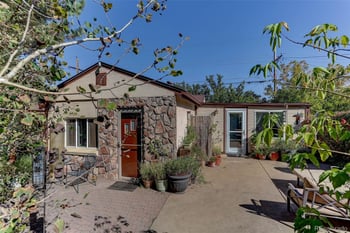
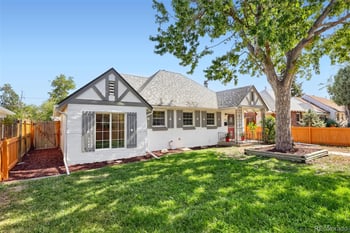
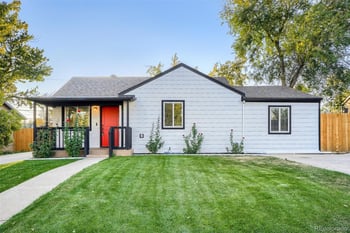
1032 N Clarkson St #102, Denver, CO 80218
MLS#: REC2735860
.jpg)



Every Colorado renter is paying a mortgage — just not their own. The rent check covers the landlord's loan payment, the landlord's property tax, the landlord's insurance, and a profit margin on top. The only real choice is whose principal balance goes down every month: the landlord's or yours.
That framing is not an argument that buying beats renting for everyone in every Front Range market this year. It is the starting math every Colorado renter deciding between a lease renewal and a purchase should run before either one.
Yes, indirectly. A landlord sets rent to cover the property's loan payment, taxes, insurance, and maintenance reserve, then adds a return on top. Part of that loan payment is principal, which builds the landlord's equity one payment at a time — equity a renter never sees back. A fixed-rate mortgage payment on an owned home stays flat for the life of the loan aside from tax and insurance escrow changes; a landlord's rent, on the other hand, is free to rise at each lease renewal.
Front Range rent has moved in both directions over the past several years depending on new apartment supply, but the long-run pattern across Denver, Aurora, and Colorado Springs has been upward, with increases concentrated at lease renewal rather than spread evenly through the year. A homeowner's principal-and-interest payment on a fixed-rate loan does not move at all over that same stretch; only the property tax and insurance portion of the payment changes.
The break-even point is the number of years it takes home price appreciation and principal paydown to outweigh the upfront cost of buying — the down payment, closing costs, and moving expenses. In most Front Range markets, that point lands between three and five years of ownership. A buyer planning to stay under three years should weigh renting more heavily; a buyer planning to stay five years or more comes out ahead owning even in a flat-price market, because principal paydown alone builds real equity.
Equity comes from two sources: principal paydown and appreciation. On a 30-year fixed loan, the first five years pay down a modest share of the balance since early payments are weighted toward interest — still, on a $450,000 Front Range loan, five years of payments retires $30,000 to $45,000 of principal in most cases, before any appreciation is counted. A renter making an equivalent monthly payment retires none of anyone's principal but their landlord's.
| Factor | Renting | Owning |
|---|---|---|
| Monthly payment change | Can rise at each lease renewal | Fixed principal and interest for the loan term |
| Who builds equity | Landlord | You |
| Upfront cost | Deposit, commonly one month's rent | Down payment plus closing costs |
| Maintenance responsibility | Landlord | Owner |
| Flexibility to relocate | High, at lease end | Lower, tied to selling or renting the home |
Rent alone is not the full cost. Add renters insurance ($12 to $28 a month), an application fee at each new lease ($40 to $75 per applicant), a security deposit tied up interest-free for the lease term, and the moving cost every time a lease is not renewed. None of that builds equity; all of it is a real monthly and periodic cost most renters do not track against the ownership alternative.
Ownership carries costs a renter never sees directly: county property tax, homeowners insurance (which has climbed sharply on the Front Range in recent years), HOA or metro district fees in many new-build communities, and maintenance the owner funds instead of calling a landlord. Budget 1% to 2% of the home's value per year for maintenance and repairs on top of the mortgage payment.
Colorado's property tax rates are lower than the national average, but the dollar amount still adds a real line to the monthly payment, and it varies by county and by whether the home sits inside a metro district with its own added mill levy. A buyer comparing two similar homes in different Denver metro suburbs should pull the actual tax bill for each, not assume the rate is identical across city lines. The Denver property taxes guide breaks down what shows up on that bill.
Conventional loans start at 3% to 5% down for a first-time buyer, FHA loans start at 3.5%, and VA loans allow 0% down for eligible veterans and service members. A 20% down payment avoids mortgage insurance but is not required to buy. The Colorado mortgage pre-approval guide lays out what a lender checks before issuing a pre-approval letter.
State law restricts cities and counties from enacting their own rent control ordinances, so rent in most Colorado markets is set by the landlord and the local market rather than a capped annual increase, unlike some coastal states. That is one more reason the rent-versus-buy comparison in Colorado leans on market rent trends rather than a legal ceiling.
Three questions settle it: Do you plan to stay in the same metro area for at least three years? Do you have a down payment plus 2% to 3% of the price for closing costs set aside? Is your income steady enough for a lender to verify it? A yes on all three is the point to start the pre-approval conversation rather than sign one more lease.
A local agent can run the actual rent-versus-buy numbers for a specific Front Range address and a specific budget, not a national average. Call or text 303-955-4220. A live person answers. Not a robot, not a phone tree. Ready to compare? Search every home for sale in Colorado.
Questions about any home in Colorado? Call or text 303-955-4220. A live person answers.
Yes, for a buyer staying under two to three years in one spot, moving for work, or without a down payment saved, since selling costs alone can erase short-term appreciation.
Budget 2% to 3% of the purchase price for a buyer's closing costs, on top of the down payment.
No. There is no requirement to disclose the underlying loan payment; rent is set by the market and the lease terms alone.
An existing lease stays in force through its term under the new owner in most cases; only a month-to-month arrangement can be ended with proper notice.
Yes, several state and local down-payment assistance programs serve first-time Colorado buyers; a lender or agent can check current eligibility.
Timelines vary with inventory and offer competition; a pre-approved buyer working with an agent moves from search to contract in a matter of weeks, not months.
The principal-and-interest portion stays fixed; only the escrowed property tax and insurance portion can change the total payment year to year.
For a buyer planning to stay three or more years, yes: principal paydown and any appreciation both build equity a renter never accumulates.