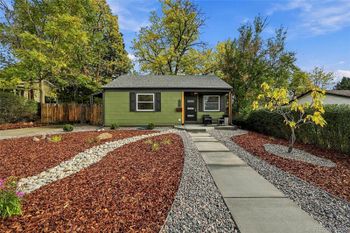
New - Just Now

$209,000
Active
2
Beds
2
Baths
1200
Sqft
10.81
Acres
2525 S Dayton Way #2105, Denver, CO 80231
MLS#: IR1071298
.jpg)



The right price for a Front Range home is the number backed by recent, comparable REcolorado sales, not the number a seller wishes for. Price a home above that number and it sits; price it at that number and it draws real offers in the first two to three weeks.
An overpriced home gets fewer showings in its first two weeks, which is exactly when a listing gets the most attention from buyers and agents watching new inventory. Fewer showings mean fewer offers, and a home that sits past 30 days on market starts to look like something is wrong with it even when nothing is. Buyers who do tour an overpriced home compare it to correctly priced competition down the street and walk away.
A comparative market analysis pulls closed sales from REcolorado for homes with a similar size, age, condition, lot and finish level within a half-mile to one mile of the subject property, sold in the last three to six months. Active and pending listings show where competition sits right now. Expired and withdrawn listings show what price point did not work. Together, those three data sets set a realistic range, not a single guess.
The Kenna Real Estate Group's Smart Pricing Report pulls REcolorado comps, active competition and neighborhood absorption data into one document built for a specific address, with a recommended list price range tied to the home's actual condition and finishes rather than a generic online estimate. A seller who wants that number for a Denver metro address can request it through the Kenna Real Estate Group's pricing guide.
Two signals matter most in the first two weeks: showing requests and online views compared to similar active listings, and buyer feedback passed along after each showing. A home that draws few showings and no offers in that window, while comparable homes nearby are going under contract, is priced above what the market will pay right now.
Two to three weeks with strong showing traffic and no offers is the standard signal to adjust. Waiting past 45 to 60 days lets the listing accumulate a long days-on-market count that buyers and their agents see in the MLS history, which works against the seller in negotiations even after a cut.
No. REcolorado tracks cumulative days on market across price changes on the same listing, and a withdraw-and-relist within a short window is flagged in the listing history that buyer's agents can see. A clean, correct price on day one avoids the visible pattern of repeated cuts altogether.
| Pricing Position | Typical Showing Activity | Typical Path to a Contract |
|---|---|---|
| At the top of the comp range | Strong showings in the first two weeks | Offer at or near list within days to a few weeks |
| 5% to 10% above the comp range | Showings slow after week one | Contract commonly follows one price reduction |
| 10% to 20% above the comp range | Showings drop off quickly | Multiple price cuts before a serious offer |
| 20% or more above the comp range | Listing stalls, buyers assume a problem | Long time on market; final sale price commonly lands below where correct day-one pricing would have landed |
Colorado's hail season runs roughly spring through September, and a Front Range roof, siding or gutters damaged in a recent storm and left unrepaired becomes a line item a buyer's inspector will flag and a lender can require fixed before closing. A seller who repairs storm damage and keeps the insurance claim paperwork before listing avoids a price reduction negotiated during the inspection period instead.
Colorado's standard contract sets an inspection objection deadline, a specific date by which the buyer must request repairs, a price credit or walk from the deal based on what the inspection finds. A home priced correctly and in known condition going in gives a seller more room in that negotiation than a home priced high, where every inspection finding becomes a bargaining point a buyer uses to bring the price back toward market value anyway.
Paint, a deep clean, minor repairs and staging for a typical Front Range home run $2,000 to $8,000 depending on scope. A single price cut of 5% on a $550,000 home is $27,500. Prep spend is almost always the cheaper move, and it is the one that helps the home sell at the correct price instead of needing a cut at all.
The mortgage payoff balance, any second lien or HELOC balance, closing costs (commonly 6% to 8% of sale price between commission, title and transfer tax), and any repairs negotiated after inspection all subtract from the sale price to land on net proceeds. A seller who needs a specific number at closing should run that math with an agent before setting the list price, not after an offer arrives.
National cash-buyer networks, such as the one run by We Buy Houses in Central Texas, trade speed and certainty for a lower purchase price, since the buyer resells the home for a profit and prices that margin into the offer. A Colorado seller weighing that trade-off against a correctly priced open-market listing should compare both numbers side by side before deciding; a seller relocating out of state and weighing that model in another market can see the same approach applied to sell your house in Central Texas. You are free to use any buyer or company you choose.
A price set at or slightly below the top of the comp range draws multiple showings fast, which commonly produces competing offers that push the final price back up. A price set above the comp range, hoping for negotiating room, more commonly produces silence, followed by a cut that lands below where the correct number would have landed on day one.
Each city and even each neighborhood inside it has its own comp set, absorption rate and typical buyer pool, so a price built for a Wash Park bungalow does not transfer to a Highlands Ranch ranch home or a Littleton patio home. A Smart Pricing Report built for the specific address, not a citywide average, is what accounts for that difference.
Colorado's seller's property disclosure requires disclosure of known material defects, and a home with disclosed issues (an older roof, a known foundation crack, a radon reading above the EPA action level) should be priced with that condition already factored in rather than priced as if the issue does not exist, since it will come out during inspection either way.
Monthly HOA dues, a metro district mill levy, or a capital improvement assessment all reduce a buyer's monthly budget for mortgage payment, which affects what they can offer. A seller should pull the current HOA or district numbers before setting a price so the number reflects what a buyer's lender will actually qualify them for.
A Smart Pricing Report built from current REcolorado data for the specific address, prepared by a local agent who has walked comparable homes in the area, gives a faster and more accurate number than an automated online estimate.
The Kenna Real Estate Group builds a Smart Pricing Report for Front Range sellers from current REcolorado comps, so the number on day one is the number that draws real offers. Call or text 303-955-4220. A live person answers. Not a robot, not a phone tree. Search every home for sale in Colorado at kennarealestate.com/homes.
Questions about any home in Colorado? Call or text 303-955-4220. A live person answers.
Few showings and no offers in the first two to three weeks, while comparable homes nearby go under contract.
Closed REcolorado comps, active competition and neighborhood absorption data, tied to the specific home's condition and finishes.
No. REcolorado tracks cumulative days on market across price changes on the same listing.
Staging and prep commonly run $2,000 to $8,000, far less than a 5% price cut on most Front Range homes.
Commission, title fees and transfer tax commonly total 6% to 8% of the sale price, on top of any negotiated repair credits.
Unrepaired storm damage to a roof, siding or gutters becomes a negotiating point during the inspection period; repairing it before listing avoids that.
No, they commonly offer below market value in exchange for speed and certainty, since the buyer resells the home for a profit.
Monthly HOA dues or a metro district mill levy reduce the monthly payment a buyer's lender will qualify them for, which affects the offer amount.