New - 15 Hours Ago
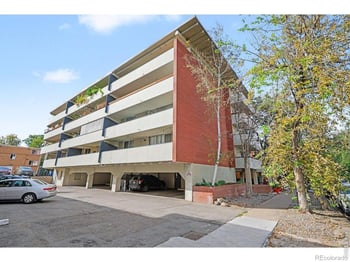
$220,000
Active
1
Beds
1
Baths
668
Sqft
--
Acres
1267 N Lafayette St #302, Denver, CO 80218
MLS#: RECIR1070056
.jpg)


Rent the house when three comparable homes within a mile leased in the last 60 days for at least 125 percent of your mortgage payment with taxes and insurance. That extra 25 percent pays for vacancy, management and repairs. When the leased comps come in under that line, renting is a monthly loss, and a Denver metro home that did not sell in 60 days has a price problem that a tenant does not fix.
This post is the yes-or-no math. The 10 questions to answer before renting a Colorado home is the operating checklist once the math says yes. The Kenna Real Estate Group at Keller Williams DTC runs both with owners across the Front Range.
Three reasons cover it. The price sits above the last three sold comps. The condition shows an inspection item Colorado buyers walk from: a failed sewer scope, a hail-worn roof, a 25-year-old furnace, or radon above 4 pCi/L with no mitigation. Or showings were blocked by a tenant, a pet or a schedule. Each has a cost to fix, and that cost is the first number to compare against a year of landlording.
Three Denver metro owners, same $550,000 house, same $3,000 leased-comp rent. Only the mortgage differs.
| Owner | Payment with taxes and insurance | 125 percent line | Rent | Verdict |
|---|---|---|---|---|
| A: refinanced in 2021 | $2,100 | $2,625 | $3,000 | Rent it |
| B: bought in 2023 | $3,600 | $4,500 | $3,000 | Fix the price and sell |
| C: bought in 2022, owes more than it is worth | $3,300 | $4,125 | $3,000 | Short sale review, not a rental |
Owner A nets about $375 a month after the reserves below and keeps a 2021 rate. Owner B loses $600 a month before a single repair, which is $7,200 a year to hold a home that a 3 percent price cut sells. Owner C is paying to hold a home that has no equity to protect; the am I underwater on my mortgage page starts that conversation.
One month per year, or 8 percent of annual rent. On $3,000 rent that is $250 a month set aside. Turnover on the Front Range costs another $1,500 to $3,000 each time: cleaning, paint touch-up, carpet cleaning, re-keying, and a leasing fee of half to one month's rent when a manager places the tenant. A lease that ends in December instead of June adds two to four weeks to the vacancy, so write leases that end between May and August. The Apartment Association of Metro Denver publishes vacancy by county each quarter; our state of the Denver rental market post reads it for owners.
Denver metro property managers charge 8 to 10 percent of collected rent plus the leasing fee. On $3,000 rent, that is $240 to $300 a month. Self-manage when the home is within a 30-minute drive, you answer a phone at 2 am, and you have a furnace contractor, a plumber and a roofer who call you back the same day. Owners who moved to Fort Collins or out of state and kept a Littleton house hire a manager; the savings from self-managing disappear the first time a habitability repair waits a week because nobody was in town.
Set aside 1 percent of the home's value each year, $458 a month on $550,000, and expect it to be spent in lumps.
Owner A's $375 a month covers this reserve. Owner B's loss grows to $1,058 a month once vacancy, management and repairs are counted honestly.
The federal Section 121 exclusion, $250,000 of gain for a single filer and $500,000 for a married couple filing jointly, requires the home to have been your primary residence for two of the five years before the sale. Move out today and the clock gives you three years to close a sale with the exclusion intact. Sell in year four and the entire gain is taxable at federal capital gains rates plus Colorado's flat income tax, and the depreciation you took as a landlord is recaptured at sale in every case. An owner with $200,000 of gain on a Centennial home is deciding between a tax-free sale now and a taxable one later, which is a bigger number than a year of rent.
Renting a home that is worth less than the loan defers the problem and adds a tenant to it. The owner still owes the shortfall at sale, still pays the monthly loss, and now carries Colorado landlord duties. Owners who bought in 2022 or 2023 with an FHA or VA loan and 3 to 5 percent down are the ones we see in this spot. A short sale, a loan modification, or holding as an owner-occupant until the balance drops are the three real paths. The short sale, foreclosure or stay comparison and the Colorado short sales guide lay them out without a sales pitch.
Yes, once the lender counts the rent. Owner-occupied conventional, FHA and VA loans require 12 months of occupancy before the home becomes a rental. After that, a signed lease lets the lender count 75 percent of the rent against the old payment, so Owner A qualifies for the next purchase with most of the old payment offset and Owner B carries the $600 gap into the debt-to-income ratio. Mike Oswald, VP of Mortgage Lending at Rate, NMLS 261003, Equal Housing Lender, runs that qualification for Kenna clients before they list or lease. You are free to use any lender. The Colorado home financing guide lists the programs, and the Colorado mortgage pre-approval guide covers the paperwork.
Owner B loses $1,058 a month, $12,700 a year with reserves. Selling costs on the Front Range run 6 to 8 percent of the price, about $38,000 on $550,000, and they are paid whether the sale is this year or in three. To break even on a three-year hold, the house has to gain $38,000 in carrying losses on top of the selling costs already baked in, which is 7 percent over three years just to get back to zero. That is a bet on the market, not an investment, and the money lost each month is gone even when the bet pays. Owner A, by contrast, needs no appreciation at all; the tenant pays the loan down $700 a month and the rest is cash flow.
Yes. The lease survives the sale, the buyer takes the home subject to it and receives the deposit at closing, and investors buy tenant-occupied homes across Adams and Arapahoe counties every month. A tenant-occupied home shows less and sells for less than a vacant, staged one, so the better plan is a lease that ends in April or May and a listing the week after move-out. Colorado's 2024 for-cause eviction law lets an owner decline to renew in order to sell, with 90 days' written notice. The how to sell a house in Colorado guide covers the timeline from there, and the rent it or sell it decision guide covers the case where the home never went on the market at all.
Rent the house when the leased comps beat your payment by 25 percent and you will hold it three years or less without losing the capital gains exclusion; otherwise cut the price to the sold comps and sell, because a tenant does not fix a listing that was priced wrong. Sellers who want a fast exit have cash options too; the Denver cash home buyers guide shows what those offers net.
We pull the leased comps and the sold comps on your home the same day, write both net sheets, and tell you which one is the yes. Call or text 303-955-4220. A live person answers. Not a robot, not a phone tree. When selling is the answer, search every home for sale in Colorado to see what the proceeds buy next.
Questions about any home in Colorado? Call or text 303-955-4220. A live person answers.
125 percent of the mortgage payment with taxes and insurance, from leased comps within a mile in the last 60 days. The extra 25 percent funds one vacant month a year, an 8 to 10 percent management fee and a 1 percent-of-value repair reserve.
No when the rent is under the payment. A 3 percent cut on $550,000 is $16,500 once; a $500 monthly rental loss is $6,000 a year plus the same selling costs later.
Three years from move-out. Section 121 requires two years as your primary residence inside the five years before the sale; year four makes the whole gain taxable.
No. The shortfall is still owed at sale, the monthly loss continues, and you add landlord duties. Review a short sale, a loan modification, or staying put until the balance drops.
Yes, 75 percent of a signed lease, once the home has met the loan's 12-month occupancy requirement. The other 25 percent is treated as vacancy and expenses.
8 to 10 percent of collected rent per month plus a leasing fee of half to one month's rent per placement. On $3,000 rent that is $240 to $300 a month.
Rent is late after a seven-day grace period, the demand for compliance gives the tenant 10 days, and the county court case takes weeks after that. Budget two to three months of lost rent for the whole process.