.jpg)


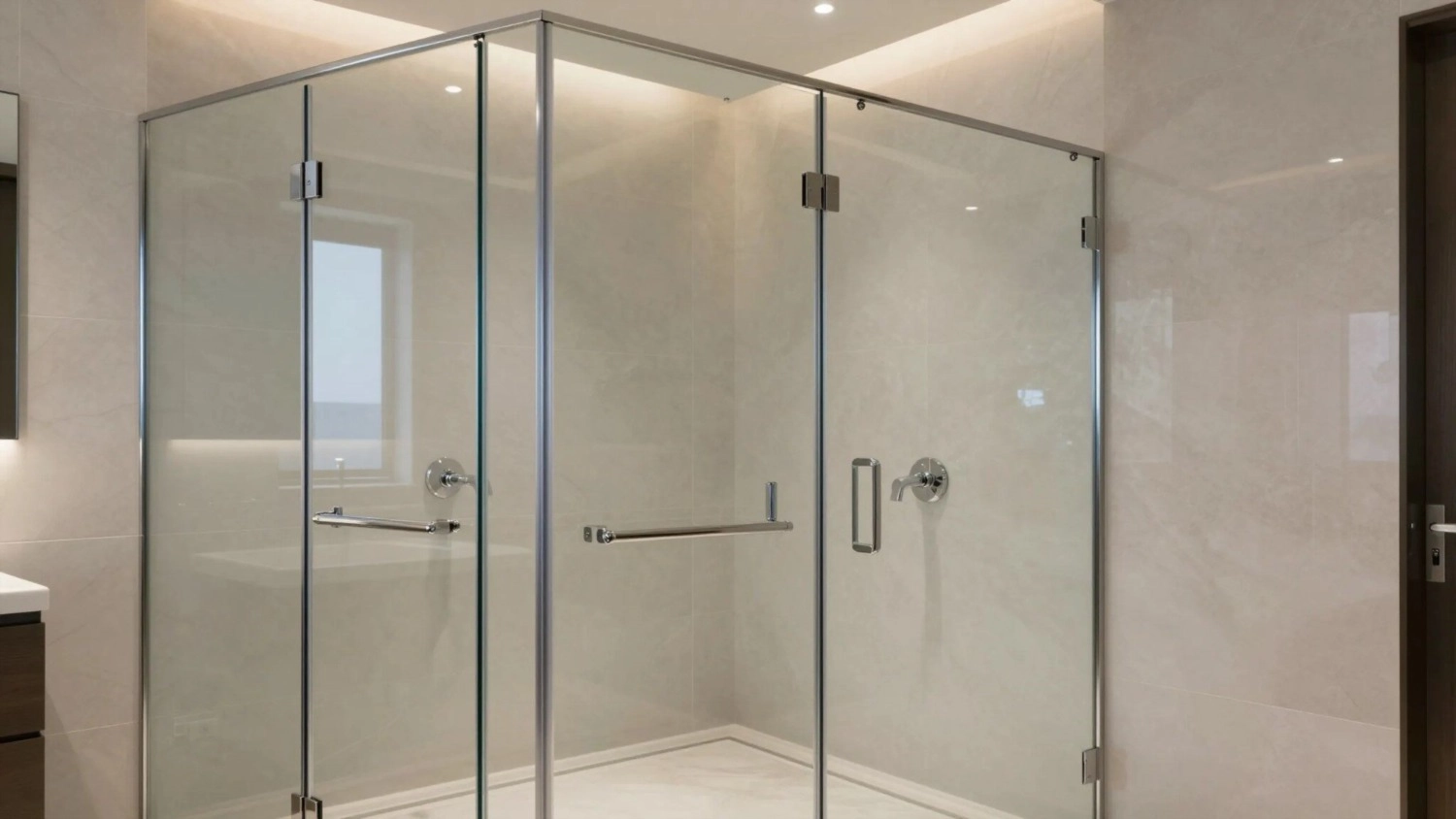
Shower glass on the Front Range faces one problem harder than most climates: water at 7 to 15 grains per gallon of hardness leaves visible mineral spotting within weeks of installation if the glass has no protective coating. Tempered glass with a factory-applied coating, cleaned with a squeegee after every shower, is the combination that actually stays clear here.
What shower glass type resists Colorado's hard water best?
Coated tempered glass — clear glass with a factory-applied protective coating fused to the surface — resists hard-water etching far longer than uncoated glass of any type. The coating fills the microscopic pores in the glass surface that mineral deposits would otherwise bond to, so water sheets off instead of drying into a spot.
Why does shower glass get cloudy with Front Range water?
Untreated glass has a slightly porous surface at the microscopic level, and Colorado's hard water leaves calcium and magnesium deposits in those pores every time water dries on the surface. Over months, those deposits build into the cloudy, etched look that no amount of squeegeeing removes once it sets into the glass itself.
What coating protects shower glass from hard water spots?
A ceramic or silicon-based protective coating applied at the factory or by a glass installer bonds to the surface and prevents mineral deposits from adhering the way they would to raw glass. It doesn't eliminate the need to squeegee after each shower, but it buys years before hard water etching becomes visible, compared with months on uncoated glass.
Is tempered glass required by code for a Colorado shower?
Yes. Building code across Front Range jurisdictions requires tempered glass in shower and tub enclosures because it breaks into small, rounded pieces instead of sharp shards if it fails, and it's rated for the repeated heat and moisture cycling a shower puts glass through daily. A licensed glass installer pulls the permit for a Denver metro shower enclosure and certifies the glass meets code.
What's the difference between clear, low-iron, and frosted shower glass?
Standard clear glass carries a faint green tint visible at the edges, especially on thicker panels. Low-iron glass removes most of that tint for a true clear look, at a higher price point. Frosted or textured glass hides water spots and soap residue between cleanings better than either clear option, which matters in a hard-water climate where spotting shows up fast.
How thick should shower glass be for a Front Range bathroom?
Framed shower doors use 1/4-inch tempered glass in most installations. Frameless doors need 3/8-inch or 1/2-inch glass to stay rigid without a metal frame supporting the edges. Thicker glass costs more but holds up to daily use and looks cleaner without visible framing.
Does a frameless shower door cost more installed in Denver?
Yes. A framed shower door installed runs $400 to $900 in the Denver metro. A frameless door with thicker glass and heavier hardware runs $1,000 to $2,500 depending on size and configuration. The price difference is mostly the thicker glass and the precision hardware needed to support it without a frame.
How do I clean hard water spots off shower glass in Colorado?
A daily squeegee pass after showering prevents most spotting from setting in the first place. For existing spots, a solution of equal parts white vinegar and water, left on the glass for several minutes before wiping, dissolves mineral deposits that a standard glass cleaner won't touch. Avoid abrasive pads on coated glass, since they wear through the protective coating.
Does dry Colorado air affect shower door seals and gaskets?
Rubber and silicone door seals and sweep gaskets dry out and crack faster in Denver's low-humidity climate than they would in a humid region, which shows up as water leaking past a door that used to seal fine. Replacing a dried gasket costs $30 to $80 and is worth checking annually rather than waiting for a leak to show up as water damage on the floor outside the shower.
What's the difference between a sliding and a hinged shower door?
A sliding door works in a tighter bathroom footprint since it doesn't need floor clearance to swing open, but the bottom track collects hard-water residue and needs more frequent cleaning than a hinged door's simpler hardware. A hinged door needs 24 to 30 inches of clearance to open fully but stays easier to keep spot-free long-term.
Do I need a permit to install a shower glass enclosure in Denver?
A glass door or enclosure swap with no change to the shower pan or plumbing doesn't need a separate permit in Denver, Aurora, or Lakewood, since it's a fixture replacement rather than construction. If the enclosure is part of a larger remodel that changes the shower pan or drain location, that work falls under the plumbing permit for the overall project.
Does shower glass affect resale value in a Front Range bathroom?
An updated frameless or semi-frameless shower enclosure is one of the details Denver metro buyers notice immediately on a showing, and a cloudy, etched, or dated framed door reads as an overdue update even in an otherwise updated bathroom. It's a comparatively low-cost swap relative to the rest of a bathroom remodel with an outsized effect on how the room presents, and a Smart Pricing Report can tell you whether it's worth doing before you list.
What shower glass style do Denver metro buyers expect in an updated bathroom?
Frameless or minimal-frame clear glass with matte black or brushed nickel hardware is what buyers see in most recently updated Front Range comparable listings. A heavily framed clear or textured door from the 1990s and 2000s reads as dated even when the rest of the bathroom has been refreshed.
How long does a hard-water coating on shower glass last?
A quality factory or professionally applied coating lasts two to five years before it needs reapplication, depending on water hardness and cleaning habits. Squeegeeing daily and avoiding abrasive cleaners extends the coating's working life closer to the higher end of that range.
What's the cost difference between tempered and laminated shower glass?
Tempered glass is the standard and lower-cost option for shower enclosures. Laminated glass, with a plastic interlayer between two glass panes, costs more and is reserved for skylights or overhead glass rather than vertical shower panels in most projects, where code-compliant tempered glass already meets the requirement at a lower price. A single replacement panel of tempered shower glass sized to a standard enclosure gives a sense of the material cost before labor and installation.
Should I choose a curbless shower for a Colorado bathroom?
A curbless, zero-threshold shower pan pairs well with a frameless glass panel and reads as a current, higher-end bathroom to Front Range buyers, but it requires more subfloor work to build the correct drain slope than a standard curbed pan. Budget for that added labor if you're converting an existing curbed shower rather than building new.
Where to go next
- A homeowner's guide to remodeling in Highlands Ranch
- Highlands Ranch HOA rules and renovation approvals
- Interior upgrades that help Colorado homes stand out
- Preparing and adding value before selling in Colorado
- Colorado market reports by ZIP code
- Search every home for sale in Colorado
Talk to the Kenna Real Estate Group
Before you update a shower enclosure for resale, the Kenna Real Estate Group can tell you what finish level buyers in your Front Range neighborhood already expect. Call or text 303-955-4220. A live person answers. Not a robot, not a phone tree. Talk to one of our Front Range agents directly, or search every home for sale in Colorado to see how recently updated bathrooms are finished at your price point.
Homes for sale that match this post
Guides
Questions about any home in Colorado? Call or text 303-955-4220. A live person answers.