New - Just Now

.jpg)


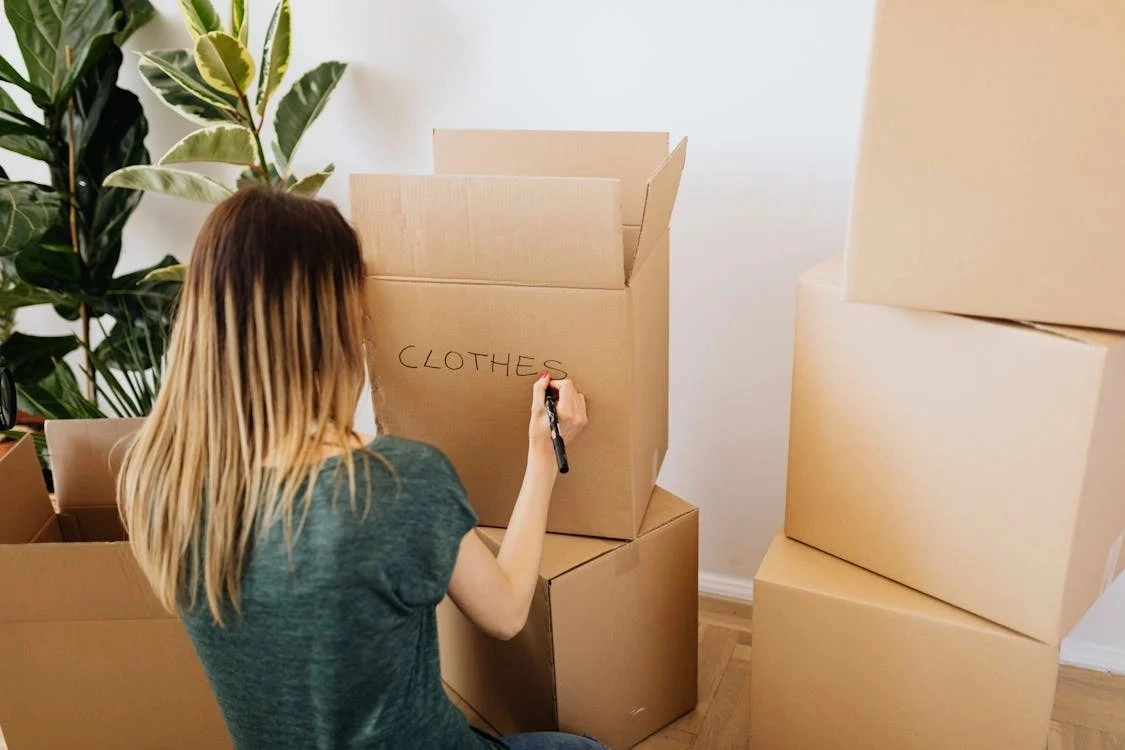
Clothes are the single biggest category by box count in most Colorado moves, and the fastest way to blow a Saturday is guessing at boxes instead of following a plan. Pack by season and by room, not by drawer, and the whole closet moves in under two hours.
Start with off-season clothes first — they get packed and sealed a full week before moving day since nobody needs a parka in July or shorts in January. Hanging items go straight into wardrobe boxes with the hangers still on; folded items go into medium boxes, never large ones, because a large box full of sweaters is too heavy to carry without damage.
Wardrobe boxes for anything on a hanger — suits, dresses, coats. Medium cardboard boxes or stackable plastic bins for folded clothes; bins cost more upfront but survive a Colorado garage or storage unit far better than cardboard if the move includes a gap between homes. Vacuum bags work well for bulky winter layers headed into off-season storage.
Colorado's hail season runs spring through September, and an open moving truck bed or a box left on a driveway during a fast-moving storm cell is a real risk. Use plastic bins with lids instead of open cardboard for any boxes staged outside, and load the truck the same day boxes get carried out rather than staging them in the driveway overnight.
Pack the least-used closet first (guest room, off-season storage) and the primary closet last, the night before or morning of. That keeps a household in normal clothes until the final hours and avoids digging through sealed boxes for a work outfit.
Compress bulky items — ski jackets, snow pants, base layers — into vacuum bags to cut the box count roughly in half. Keep boots, gloves and one full cold-weather outfit per household member in a "first night" box that travels in the car, not the truck, since a Front Range move that lands in October or later can hit snow before the moving truck even arrives.
A full-service packing crew saves the most time on a tight closing timeline, particularly for a household relocating from out of state with only a few days on the ground before the move. Packing clothes yourself costs nothing but time and works fine for anyone with even a weekend to spare before the move date.
Plan on roughly 1 wardrobe box and 3 to 5 medium boxes per adult closet, and 1 to 2 medium boxes per kid's closet. A three-bedroom Front Range home needs about 15 to 25 boxes for clothing alone, separate from linens and shoes.
| Household size | Wardrobe boxes | Medium clothing boxes |
|---|---|---|
| 1-2 people | 2-4 | 8-14 |
| 3-4 people | 4-6 | 15-25 |
| 5+ people | 6-10 | 25-35 |
Suitcases and duffel bags a household already owns hold as much as a wardrobe box for zero extra cost. Trash bags work in a pinch for hanging clothes — poke the hanger hooks through the bottom of the bag and gather it around the hangers — but they tear easily, so use them only for a short local move.
Colorado's dry climate helps, but a metal storage unit still swings in temperature between a hot Front Range summer and a cold winter, which can trap condensation. Use sealed plastic bins rather than cardboard for anything going into storage longer than a month, and add a moisture absorber packet to each bin.
Yes. Shoes damage soft clothing in transit and hold odor and grit from Colorado dirt roads, trailheads and winter slush. Pack shoes in their own labeled boxes, soles together, with paper stuffed inside boots to hold their shape.
Start off-season and rarely-worn clothes 3 to 4 weeks out, everyday clothes in the final week, and the last outfit the morning of the move. A Front Range closing date can shift by a few days if financing or inspection issues come up, so keep the "first night" box flexible until the date is locked.
Anything a household needs in the first 24 to 48 hours — work clothes, sleepwear, a full outfit per person, medication and toiletries — rides in a car or personal bag, never in the truck. Trucks can run a day or more behind schedule on a long-distance move.
Label by closet and by person, not just "clothes" — "Primary closet, hanging" versus "Kids' room, folded" saves real time on move-in day. Color-coded tape or stickers by room speed up a moving crew that has never seen the new floor plan before.
Most Front Range movers rent wardrobe boxes for a flat per-box or per-day fee, separate from the general per-box charge, and some include a set number free with a full-service move. Ask for the exact wardrobe box rate in writing before booking.
Vacuum-sealed bags inside hard-sided bins cut both weight and volume, which matters directly on a long-distance move priced by weight. Keep a full changeable outfit and any climate-specific gear (a coat leaving Colorado for a hot climate, or the reverse) in a carry-on-style bag.
Formal wear, leather and anything with beading or sequins travels best flat in a garment box with acid-free tissue paper between layers, not folded into a general clothing box. Front Range dry cleaners along the move route can rush a pre-move clean and press for anything that needs to arrive ready to wear.
Wardrobe boxes and specialty garment boxes are worth ordering ahead from a moving supply company, since local Front Range hardware and home stores run low during peak spring and summer moving weeks. Standard medium boxes, tape and paper padding are easy to find locally the week of the move.
The Kenna Real Estate Group coordinates closing dates with movers and packers across the Front Range so nothing sits half-packed on a driveway during hail season. Ask for the printable room-by-room packing checklist in the form below and we email it the same day. Call or text 303-955-4220. A live person answers. Not a robot, not a phone tree. Ready to plan the move around a new address? Search every home for sale in Colorado.
Questions about any home in Colorado? Call or text 303-955-4220. A live person answers.
About 15 to 25 boxes for a three-bedroom household, split between wardrobe boxes for hanging items and medium boxes for folded ones.
Yes for coats staying on hangers. Compress bulky ski gear into vacuum bags instead to save box space.
A full outfit per person, medication, toiletries and anything needed in the first 24 to 48 hours, since trucks can arrive later than expected.
Yes on a tight closing timeline or an out-of-state move with only a few days on the ground. It costs more but removes the packing bottleneck entirely.
Use plastic bins with lids for anything staged outside and load the truck the same day boxes come out, rather than leaving them in the driveway overnight during hail season (spring through September).
Some include a set number free with a full-service move; others charge a flat per-box or per-day rental fee. Get the exact rate in writing.
Off-season clothes 3 to 4 weeks out, everyday clothes in the final week, and the last outfit the morning of the move.
Use sealed plastic bins instead of cardboard and add a moisture absorber packet, since Colorado's temperature swings between seasons can trap condensation in a metal unit.


