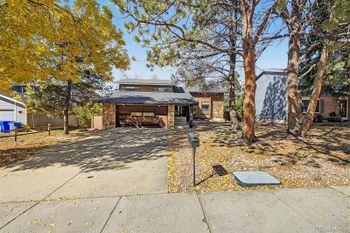
New - 30 Mins Ago

$599,000
Active
4
Beds
5
Baths
3692
Sqft
0.1334
Acres
3324 Union Jack Way, Colorado Springs, CO 80920
MLS#: 1202327
.jpg)



The Denver metro runs on REcolorado, Colorado Springs runs on Pikes Peak MLS, and Fort Collins and Northern Colorado run on IRES; every accurate home search a Front Range buyer sees online traces back to one of those three systems, not to the search site itself.
REcolorado covers Denver, Aurora, Lakewood, Littleton, Centennial, and Highlands Ranch. Colorado Springs and El Paso County run through Pikes Peak MLS. Fort Collins, Loveland, Greeley, and Windsor run through IRES. A listing entered in one system takes time to reach a search site pulling from a different feed, which is why cross-region searches sometimes show a gap.
Older systems moved data through RETS feeds on an overnight batch, so a price change or a new pending status took up to a day to show everywhere. Current MLS systems run on the RESO Web API standard, a real-time connection that pushes a status change out within seconds instead of overnight. A search built on a real-time feed shows a Front Range home's actual status, not yesterday's.
A site that scrapes listing pages instead of connecting to a verified MLS feed lags behind by days, showing a home as active after it's under contract or listing a price the seller already changed. A multiple listing service website connected directly to the MLS is the source that stays current; everything downstream of it is only as fresh as its last sync.
Check the listing's last-updated timestamp, compare the price against the listing agent's own site if one exists, and call the listing agent or the Kenna Real Estate Group directly if a home looks too good to still be available. A five-minute phone call saves a wasted drive to a home that went under contract two days earlier.
Yes. Colorado MLS systems let the listing broker set syndication rules for a property, choosing which third-party sites receive the feed and which don't. A seller who wants maximum reach asks the agent to confirm full syndication; a seller who wants a quieter, agent-network-only listing can request the opposite.
Search engines read structured schema data directly from verified listing feeds to confirm price, location, and availability before ranking a page. A listing site running on outdated or scraped data risks a ranking penalty for showing duplicate or incorrect information, one more reason a Front Range buyer gets better results starting from a search tied to the live MLS feed.
The listing agent updates the MLS status directly, and that change pushes out to every connected search platform within seconds on a modern RESO Web API feed. A search site still showing that home as active a day later is either running on a delayed sync or not connected to the MLS at all, which is the single fastest way for a Front Range buyer to tell a live search from a stale one.
A buyer who tours based on a scraped, days-old listing shows up to a home that's already pending, wasting a Saturday morning that would have gone to an actual available property otherwise. Repeated experiences like that push buyers toward whichever search they trust most, which is one reason agents steer clients toward a search tied directly to REcolorado, Pikes Peak MLS, or IRES rather than a general aggregator site.
A saved search tied to the live MLS feed sends a notification the moment a new listing matches, or the moment a price changes, instead of batching updates once a day. In a competitive price band, that gap between an hour-old alert and a next-morning alert is the difference, in a competitive price band, between touring a home first and touring it after an offer's already in.
Confirm the listing status directly with the listing agent or a Front Range brokerage tied to the MLS, not just the site where the home was found. Compare the square footage, lot size, and photo count against the MLS record if it's visible; a mismatch between the two is a sign the third-party page is running on old data rather than the current listing sheet.
A listing photo shoot happens once at the start of a listing, while the price, status, and days on market update continuously behind it. A home with photos that look dated next to a fresh status update is still an active listing worth touring; a home with sharp new photos and no status change in weeks is worth a phone call to confirm it has not already gone under contract.
A search alert tied to REcolorado, Pikes Peak MLS, or IRES data notifies a buyer the moment a new listing or price change matches their criteria, without the buyer needing to refresh a third-party site by hand every morning. That single setup step is the difference between competing for a Front Range home on day one and finding out about it a week later.
The same live-feed principle applies whether the search covers Denver, Colorado Springs, or Fort Collins; a buyer moving between Front Range regions during a single search does not have to give up real-time accuracy just because the home crosses from one MLS territory into another.
One search, one live source of truth, no matter which Front Range MLS territory a home sits in.
The Kenna Real Estate Group's home search draws on the same REcolorado, Pikes Peak MLS, and IRES data Front Range agents use to write offers, refreshed continuously rather than on a delay. Search every home for sale in Colorado to see current status, price, and days on market instead of a cached snapshot.
| Front Range Region | MLS System | Cities Covered |
|---|---|---|
| Denver Metro | REcolorado | Denver, Aurora, Lakewood, Littleton, Centennial, Highlands Ranch |
| Colorado Springs Area | Pikes Peak MLS | Colorado Springs, El Paso County |
| Northern Colorado | IRES | Fort Collins, Loveland, Greeley, Windsor |
The Kenna Real Estate Group builds every Colorado search on live REcolorado, Pikes Peak MLS, and IRES data, not a cached feed, so buyers see a home's real status before they drive out to see it. Call or text 303-955-4220. A live person answers. Not a robot, not a phone tree. Ready to look at what's on the market right now? Search every home for sale in Colorado.
Questions about any home in Colorado? Call or text 303-955-4220. A live person answers.
REcolorado.
Pikes Peak MLS.
IRES.
It's pulling scraped or unsynced data instead of a live MLS feed, so the status lags behind the actual sale.
Within seconds under the RESO Web API standard, versus up to a day on older batch systems.
Yes, through the listing broker's syndication settings, which control which third-party sites receive the feed.
Check the last-updated time on the listing and call the listing agent directly before driving out to see it.