.jpg)


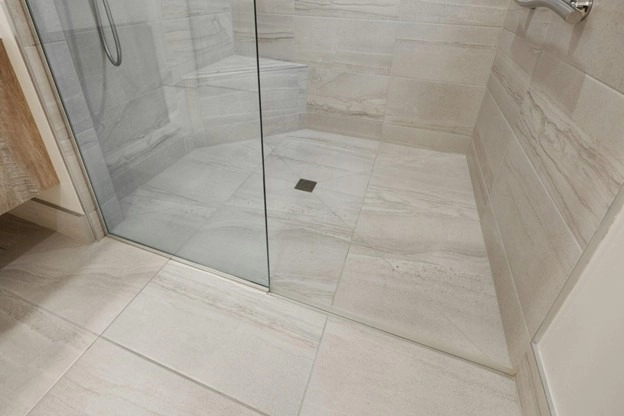
Bathroom tile on the Front Range has to answer to three things most guides skip: 7 to 15 grains per gallon of hard water that etches grout and leaves mineral spots, a dry climate that stresses grout joints, and expansive clay soil under many Denver metro slabs that can crack tile near thresholds over time. Porcelain tile with an epoxy or urethane grout answers all three at once.
What bathroom tile holds up best to Colorado's hard water?
Porcelain tile resists hard-water etching better than natural stone, since it's a dense, low-porosity material that doesn't absorb mineral deposits the way limestone or travertine does. If you want a natural stone look, porcelain tile manufactured to mimic marble or travertine gives the appearance without the maintenance hard water demands on the real material.
Does hard water stain grout in a Front Range bathroom?
Yes. Standard cement grout is porous, and Front Range water at 7 to 15 grains per gallon of hardness leaves visible white mineral buildup in grout lines within one to two years, especially around the shower floor and any spot water sits and evaporates. Epoxy grout resists this almost entirely because it doesn't absorb water the way cement grout does; it costs more per square foot but eliminates the yearly grout-cleaning cycle.
Why does bathroom tile crack in Denver homes with expansive soil?
Denver metro and Colorado Springs sit on expansive bentonite clay soils in many neighborhoods, and slab-on-grade homes see slow seasonal movement as the soil swells and contracts with moisture. That movement telegraphs into tile floors as hairline cracks near a doorway threshold or where an addition ties into the original foundation. A crack-isolation membrane installed under new tile absorbs that small amount of substrate movement before it reaches the tile surface.
Does dry Colorado air cause grout to crack?
Denver's low humidity, especially in winter, pulls moisture out of cement grout faster than it cures in a humid climate, which can leave grout more prone to hairline cracking if it isn't kept damp during the curing window. A contractor experienced with Front Range installs knows to mist new grout for several days after setting rather than letting it cure in dry indoor air straight through.
What tile size works best in a small Front Range bathroom?
Larger format tile — 12x24 inches or bigger — uses fewer grout lines, which means less hard-water grout maintenance and a cleaner look in a small bathroom. Smaller mosaic or penny tile still works well on shower floors for slip resistance, but keep the surrounding walls and floor in larger format to limit the total grout area exposed to hard water.
Do I need a permit to retile a bathroom floor in Denver?
A straight tile swap with no plumbing changes doesn't need a permit in Denver, Aurora, Lakewood, or Littleton. Moving a drain, adding a shower valve, or changing the shower pan does require a plumbing permit, since it touches the water supply and drain lines the city inspects. Colorado Springs and Fort Collins follow the same rule through their own building departments.
What's the difference between porcelain and ceramic tile for a Colorado bathroom?
Porcelain fires at a higher temperature and absorbs less water than ceramic, which matters directly for hard-water performance and for any tile near a shower or tub. Ceramic costs less and works fine on a bathroom wall away from direct water contact; porcelain is the better choice for floors and shower surrounds on the Front Range.
Does natural stone tile hold up to Colorado's hard water and dry climate?
Natural stone — marble, travertine, limestone — needs sealing on installation and resealing every one to two years to resist Front Range hard water etching, and the dry climate accelerates how fast a stone sealer wears thin. It's a higher-maintenance choice here than in a humid climate; porcelain that mimics the same look cuts the upkeep to nearly nothing.
What grout color hides hard water spots best?
Light gray and warm white grout show mineral buildup faster than a mid-tone gray or a color close to the tile itself. A mid-gray grout in the 30% to 50% value range hides early mineral spotting the longest between cleanings, buying more time before it needs a deep clean or a fresh seal.
How much does bathroom tile cost installed in the Denver metro?
Ceramic tile installed runs $8 to $15 per square foot in the Denver metro, including materials and labor. Porcelain runs $10 to $20 per square foot. Natural stone runs $15 to $35 per square foot depending on the material, with sealing as an added line item. A standard 5x8 bathroom floor and shower surround, roughly 100 square feet of tile, runs $1,500 to $4,500 for the tile work alone.
What tile trends do Front Range buyers expect in a remodeled bathroom?
Large-format porcelain floor tile, a tiled shower surround that runs to the ceiling instead of stopping at 6 feet, and a single accent tile band or niche are what Denver metro buyers see most in updated comparable listings right now. A bathroom retiled in a dated small-mosaic pattern from the 1990s reads as original to a buyer even if the rest of the home is updated.
Should I match my kitchen and bathroom tile in a Colorado home?
Matching isn't necessary, but a consistent tone and finish level across the home reads as intentional rather than piecemeal to a buyer. If your kitchen has a warm, matte porcelain floor, a bathroom with a cool, high-gloss ceramic reads as mismatched even though the rooms don't need identical tile.
What's the best shower tile for a Colorado home with hard water?
Large-format porcelain on the walls with a smaller-format slip-resistant porcelain or stone-look tile on the floor, set with epoxy grout throughout, holds up longest to daily hard-water exposure with the least maintenance. A glass shower enclosure paired with this tile combination also shows hard-water spotting on the glass itself, which is a separate maintenance item from the tile.
Does tile choice affect resale value in Denver?
Dated tile is one of the fastest things a buyer's agent flags on a Front Range showing, and it shows up directly in buyer feedback and days on market. Updated large-format tile in a neutral tone doesn't add a dollar-for-dollar premium on its own, but it removes a reason for a buyer to discount their offer or walk away from an otherwise strong listing. A local market report shows how closely finish quality tracks final sale price in your specific ZIP code.
How do I prevent tile cracking near a bathroom threshold in an older Denver home?
A crack-isolation membrane under the tile at the threshold, an expansion joint where the tile meets a different material or room, and flexible caulk instead of rigid grout at transition points all reduce cracking from the small seasonal shifts expansive soil causes. Skipping the membrane is the most common reason a Front Range retile job shows a crack within the first year or two.
What sealer protects grout from Colorado hard water?
A penetrating grout sealer applied after installation and reapplied every twelve to eighteen months slows mineral absorption into cement grout significantly. Epoxy grout skips this maintenance step entirely since it doesn't absorb water the way cement grout does, which is why more Front Range bathroom remodels are specifying it despite the higher upfront cost.
What tile pattern makes a small Front Range bathroom look bigger?
A diagonal or large-format tile layout with minimal grout lines and a continuous floor tile that runs into the shower without a visual break both make a small bathroom read larger in photos and in person, which matters directly for how a listing performs in a competitive Denver metro market.
Bathroom renovation firms outside Colorado follow the same hard-water and durability logic in their own climates; a bathroom renovation in Toronto, for example, deals with similar mineral-heavy municipal water, and the same firm's kitchen renovation services apply the same porcelain-first material logic to kitchen floors that see the same water exposure.
Where to go next
- Preparing and adding value before selling in Colorado
- Highlands Ranch HOA rules and renovation approvals
- Top flooring choices that boost home value in Denver
- A homeowner's guide to remodeling in Highlands Ranch
- Colorado condos for sale
- Search every home for sale in Colorado
Talk to the Kenna Real Estate Group
Before you tile a bathroom for resale, the Kenna Real Estate Group can tell you which finishes buyers in your neighborhood are already comparing your home against. Call or text 303-955-4220. A live person answers. Not a robot, not a phone tree. Get a Smart Pricing Report, or search every home for sale in Colorado to see how recently sold homes finished their bathrooms.
Homes for sale that match this post
Guides
Questions about any home in Colorado? Call or text 303-955-4220. A live person answers.