New - 4 Hours Ago
.jpg)


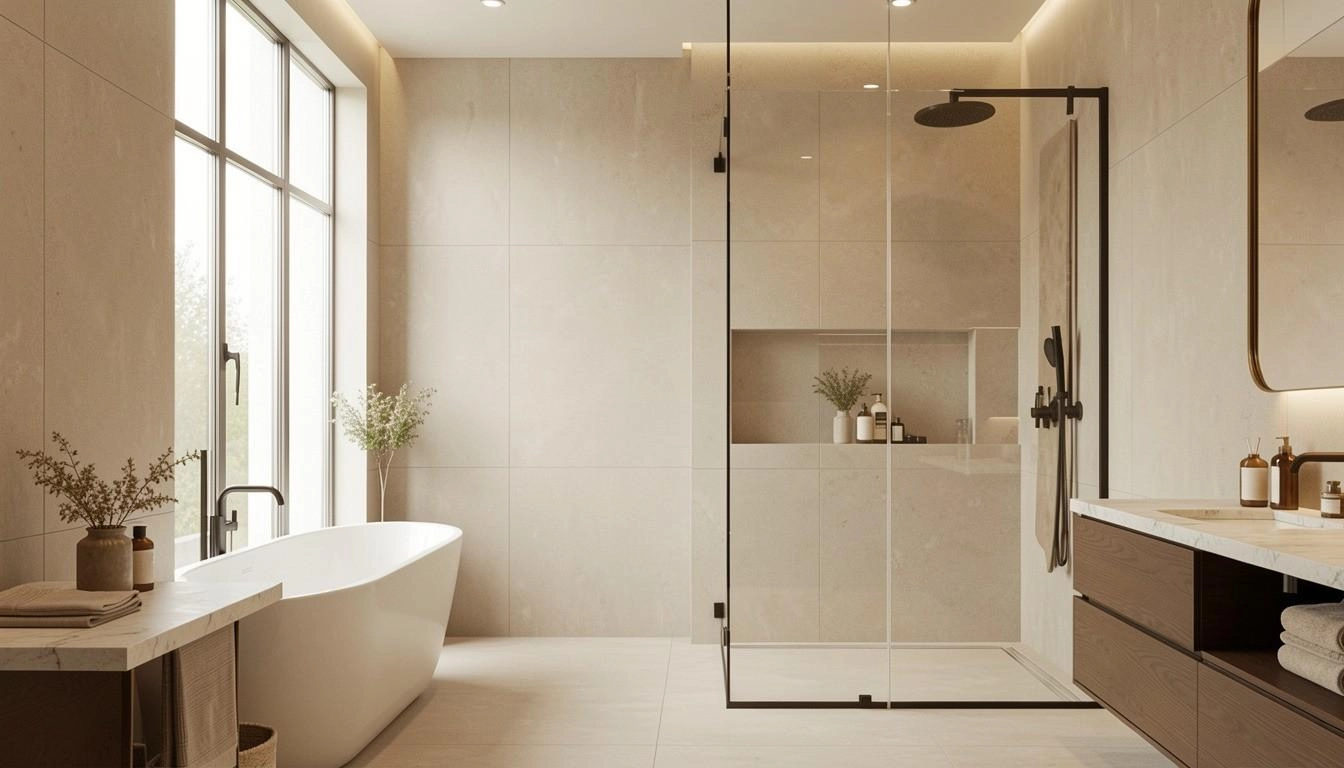
Three bathroom finishes shorten a Denver metro listing's days on market: neutral large-format porcelain tile, clean or fresh grout, and a vanity with a solid-surface top. Three finishes quietly lower the appraisal: 4-by-4-inch ceramic squares from before 2005, polished marble on a daily-use shower floor, and bold color or pattern that the next owner plans to rip out.
This guide covers what buyers expect by price band across Denver, Aurora, Littleton, Centennial and Highlands Ranch, what each fix costs on the Front Range in 2026, when the City and County of Denver requires a plumbing permit, and which updates to skip because they never come back at closing.
| List price | What buyers accept | What costs you showings |
|---|---|---|
| Under $500,000 (condos, townhomes, older ranches in Aurora, Thornton, Lakewood) | Clean original tile with fresh grout and caulk, new faucet, new mirror, new light | Cracked or missing tile, stained grout, a vanity with water damage |
| $500,000 to $800,000 (Centennial, Littleton, Highlands Ranch, Arvada, Parker) | Large-format porcelain floor, tiled tub surround or walk-in shower, quartz vanity top, framed or frameless glass | Builder-grade 3-by-6 glossy white tile with a fiberglass tub insert, oak cabinet from 1998 |
| Above $800,000 (Cherry Hills Village, Greenwood Village, Castle Pines, Boulder, Golden) | Curbless or low-curb shower, floor-to-ceiling tile, double vanity, heated floor, a freestanding tub in the primary | A hall bath that was skipped while the primary was redone; mismatched finishes between baths |
The pattern holds in every price band: buyers forgive dated, they do not forgive dirty or broken. A $400 regrout and recaulk moves a listing more than a $4,000 accent wall.
Browse current bathroom tile designs for the formats above; pick the one closest to what the rest of the house already uses.
Appraisers on Denver assignments use five phrases in the bathroom line, and each moves the comparable adjustment:
Polished marble on a shower floor belongs on this list. It etches under the high-mineral water in Denver, Aurora and Colorado Springs and looks worn within 3 years. Honed porcelain that looks like marble gives the same photo without the etching.
| Scope | Cost in Denver metro | Time | Do it before listing? |
|---|---|---|---|
| Regrout, recaulk, new faucet, mirror, light, hardware | $800 to $2,500 | 2 to 4 days | Yes, every bath, every price band |
| New vanity with quartz top, new toilet | $2,500 to $6,000 | 1 week | Yes when the cabinet is damaged or pre-2000 |
| Retile floor and tub surround, keep the layout | $7,000 to $14,000 | 2 to 3 weeks | Yes in the $500,000-plus bands when tile is cracked or 4-by-4 ceramic |
| Tub-to-shower conversion with glass | $12,000 to $25,000 | 3 to 5 weeks | Only in the primary bath, and only if a tub remains elsewhere in the house |
| Full primary bath remodel, moved plumbing | $35,000 to $70,000 | 6 to 10 weeks plus permit | No, unless you plan to stay 3-plus years |
Tile labor on the Front Range runs $12 to $20 per square foot installed for porcelain on the floor and $18 to $30 per square foot on walls. Heated floor mats add $8 to $15 per square foot plus a dedicated circuit; buyers above $800,000 expect them in the primary, and buyers below that price do not pay extra for them. The preparing and adding value before selling page ranks bathroom work against the other pre-listing projects.
Swapping a faucet, toilet, vanity or light fixture in the same spot needs no permit anywhere in the metro. Moving a drain, adding a fixture, converting a tub to a shower with a new drain location, or adding a circuit for a heated floor requires a plumbing or electrical permit from the City and County of Denver's Community Planning and Development, or from the building department in Aurora, Lakewood, Littleton, Centennial, Arapahoe County or Douglas County. Colorado licenses plumbers and electricians through DORA, and the contractor pulls the permit under that license.
An unpermitted tub-to-shower conversion shows up two ways at sale: the buyer's inspector flags the drain, and the appraiser cannot count the bath as updated. A retroactive permit in Denver adds an investigation fee plus an inspection that means opening a wall. Pull the permit.
Colorado's air sits at 10 to 30 percent humidity most of the year, and the water in Denver, Aurora, Highlands Ranch and Colorado Springs carries enough calcium to spot glass and etch stone. Three choices hold up:
Radon comes up in the same conversation because a bathroom remodel in a basement opens the slab. If you cut the slab for a new drain, have the radon system checked afterward; Colorado sits in EPA Zone 1 and most Front Range basements test above 4 pCi/L at some point.
Price the finished result with a Smart Pricing Report so the update lands in the list price instead of getting negotiated away at inspection. Buyers in Centennial and Highlands Ranch compare your bath photos against 20 other listings the same night.
The Kenna Real Estate Group at Keller Williams DTC walks every seller's bathrooms before the listing photos, tells you which of the three fixes above your price band needs, and prices the home on what buyers in your ZIP code paid last month. Call or text 303-955-4220. A live person answers. Not a robot, not a phone tree. Or search every home for sale in Colorado to see what your competition's bathrooms look like tonight.
Questions about any home in Colorado? Call or text 303-955-4220. A live person answers.
A mid-range refresh (new vanity, tile, fixtures) returns 60 to 75 cents per dollar at resale on the Front Range. A regrout-and-fixture refresh under $2,500 returns more than it costs because it removes an inspection and appraisal flag.
Grout that matches the tile within one shade. Buyers read a matched grout as new and a contrasting dark grout as a trend from 5 years ago.
Only in the primary bath, only above $500,000, and only if another tub stays in the house. Most buyer pools in the Denver metro want at least one tub in the house.
A simple plumbing permit for moved fixtures issues in 1 to 3 weeks through Denver's online permit system; a bathroom that changes walls or adds a fixture goes through plan review and takes 4 to 8 weeks.
Polished marble on a shower floor etches under Front Range hard water within 3 years. Honed marble on a vanity top or a marble-look porcelain gives the same look without the maintenance.
Regrout, recaulk, a new faucet and a new light, $800 to $2,500 per bath, done in 2 to 4 days. It removes the 'worn' label from the appraisal and the listing photos.
Above $800,000, buyers expect them in the primary bath. Below that, they do not pay extra, so skip the $8 to $15 per square foot unless you are staying.