.jpg)


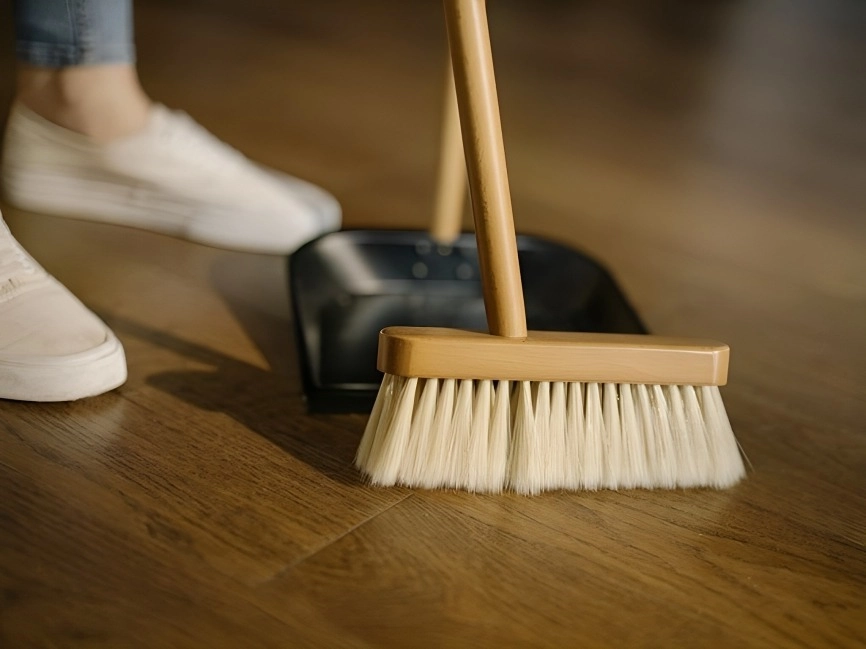
The floor cleaning method that adds the most years to a Colorado home's floors depends on the material: hardwood and laminate need minimal water because of the state's dry climate, while tile needs a vinegar-and-water solution that won't damage grout. Getting this wrong is one of the fastest ways to knock value off a floor before a sale.
Why Colorado's climate changes floor cleaning
Front Range indoor humidity drops below 30% for much of the year, and hardwood and laminate floors react to moisture more than most homeowners expect. Water that would evaporate quickly in a humid climate instead sits and seeps between boards here, especially in a Denver, Aurora or Colorado Springs home during the dry winter months. Add in mag chloride residue and mud tracked in from November through April, and floor care becomes a bigger factor in resale condition than in most states.
Cleaning hardwood floors in a dry climate
Never use standing water on a wax finish or untreated wood; it soaks into the grain and causes swelling or rot. Sweep, dust and vacuum a wax-finish floor regularly instead. For a polyurethane finish, a neutral pH soap or a vinegar-and-water mix applied with a well-wrung microfiber mop works without leaving streaks or residue. Dry the floor immediately after any wet mopping rather than letting it air dry, since Colorado's dry air pulls moisture out of wood unevenly and can cause cupping at the board edges.
Cleaning laminate floors without ruining them
Laminate is made to look like hardwood but reacts even worse to standing water, since moisture that gets under the seams causes the boards to swell and separate permanently. Dry mop and vacuum laminate regularly, and use a damp — not wet — cloth for stains. A steam mop can work on laminate if used carefully and briefly; extended steam exposure drives moisture under the boards the same way standing water does.
Cleaning tile floors and protecting grout
A vinegar-and-water solution sprayed lightly and wiped with a microfiber cloth cleans most tile without damaging the grout lines. Skip bleach, wax-based or oil-based cleaners, which seep into grout and tile pores and discolor them over time. Avoid steel wool or other abrasive tools, which scratch glazed tile permanently.
How does mag chloride affect Colorado floor cleaning?
The de-icer Colorado road crews use from November through March leaves a chalky mineral residue that tracks onto entryway tile and hardwood on shoes and paws. Left untreated, it dulls finishes and can etch grout over a winter. A doormat system at every entrance, paired with a quick vinegar-water wipe-down of entry flooring after each snow event, prevents most of the damage.
How frequently should floors be cleaned to protect resale value?
- Daily: sweep or dry-mop entryways and kitchens during mud season and mag chloride months.
- Weekly: full-home vacuum and dry-mop across all hard flooring.
- Monthly: wet clean with the material-appropriate method above.
- Before listing: a full professional deep clean and, on hardwood, a light buff if the finish looks dull.
Ask for the printable floor care and pre-listing checklist in the form below and we email it the same day.
How do you clean natural stone floors in a Colorado home?
Natural stone such as slate, travertine or granite needs a pH-neutral cleaner made for natural stone; vinegar and other acidic cleaners etch the surface and dull the polish over time. Reseal natural stone entryways every 1 to 2 years in a high-traffic Front Range home, since sealant wears faster where mag chloride and grit track in during winter.
Are eco-friendly cleaning products worth it for well water homes?
Homes on well water in unincorporated parts of Jefferson, Douglas or Arapahoe County have harder water, which leaves more mineral film behind from standard cleaners. A cleaner formulated for hard water, or a white vinegar solution, cuts that film better than a standard all-purpose cleaner on both tile and sealed hardwood.
Does floor care fit into a broader Colorado home maintenance routine?
Floor care is one piece of a seasonal maintenance routine that also covers gutters, furnace filters and exterior caulking. See our guide to marketing a Colorado home to sell for how a well-maintained home shows to buyers touring Denver and Front Range listings.
Does the type of finish on a hardwood floor change how it should be cleaned?
A wax finish and a polyurethane finish need different cleaning products, and mixing them up damages the floor rather than protecting it. Wax finishes need dry care only; polyurethane finishes tolerate a lightly damp mop. If you don't know which finish a floor has, a water-drop test tells you fast: water that beads up sits on a wax or oil finish, while water that soaks in slightly indicates polyurethane.
What cleaning mistakes shorten a Colorado floor's life the fastest?
- Over-wetting hardwood or laminate: the single fastest way to cause warping in a dry climate where boards already expand and contract more than average.
- Skipping entry mats during mag chloride season: lets mineral residue grind into finish before it's ever wiped up.
- Using the wrong pH cleaner on natural stone or tile: etches the surface permanently, unlike a stain that buffs out.
- Steel wool or abrasive pads on any finished floor: scratches through the protective top layer in one pass.
Does floor condition affect what a Colorado home appraises for?
Damaged flooring is one of the fastest things a Front Range appraiser and buyer both notice, and it directly affects what a home can list at. A floor with water damage, deep scratches or worn finish routinely costs a seller more in price reduction than proper cleaning and maintenance would have cost over the years the home was owned. See the Kenna Real Estate Group's guide to pricing a Colorado home to sell for how condition factors into list price.
Where to go next
- Preparing and adding value before selling
- Pricing your Colorado home to sell
- Top flooring choices that boost home value in Denver's market
- Indoor air quality and home comfort for Colorado homeowners
- Search every home for sale in Colorado
Talk to the Kenna Real Estate Group
If you're not sure whether your floors need refinishing or just a deep clean before you list, we can walk your home and give you a straight answer. Call or text 303-955-4220. A live person answers. Not a robot, not a phone tree. Ready to see what's on the market right now? Search every home for sale in Colorado.
Homes for sale that match this post
Guides
Questions about any home in Colorado? Call or text 303-955-4220. A live person answers.