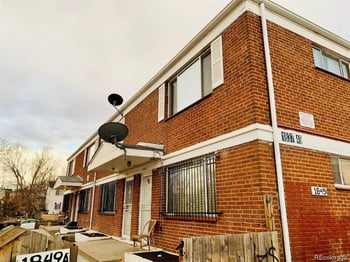
$225,000
Pending
2
Beds
2
Baths
952
Sqft
--
Acres
7375 E Quincy Ave #204, Denver, CO 80237
MLS#: REC4015758
.jpg)



Gross Rent Multiplier (GRM) is a purchase price divided by a property's annual gross rental income. It gives a Front Range investor a quick first screen on a rental property before running the fuller numbers: taxes, insurance, HOA dues, financing and vacancy. In the Denver metro, a GRM in the 12 to 16 range is typical for a single-family rental in 2026; anything meaningfully lower is worth a closer look, and anything meaningfully higher signals the price does not match the rent the market will actually support.
GRM = Purchase Price ÷ Annual Gross Rental Income.
Example: a Denver metro single-family rental priced at $475,000 that rents for $2,900 a month brings in $34,800 a year in gross rental income. $475,000 ÷ $34,800 = 13.65. That GRM of 13.65 means it would take roughly 13.65 years of gross rent, before any expenses, to equal the purchase price.
| Step | Example |
|---|---|
| 1. Annual gross rental income | $2,900 × 12 = $34,800 |
| 2. Purchase price | $475,000 |
| 3. GRM | $475,000 ÷ $34,800 = 13.65 |
A single-family rental in Aurora, Thornton or Colorado Springs running a GRM of 11 to 13 is priced more favorably relative to its rent than one running 15 or higher in a pricier Denver neighborhood like Wash Park or Cherry Creek. GRM does not stand alone, though; a lower number can also signal a property in a rougher condition or a submarket with softer appreciation, so pair it with a look at recent comparable sales and the neighborhood's rent trend over the past two to three years before deciding a low GRM means a genuinely good deal.
GRM uses gross rental income and ignores expenses entirely. The capitalization rate (cap rate) uses net operating income, purchase price and rental income minus operating expenses like property taxes, insurance, HOA dues and maintenance reserves. GRM is faster to calculate and useful for screening a long list of listings fast. Cap rate takes more inputs but gives a more accurate read on what a property will actually put in your pocket, which matters more once you have narrowed a search down to two or three serious candidates. Front Range cap rates on single-family rentals run 4% to 6% in 2026; a property that pencils well on GRM but falls far below that range on cap rate has expenses eating more of the rent than the purchase price alone suggests.
Gross Income Multiplier (GIM) uses total property income, including parking fees, laundry income and storage rental, not just base rent. GRM = Purchase Price ÷ Gross Rental Income. GIM = Purchase Price ÷ Gross Income (rent plus other income). On a multi-unit Denver metro property with paid parking and coin laundry, GIM runs slightly lower than GRM because the denominator is larger, which paints a fuller picture of the property's actual earning potential than rent alone.
Using outdated rental comps is the most common error; Front Range rents have moved enough year over year that a comp from two years ago will skew the calculation. Ignoring condition and location is the second: two properties with an identical GRM are not the same investment if one needs a new roof after last year's hail season and the other does not. Relying on GRM alone, without ever running a cap rate or a full cash-flow projection including financing, is the third and most costly mistake, since GRM was built as a first-pass screening tool, not a final decision-maker.
GRM is most useful on multi-unit residential properties, duplexes, and single-family rentals with stable, market-rate rent history, exactly the property types most Front Range investors start with. It is less reliable on a property with unusual income, a short-term rental with seasonal swings, or a mixed-use building with a commercial ground floor, where the fuller cap rate and cash-flow analysis carries more weight.
GRM earns its keep when you are looking at five or six listings at once and need a fast first cut before spending time on a fuller analysis of each one. Pull the asking price and the current or projected market rent for every property on your list, run the formula on each, and rank them. A property sitting well above the rest on GRM is either overpriced relative to its rent or needs work before it can command market rent; either way, that is worth confirming with a rehab estimate or a closer look at recent comparable sales before you drop it entirely.
| Property | Price | Monthly rent | GRM |
|---|---|---|---|
| A - Aurora single-family | $430,000 | $2,600 | 13.8 |
| B - Thornton townhome | $395,000 | $2,450 | 13.4 |
| C - Denver duplex (per unit) | $460,000 | $2,300 | 16.7 |
In this example, Property C's higher GRM signals it is priced richer relative to its rent than A or B, which does not automatically rule it out but does mean it needs a stronger appreciation or value-add case to justify the price, rather than cash flow alone.
Once GRM and cap rate narrow your list to a serious candidate, the financing terms decide whether the deal actually cash flows. Investment property loans in Colorado require 15% to 25% down and carry a higher rate than an owner-occupied mortgage. Mike Oswald at Rate (NMLS 261003, Equal Housing Lender) works with Front Range investors on these numbers before you make an offer, and you are free to use any lender. Start with the Colorado Home Financing Guide and Kenna Credit Care Mortgage Readiness program to see where your numbers stand before you start making offers.
The Kenna Real Estate Group works with Front Range investors on every step from pulling comps and running GRM and cap rate on a shortlist to closing on a rental property. Call or text 303-955-4220. A live person answers. Not a robot, not a phone tree. Or search every home for sale in Colorado to start building your list.
Questions about any home in Colorado? Call or text 303-955-4220. A live person answers.
GRM equals the purchase price divided by the property's annual gross rental income. A $475,000 property renting for $2,900 a month has a GRM of 13.65.
A single-family rental running 11 to 13 is priced more favorably relative to rent than one running 15 or higher, though condition and location still need a separate look.
GRM uses gross rental income only and ignores expenses. Cap rate uses net operating income after property taxes, insurance, HOA dues and maintenance, giving a more accurate read on real return.
Property taxes, HOA and metro district fees, insurance (which runs higher in Colorado's hail corridors), vacancy, and financing costs. GRM is a first screen, not a full analysis.
GIM uses total property income, including parking and laundry fees, not just base rent. GIM runs slightly lower than GRM on a property with meaningful extra income.
15% to 25% down, higher than an owner-occupied mortgage. Mike Oswald at Rate (NMLS 261003, Equal Housing Lender) can walk through the numbers, and you are free to use any lender.
Yes, the formula is the same statewide. Use local rent comps for that specific submarket rather than Denver metro averages, since rents and typical GRM ranges vary by city.