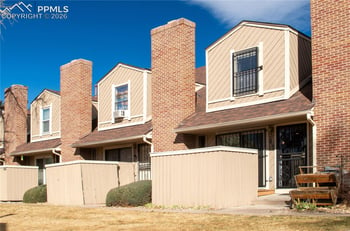
$345,000
Pending
3
Beds
2
Baths
1538
Sqft
0.0202
Acres
3300 W Florida Ave #48, Denver, CO 80219
MLS#: 9397860
.jpg)


Property prospecting for a Colorado investor means running every candidate property through five checks before an offer goes out: location, condition at altitude, legal and zoning status, the financial math, and the competition for that same deal. Skip one and the numbers you show a lender or a partner will not hold up after closing.
Real estate remains one of the most common paths to wealth among high-net-worth households, and reporting has found that 90% of millionaires build wealth through real estate. That track record is exactly why Front Range property prospecting rewards a disciplined process over a hunch.
Property prospecting is the process of finding and evaluating properties that fit an investment goal, whether that goal is a rental, a flip, or a buy-and-hold portfolio piece. The Denver metro market moves fast enough that an investor who evaluates a property slowly loses it to a buyer who moved first, so prospecting works best as a system: a defined buy box, a lead source, and a checklist you run the same way every time.
Location sets rent, resale speed, and future value more than any renovation does. Compare commute times to major employment centers, proximity to parks and trails, and walkability to retail corridors, since these are the factors renters and buyers weigh first. Check the Regional Transportation District's light rail and bus routes near the property, since transit access adds rental demand in Aurora, Lakewood, and along the I-25 corridor. Our hottest and coldest Denver ZIP codes report tracks which submarkets are gaining demand quarter over quarter.
Track absorption, vacancy, and days-on-market for the specific submarket, not the metro average. A Denver metro ZIP code with rising permits for new apartments will see rental rate growth slow even if the city-wide market stays strong. Our Colorado market reports break out these numbers by area so you can compare a target property's submarket against the metro trend before you commit capital.
Never let curb appeal set your offer. Colorado's freeze-thaw cycles crack foundations and driveways over time, hail season runs from late spring through summer and shortens roof life, and expansive bentonite clay soils in parts of Douglas County, Colorado Springs, and the western suburbs move foundations enough to crack drywall and stick doors. An HVAC technician's inspection matters here too: a fin dent or coil damage on an outdoor unit costs far less to fix before closing than after, when it turns into a full system replacement mid-summer.
Add a sewer scope, a radon test, and a roof inspection to every Colorado prospecting checklist. Structural cracks, roof leaks, and outdated electrical panels are common enough in Front Range housing stock from the 1970s and 1980s that finding one early gives you room to negotiate the price down to cover the fix.
Which type of property are you interested in? Are you looking for residential or commercial, a single-family rental, a condo, or a duplex under Colorado's house-hacking rules. A single-family rental in Thornton or Commerce City rents to a broader tenant pool than a downtown Denver condo, while a duplex or fourplex under our Colorado duplex and multifamily buying guide lets an owner-occupant investor buy with a lower down payment through an FHA loan.
Ready to prospect for your next Colorado investment property?
Call or text the Kenna Real Estate Group at 303-955-4220 to get an agent who tracks off-market and pre-market Front Range inventory.
Run the return on investment before you fall in love with a property. Estimate rental income or resale value against the full cost of acquiring, renovating, and holding the property, including Colorado's residential property assessment rate applied to the county's mill levy. A Denver metro cap rate in the mid-single digits is common for stabilized rentals; a lower number can still work if appreciation and loan paydown carry the return. Build a full cash flow projection, including a vacancy buffer and a maintenance reserve, before you commit financing.
| Property type | Typical Denver metro down payment | Primary return driver |
|---|---|---|
| Single-family rental | 20% - 25% (non-owner-occupied) | Appreciation plus steady rent |
| Condo or townhome | 20% - 25%, higher with HOA rental caps | Cash flow, lower maintenance |
| Duplex or fourplex (owner-occupied) | 3.5% FHA if you live in one unit | Reduced housing cost plus equity |
| Small commercial or mixed-use | 25% - 35% | Lease income, longer hold |
Check zoning, building codes, easements, deed restrictions, and any HOA or metro district covenants before you close. Metro districts, common across new Front Range subdivisions, carry their own mill levy on top of the county's, which changes the after-tax return on a rental. Colorado also regulates how you market a contract you have not closed on: talk with a Colorado real estate attorney or a licensed agent before assigning or wholesaling a contract, since the line between an investor and an unlicensed broker is narrower here than in some states.
Track other investors active in your target submarket by watching closed sales, not just active listings. A Denver metro ZIP code where three or four investor-owned LLCs closed in the last quarter tells you the pricing discipline other buyers are using, and lets you set an offer that competes without overpaying.
Social media adds a channel too: a large share of the global population uses social media daily, which makes a local Facebook or Nextdoor presence a legitimate way to reach Front Range sellers and other investors directly.
Conventional loans, portfolio loans, hard money, and cash each fit a different prospecting scenario. A cash or hard money offer wins a competitive Denver metro bidding situation; a conventional or portfolio loan protects your capital on a long-term hold. Review our Colorado mortgage pre-approval guide and Colorado home financing guide before you make an offer that depends on financing you have not lined up.
The Kenna Real Estate Group helps Colorado investors prospect, evaluate, and close on single-family, condo, duplex, and multifamily properties across the Denver metro and the Front Range. Call or text 303-955-4220. A live person answers. Not a robot, not a phone tree. Or search every home for sale in Colorado to start your prospecting list today.
Questions about any home in Colorado? Call or text 303-955-4220. A live person answers.
Location. A property's submarket sets its rent ceiling, resale speed, and appreciation rate more than any renovation the investor makes afterward.
Direct mail to absentee owners, relationships with agents and title officers, referrals from past sellers, and prospecting tools such as DealMachine and PropStream that layer equity and ownership data onto a map.
Stabilized Denver metro rentals frequently trade in the mid-single-digit cap rate range. A lower number can still pencil out when appreciation and loan paydown carry the return.
Yes. A metro district adds its own mill levy on top of the county's, which raises the property tax bill and changes the after-tax cash flow an investor should model.
Foundation movement from expansive bentonite clay soils, roof damage from hail season between late spring and early fall, and freeze-thaw cracking in driveways and slabs.
It depends on how the deal is structured and marketed. Colorado's rules on marketing a property you do not own are stricter than in many states, so confirm the structure with a Colorado real estate attorney or licensed agent first.
Pull the listing history to see the original price, the days on market, and any price reductions, then reach out directly to gauge whether the owner is still motivated to sell.