.jpg)


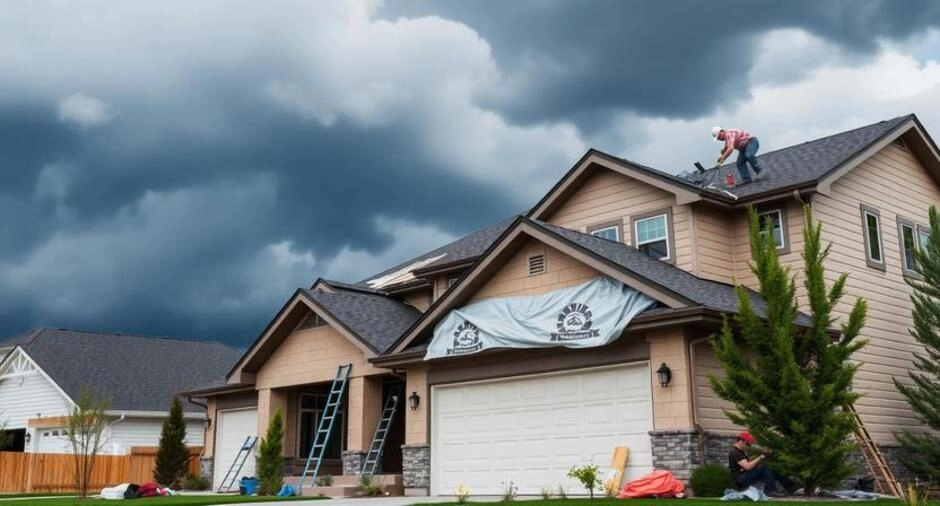
Colorado's hail season, which runs from spring through September along the Front Range, and its daily temperature swings of 30 to 40 degrees make timing the single biggest risk factor on a roof, siding, window or deck project. A contractor with a weather plan for the exposed phase of the job protects the investment. One without a plan can turn a smart upgrade into a costly repair before the project is even finished.
Why the Middle of a Project Is the Riskiest Part
A finished Colorado home is built to handle the state's weather: the roof sheds rain and hail, siding blocks wind-driven moisture, windows seal out drafts, and grading moves water away from the foundation. Mid-project, some of those layers come off before the new ones go on. That gap, sometimes a few hours, sometimes overnight, is when an unfinished roof deck, an open wall cavity, or an uninstalled window opening is exposed to whatever the Front Range sky does next.
Hail Season: Spring Through September on the Front Range
Colorado's hail season concentrates from spring through September, with Denver, Aurora, Colorado Springs and the eastern plains seeing the most frequent activity. A roof tear-off scheduled in June without same-day underlayment and dry-in carries real exposure if a storm builds that afternoon, which happens commonly enough along the Front Range that experienced roofers plan tear-off and dry-in as a single-day sequence whenever possible. Siding and window projects carry similar exposure: an open wall cavity during a hail event can let wind-driven rain into framing and insulation before anyone notices.
Freeze-Thaw and 40-Degree Swings on Caulk and Seals
Outside hail season, the Front Range's other weather risk is temperature swing. A 70-degree afternoon followed by a 30-degree night is common in shoulder-season months, and that swing affects how caulk, sealant and adhesive cure around new windows and siding joints. Most sealants have a minimum application temperature, commonly 40 to 50 degrees, and need stable conditions while curing. A window installed on a warm afternoon that then drops below freezing overnight before the sealant sets can fail at the seam within a season, showing up later as a draft or a water stain around the frame.
Using Weather Timing Tools for Construction Scheduling
Larger renovations increasingly rely on weather timing for construction projects rather than a single day's forecast, since rain, wind, heat, cold and humidity affect each phase of a roof, siding or window job differently. A day that looks fine for tear-off can turn into a poor choice if the following 48 hours bring moisture or high wind before dry-in is complete. Ask your contractor whether they plan phases around a multi-day weather window rather than a single clear morning.
Do I Need a Permit for This Work in Denver or the Front Range?
Roof replacement, siding replacement, and window replacement all require a building permit in Denver, Aurora, Lakewood, Colorado Springs and most Front Range municipalities, since these are exterior envelope changes tied to weatherproofing and structural attachment. Permit timing matters for scheduling: a contractor who pulls the permit and schedules inspection around the same weather window avoids a project sitting exposed while waiting on paperwork. Confirm permit status before materials get delivered, not after.
HOA and Metro District Approval Before Work Starts
Highlands Ranch, Castle Rock, Parker and most planned Front Range communities require HOA architectural review for exterior color and material changes, including roofing, siding and window trim. Submit for approval before scheduling the project, since waiting on HOA sign-off can push a job into a worse weather window than if it had started on the original timeline. A metro district can also carry separate design guidelines from the HOA in some communities, so confirm both if your property falls under both structures.
When a Pause Is the Right Call
High winds, lightning, extreme heat or cold, and heavy precipitation can affect both the quality of the work and conditions for the crew. A contractor who pauses when outdoor conditions turn dangerous for a crew is not falling behind; that choice protects both the workers and the home from problems rushed work creates. Ask up front how exposed areas get covered, where materials are stored, and what conditions trigger a stop. "We'll keep an eye on it" is not a weather plan for a roof, siding, window or deck project.
Questions to Ask Before Work Starts
- How many clear, workable days does this phase need? A roof tear-off and dry-in, for example, ideally happens within one working day.
- Which phase leaves the home most exposed? Know exactly when the house has no roof, no siding, or an open window opening.
- What happens if the forecast changes after materials arrive? Confirm how exposed areas get tarped, wrapped or secured overnight.
- Who monitors the weather during the job? A named person and a clear decision point beats a vague assurance.
Storm Damage, Disclosure, and the Inspection Objection Deadline
If a Colorado storm damages a home during an in-progress renovation, that event and any insurance claim become part of the seller's property disclosure when the home eventually sells. Colorado's standard contract gives a buyer an inspection objection deadline, commonly negotiated in the contract, to raise issues found during inspection, including evidence of prior water intrusion or incomplete repair work. Keep documentation of the repair, including permits, photos and contractor invoices, since a buyer's inspector will commonly flag any sign of past exterior work even after it is fully repaired.
Colorado Springs Versus Denver: Different Hail Patterns, Same Planning
Colorado Springs and the areas south along I-25 see a somewhat different hail track than the Denver metro, with El Paso County recording some of the state's most frequent large-hail events. That does not change the planning principle, only the calendar risk. A Colorado Springs project in July carries higher exposure than the same project in April or October, and a contractor working across both markets should be able to speak specifically to which weeks in a given season carry the most storm activity for your address.
Protecting the Value of the Upgrade
A well-timed roof, siding or window project adds real value at resale on the Front Range and photographs well for a listing. A rushed job that trapped moisture during an exposed phase can cost more to fix than the original project, and that cost commonly surfaces during a buyer's inspection rather than before. Weigh a planned exterior upgrade against your overall pre-listing budget using the Preparing and Adding Value Before Selling guide, and confirm the number with a Smart Pricing Report before committing to a large exterior project.
Where to go next
- Preparing and Adding Value Before Selling
- Get a Smart Pricing Report for your Colorado home
- The Colorado Home Seller's Guide
- Explore homes for sale in Colorado Springs
- Explore homes for sale in Denver
- Search every home for sale in Colorado
Talk to the Kenna Real Estate Group
The Kenna Real Estate Group helps Front Range homeowners weigh exterior project timing against listing timelines and helps buyers read past renovation history correctly during inspection. Call or text 303-955-4220. A live person answers. Not a robot, not a phone tree. Ready to see what's on the market instead? Search every home for sale in Colorado.
Homes for sale that match this post
- Special Districts Property Tax Guide in Colorado Springs
- HOA Rules and Fees Guide in Colorado Springs
- All homes for sale in Colorado Springs
Guides
Questions about any home in Colorado? Call or text 303-955-4220. A live person answers.