.jpg)


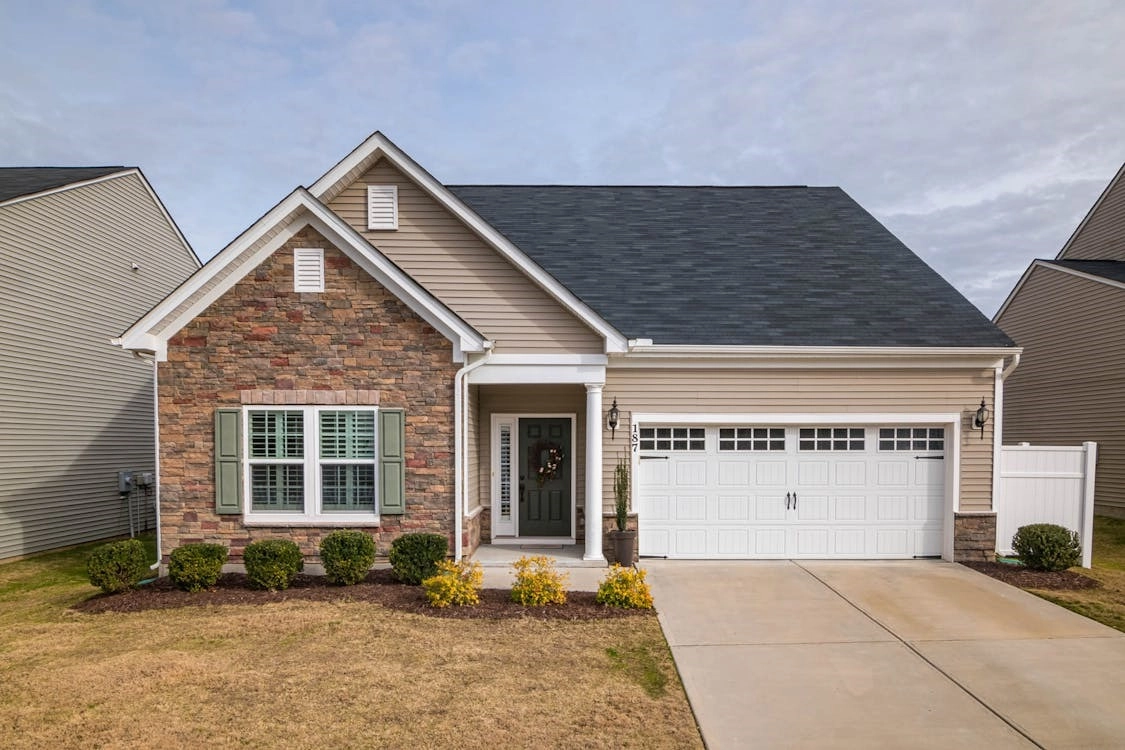
Siding color on the Front Range has to answer to three things a lot of homeowners in other climates don't have to think about: intense high-altitude sun that fades pigment faster, hail that dents and can require full replacement on a shorter cycle, and an HOA architectural review process that governs a large share of Colorado's newer subdivisions. Pick the color after you've checked all three, not before.
What siding color sells best on the Front Range?
Warm and cool neutrals — greige, soft white, warm gray, deep charcoal on trim — consistently perform best in Denver metro listing photos and buyer feedback, because they read as move-in ready without dating the home the way a bold color choice can. Save a bold color for the front door or shutters, where it reads as an accent rather than a commitment for the next owner.
Does Colorado's strong sun fade certain siding colors faster?
Yes. UV intensity at 5,280 feet and above is measurably higher than at sea level, and dark, saturated colors absorb more UV energy and fade faster than lighter tones on the same material. Deep reds, dark blues, and black siding show visible fading in as little as 5 to 8 years on south- and west-facing walls, while lighter neutrals hold their color longer under the same sun exposure.
Do Front Range HOAs restrict exterior paint and siding colors?
Most Front Range HOAs and metro districts maintain an approved color palette and require architectural review before you repaint or reside, even for a color-only change with no material change. Submit your color choice to the HOA before you buy paint or order siding; a rejected submission after the work is done can mean redoing it at your own cost.
What siding material handles Colorado hail best?
| Material | Hail resistance | Typical cost per sq ft installed |
|---|---|---|
| Fiber cement (e.g., impact-rated) | High — dense, resists denting | $8 – $14 |
| Vinyl | Moderate — can crack on direct large-hail hits | $4 – $9 |
| Wood | Moderate — dents but rarely cracks through | $7 – $12 |
| Metal/steel | High, but shows cosmetic denting | $9 – $16 |
| Stucco | Low to moderate — can chip and crack | $7 – $11 |
How much does it cost to repaint or reside a house on the Front Range?
Repainting an average 2,000 to 2,500 square foot Front Range home runs $4,000 to $9,000 depending on prep work and the number of stories. A full reside runs considerably more, $16,000 to $35,000 or higher depending on material choice and how much of the existing exterior needs to come off first. Preparing and Adding Value Before Selling compares that cost against other pre-listing projects.
Does a dark or light siding color affect cooling costs at altitude?
Dark siding absorbs more heat and can raise the exterior wall temperature on a west-facing elevation during Front Range summer afternoons, which puts a small additional load on cooling. The effect is modest compared to window efficiency and insulation, but on a home without central air, lighter siding on the sun-exposed elevations is one more small factor working in your favor.
What colors match Denver's architectural styles?
- Denver bungalow and Craftsman: earthy greens, warm browns, deep reds with white or cream trim.
- Victorian (Baker, Capitol Hill): historically accurate multi-color schemes; check with Denver Landmark Preservation if the home sits in a historic district before choosing a palette.
- Mid-century modern: warm woods paired with a single bold accent color; the Mid-Century Modern buying guide covers the look in more detail.
- Contemporary Front Range new construction: black or charcoal window frames with warm-gray or white siding is the current standard palette across most new-build subdivisions.
Should I match neighboring homes or stand out?
In an HOA-governed subdivision, the approved palette makes this decision for you within a narrow range. In an older Denver neighborhood without HOA rules, a color that reads as intentional and well-maintained — even if it's distinct from neighbors — outperforms a color chosen purely to blend in or purely to stand out. Buyers respond to "clearly cared for," not to matching the house next door.
How do I test a siding color before committing?
Paint 2-foot-square swatches directly on the actual siding or substrate, in at least two spots — one in full sun, one in shade — and look at them at different times of day for at least three days before ordering full quantities. Colorado's light changes dramatically between morning, midday, and the golden-hour light common at altitude, and a color that looks right at noon can look very different at 6 p.m.
Does siding color affect a home's appraisal or resale value?
Color itself is not a line item on an appraisal, but curb appeal factors into the overall condition rating an appraiser assigns, and a faded, dated, or poorly maintained exterior can pull that rating down. Buyer perception matters even more than appraisal — a well-chosen, well-maintained color scheme is one of the fastest ways to improve first impressions in listing photos and drive-by showings.
What's the difference between vinyl, fiber cement, and wood siding costs?
Vinyl is the least expensive to install and lowest maintenance, but has the most limited color range on the darker end since dark vinyl can warp in intense sun. Fiber cement costs more upfront but holds paint longer and handles hail better, making it a common choice for Front Range replacement projects. Wood offers the widest custom color range but needs repainting or restaining on the shortest cycle of the three.
How does hail season affect siding maintenance timing?
Colorado's hail season runs spring through September, and a major hailstorm can dent vinyl, crack stucco, or damage wood siding enough to require an insurance claim and full section replacement. Time discretionary exterior painting or siding projects for after hail season where possible, and always photograph the exterior condition before and after any storm for insurance documentation.
What permits do I need to reside a house in Denver or a Front Range suburb?
A full reside requires a building permit from the city or county, since it can involve changes to sheathing, house wrap, or window flashing details. A repaint of existing siding does not need a permit unless it's in a historic district with color-approval requirements. Confirm with your specific jurisdiction before scheduling the work.
How frequently does exterior paint need to be redone in Colorado's climate?
Expect a repaint cycle of 7 to 10 years on most Front Range homes, shorter on south- and west-facing walls that take the most direct UV exposure, and potentially shorter still after a significant hailstorm. Higher-quality paint formulated for UV resistance extends that cycle closer to the 10-year mark.
What accent colors work with neutral Front Range siding?
A neutral field color (warm white, greige, soft gray) paired with a black or deep charcoal front door and window trim is the most consistent high-performing combination in current Denver metro listings. Warm wood tones on a front door or porch ceiling add contrast without requiring a full-color commitment on the siding itself.
Where to go next
- Preparing and Adding Value Before Selling
- Denver HOA Rules and Fees Guide
- Pricing Your Colorado Home to Sell
- Denver Curb Appeal Tips from a Local
- 8 Curb Appeal Fixes for Front Range Sellers
- Search every home for sale in Colorado
Talk to the Kenna Real Estate Group
The Kenna Real Estate Group can tell you which exterior updates a Front Range buyer actually responds to before you commit to a color and a contractor, and we know which HOAs on our patch require review before you start. Call or text 303-955-4220. A live person answers. Not a robot, not a phone tree. Curious what's on the market nearby? Search every home for sale in Colorado.
Homes for sale that match this post
- HOA Rules and Fees Guide in Denver
- Move in Ready Homes in Denver
- Mid-Century Modern Style Homes in Denver
- New construction: guide
- Curb appeal: guide
- All homes for sale in Denver
Guides
Questions about any home in Colorado? Call or text 303-955-4220. A live person answers.