.jpg)


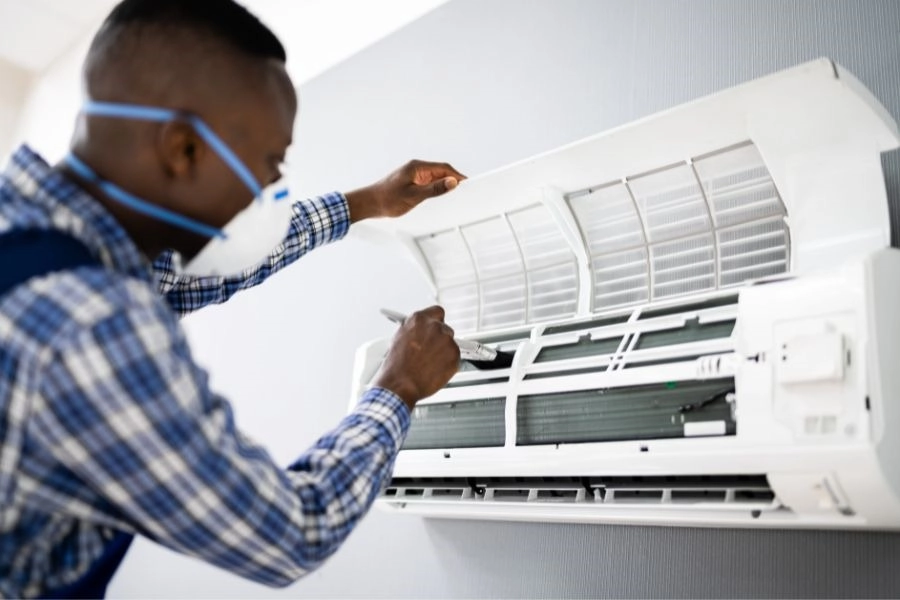
A gas furnace or central AC on the Front Range reaches 15 to 20 years with consistent maintenance, compared with 10 to 12 years for a system that only gets attention when it breaks. The gap comes down to a handful of habits: filter changes, an annual tune-up, and equipment sized correctly for Colorado's altitude from the start.
How Long a Front Range Furnace Should Last
A gas furnace serviced annually by a licensed contractor commonly reaches 15 to 20 years. Colorado's heating season runs roughly October through April, and a furnace on the Front Range logs more running hours per year than the same unit in a milder climate, which makes the annual tune-up matter more here than in a lot of the country.
How Long a Central AC or Evaporative Cooler Should Last in Colorado
A central AC unit reaches 12 to 15 years with regular maintenance. An evaporative cooler, common on the drier parts of the Front Range, has a shorter typical life of 8 to 12 years because its pads and water system need more frequent attention, but it costs less to replace when the time comes.
How Frequently to Change HVAC Filters in Colorado
A standard filter should change every 60 to 90 days during heavy-use months and can stretch to 90 days during shoulder seasons. A dirty filter forces the blower motor to work harder, which shortens its life and raises energy use for as long as it goes unchanged.
Wildfire Smoke and Colorado Filter Schedules
Front Range wildfire season, commonly June through September, pushes particulate levels high enough that a standard 60-to-90-day filter schedule needs to shorten to 30 to 45 days during a heavy smoke stretch. A higher-MERV filter rated for smoke and fine particulate protects both indoor air quality and the equipment itself from the added load.
Does Altitude Affect How Long Colorado HVAC Equipment Lasts
Equipment sized without the standard Colorado altitude derate, roughly 4% of rated capacity per 1,000 feet of elevation, runs harder than it should to hit the same temperature, and that extra strain shortens component life over years. A system installed correctly for the home's actual elevation from day one avoids the slow wear an undersized or misapplied unit accumulates.
What an Annual HVAC Tune-Up Costs on the Front Range
A standard annual tune-up runs $89 to $175 per visit and covers a combustion check, filter inspection, electrical connection check, and refrigerant level check on the cooling side. That cost is small compared with the $150 to $450 emergency repairs a skipped tune-up commonly leads to, and it is also the maintenance record a manufacturer expects to keep a warranty active.
Does a Smart Thermostat Extend HVAC Equipment Life
A smart thermostat reduces the number of on/off cycles a system runs through by holding a steadier setpoint and adjusting gradually, and fewer cycles means less wear on the blower motor and compressor over the equipment's life. Pairing a smart thermostat with Xcel Energy's time-of-use schedule, shifting cooling load to off-peak hours, adds an operating-cost benefit on top of the equipment-life benefit.
Maintenance That Keeps an Evaporative Cooler Running Longer
- Clean and replace pads at the start of each cooling season, commonly $30 to $80 per set.
- Flush mineral buildup from the water reservoir given the Front Range's hard water, which scales evaporative cooler components the same way it scales a water heater.
- Winterize before the first freeze by shutting off the water supply and draining the unit to avoid frozen-line damage.
Dust, Pollen, and Altitude Effects on Colorado Filters
Front Range spring winds carry heavy pollen and dust loads, and a system running at altitude already moves a slightly higher air volume to deliver the same heating or cooling output, which pulls more particulate through the filter over the same 60-to-90-day cycle. Checking the filter monthly during peak pollen season, commonly April through June, catches a filter that needs an early change before it restricts airflow enough to strain the blower motor.
Does Duct Sealing Extend HVAC System Life in Colorado
Leaky ducts force a furnace or AC to run longer to deliver the same comfort, adding hours of operation and wear the system does not need to log. Duct sealing runs $300 to $1,000 depending on home size and duct accessibility, and it is one of the more overlooked items on a Front Range HVAC maintenance list.
The Biggest Mistake That Shortens HVAC Life in Colorado
Skipping the annual tune-up is the single most common reason a Front Range system fails early. A furnace or AC that runs without a combustion check, filter change, or electrical inspection for several years accumulates small problems that compound into a major failure, commonly during the exact cold snap or heat spell when the system is needed most.
Does an Xcel Energy Rebate Apply to Maintenance or Only New Equipment
Xcel Energy's rebates target new equipment purchases, not routine maintenance visits, but a documented annual tune-up history commonly stays part of what keeps a system's existing rebate-qualified status intact if a component needs warranty replacement under a prior install. Keep tune-up receipts in the same file as any rebate paperwork from the original installation.
Colorado's Carbon Monoxide Alarm Law and Furnace Maintenance
Colorado law (C.R.S. 38-45-101) requires a working carbon monoxide alarm within 15 feet of every sleeping room in a home with a fuel-fired furnace, water heater, fireplace, or attached garage before that home changes ownership. Pairing the annual furnace tune-up with a CO alarm battery check keeps both items current on the same schedule.
Maintenance Schedule for a Longer HVAC Life on the Front Range
| Task | Frequency | Typical Cost |
|---|---|---|
| Filter change (standard) | Every 60 to 90 days; 30 to 45 during wildfire smoke | $15 to $30 per filter |
| Annual tune-up (furnace and AC) | Once per system, per year | $89 to $175 per visit |
| Duct sealing inspection | Every 3 to 5 years | $300 to $1,000 if sealing is needed |
| Evaporative cooler pad replacement | Annually, start of cooling season | $30 to $80 |
Does Regular HVAC Maintenance Affect a Colorado Home's Resale Value
A documented maintenance history, with tune-up records and a permitted, correctly sized system, reads to a buyer as one less unknown to price into an offer. The Kenna Real Estate Group's Smart Pricing Report factors HVAC maintenance records into a home's list price alongside the system's age and condition, and the home-value prep guide covers where HVAC service fits on a pre-listing punch list.
Ask for the printable Colorado HVAC maintenance schedule in the form below and we email it the same day.
Where to go next
- Why a High-Efficiency HVAC System Is the Secret Weapon for Colorado Home Sellers
- How Platinum HVAC Is Raising the Standard for Heating and Cooling in Colorado
- Your Complete Homeowner's Guide to AC Repair in Denver
- Preparing and adding value before you sell
- The Colorado Home Buyer's Guide
- Search every home for sale in Colorado
Talk to the Kenna Real Estate Group
The Kenna Real Estate Group checks HVAC maintenance and permit records as part of every Front Range listing and every buyer's offer, so a system's real remaining life gets priced correctly instead of guessed at. Call or text 303-955-4220. A live person answers. Not a robot, not a phone tree. Ready to see what a well-maintained home is worth on today's market? Search every home for sale in Colorado.
Homes for sale that match this post
Guides
Questions about any home in Colorado? Call or text 303-955-4220. A live person answers.