
.jpg)


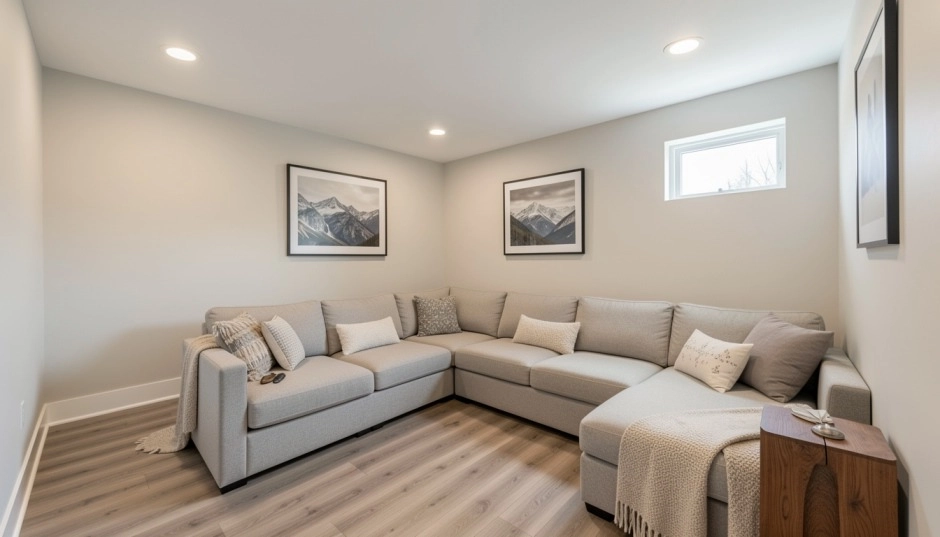
A finished basement is one of the highest-value projects a Colorado homeowner can do, and one of the most permit-heavy. Denver, Aurora, Lakewood and most Front Range cities require a permit for a basement finish that adds a bedroom, a bathroom, or new electrical circuits, and state building code requires an egress window in any basement bedroom. Here are ten remodel ideas that add real value, plus what Colorado code, radon and soil conditions mean for each one.
A dedicated office with a closet counts toward finished square footage on an appraisal without a full egress upgrade, since it does not need to qualify as a bedroom. Run a dedicated circuit for equipment and add a mini-split or ducted vent if the space runs warm; basements in Front Range homes stay 10 to 15 degrees cooler than the main floor in summer and need supplemental heat in winter.
Basements insulate sound naturally, which makes them the best room in a Colorado house for a theater setup. Budget for extra electrical circuits and check ceiling height first: most Front Range building codes set a 7-foot minimum ceiling height for a habitable basement room, and older homes built before that standard need floor lowering to qualify.
A basement bedroom is not legal without an egress window, an opening large enough and low enough for someone to exit in an emergency and for a firefighter to enter. Cutting a new egress well runs $3,000 to $8,000 in the Denver metro depending on excavation depth and window well drainage. Pair the bedroom with a three-quarter bath and this becomes the highest-return basement project for resale.
Adding a sink, dishwasher or cooktop means new plumbing and possibly a gas line, both of which need a permit and, for the gas line, a state-licensed plumber. This upgrade matters most if you are finishing the basement as a rental unit or an accessory dwelling unit rather than added living space for your own household.
Rubber flooring over a moisture barrier protects against the humidity Front Range basements pick up after spring snowmelt and summer storms. Skip carpet in a gym space; it traps moisture against a foundation wall that already deals with clay soil pressure from outside.
Basements hold a naturally stable temperature that a wine cellar needs, and Colorado's dry outdoor climate works against a wine room indoors, so budget for a small humidity system alongside cooling. Insulate and vapor-seal the room separately from the rest of the basement to control humidity in one space instead of the whole floor.
Converting a basement into a self-contained rental with its own entrance, kitchen and bathroom makes it an accessory dwelling unit under Denver's zoning code, and Denver allows ADUs on most residential lots citywide. This is the project with the clearest return: a legal basement ADU adds both rental income and appraised value, but it needs its own egress, a separate entrance, and full permit review, not a quiet build-out.
Moving laundry to the basement frees main-floor square footage but means running new supply, drain and vent lines; get a licensed plumber to confirm the existing drain handles the added fixture load before you commit to the layout.
An open flex room with durable flooring and good lighting returns strong buyer interest without the same permit load as a bedroom or kitchenette, since no new plumbing or egress is involved. This is the lowest-cost, lowest-permit-complexity basement project on this list.
A basement half or three-quarter bath needs a permit and, if the drain runs uphill to the main sewer line, a sewage ejector pump. Budget $8,000 to $18,000 in the Denver metro for a new basement bathroom depending on plumbing distance from existing lines.
Denver, Aurora, Lakewood, Littleton and most Front Range cities require a building permit for a basement finish that adds a bedroom, bathroom, or new circuits, with separate inspections at framing, electrical rough-in, plumbing rough-in, insulation and final. Skipping this process is the most common reason a Front Range basement remodel turns into a disclosure problem at resale. Ask for the printable basement remodel checklist in the form below and we email it the same day.
Colorado sits in an EPA Zone 1 radon area, the highest risk category, and roughly half of Front Range homes test above the action level before mitigation. Test for radon before you finish a basement and again after, since sealing a basement floor and walls changes airflow and can raise indoor radon concentration when a mitigation system is not already in place.
Expansive bentonite clay under most of the Front Range swells with moisture and pushes against foundation walls; grade the exterior away from the house and confirm gutters discharge at least 5 feet from the foundation before drywall goes up over any wall with a history of moisture. Framing directly against an unwaterproofed foundation wall traps that moisture and invites mold behind the new finish.
Cost-vs-value studies for the Mountain region put a full basement finish, drywall, flooring, electrical and one bathroom, in the $30,000 to $70,000 range for 800 to 1,200 square feet, with resale recoup commonly landing in the 65% to 75% range. An egress bedroom and full bath push the project cost higher but also raise the home's bedroom count, which moves the listing into a different buyer search bracket entirely.
Work with a design and build team like Maclani or another licensed remodeler; you are free to use any contractor licensed in your city for the work.
Denver's 2022 energy code sets minimum insulation values for below-grade walls in a basement finish, higher than what many older Front Range homes have against an unfinished foundation wall today. Add rigid foam insulation against the foundation before framing interior walls; this step meets code and also creates a thermal break that keeps the room warmer through a Colorado winter.
An egress window well needs its own drain tied into the home's foundation drain system or a dry well, since a well without drainage fills with rain and snowmelt and can push water back through the window. Confirm this detail with your contractor before the well is poured; it is a common callback item on Front Range basement finishes.
Recreation rooms and home offices need the least permit review since neither adds plumbing or a bedroom; guest suites, wet bars and rental units need the most, since each adds plumbing, electrical, or an egress requirement that triggers full inspection sign-off. Match your budget and timeline tolerance to that permit complexity before committing to a design.
Whether you are finishing a basement before you list or sizing up a Colorado home's basement potential before you buy, the Kenna Real Estate Group can show you what similar finished basements added to the sale price in your neighborhood. Call or text 303-955-4220. A live person answers. Not a robot, not a phone tree. Or search every home for sale in Colorado right now.
Questions about any home in Colorado? Call or text 303-955-4220. A live person answers.
Yes in Denver, Aurora, Lakewood and most Front Range cities, any basement finish that adds a bedroom, bathroom or new electrical circuits needs a permit with separate framing, electrical, plumbing and final inspections.
Yes. State building code requires an egress window large enough for emergency exit and firefighter entry before a basement room counts as a legal bedroom.
A full finish with one bathroom runs $30,000 to $70,000 for 800 to 1,200 square feet; an egress bedroom adds $3,000 to $8,000 for the window well alone.
Both. Colorado sits in the EPA's highest radon risk zone, and sealing a basement during a remodel changes indoor airflow, so test before and again after.
Yes, as an accessory dwelling unit under Denver's zoning code on most residential lots, but it needs its own entrance, egress and full permit review as a separate dwelling.
Cost-vs-value data for the Mountain region shows a basement finish recouping roughly 65% to 75% of its cost at resale, more when it adds a legal bedroom.
Expansive bentonite clay pushes against foundation walls when it absorbs water, so grade and gutter drainage need to be confirmed before drywall goes up over any wall with moisture history.
Yes, any new plumbing or gas line needs a Colorado state-licensed plumber and a permit, especially if the drain requires a sewage ejector pump.