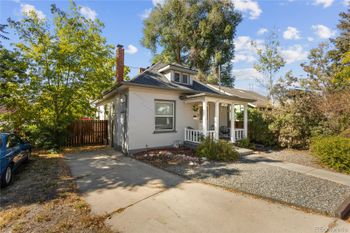
A house in Castle Pines might be minutes from American Academy's Castle Pines campus. That sounds convenient until you discover that admission depends on a lottery, and families already living within Douglas County School District receive priority.
Drive south to Castle Rock, and Aspen View Academy offers another tuition-free K–8 charter option. But it uses the district's enrollment system instead of American Academy's separate lottery. A nearby private school, meanwhile, may accept applications throughout the year but require an interview, tuition payments and agreement with its educational mission.
For families moving to Denver's southern suburbs, especially Lone Tree, Castle Pines and Castle Rock, these differences can change the school plan before a home purchase is complete.
The questions aren't just which schools sound appealing. Can your child enroll in the grade you need? What happens if there's no opening? How much will you actually pay? And will the school still work when you're managing work schedules, pickup and another child's activities?
Start With the School Assigned to Your Address
Before comparing private schools or submitting charter applications, find out which public schools serve the home you're considering.
In Douglas County School District (DCSD), the School Locator Map identifies neighborhood school assignments by property address. Check the exact address, then confirm the school and enrollment year with the district. A Lone Tree mailing address, for example, doesn't tell you everything about the schools serving a particular property.
This gives you an essential starting point. A neighborhood school assigned to your residence is different from a charter or other choice school where admission depends on an application and available space.
Even the name of a school can be misleading.
Lone Tree Elementary, located in Heritage Hills, is a public K–5 magnet school. Every new student must apply through open enrollment. Its published priorities include children of district staff, siblings of enrolled students, Heritage Hills residents and other DCSD residents, in that order. Available space still determines whether an offer can be made.
So a family purchasing in Heritage Hills should not assume Lone Tree Elementary is a guaranteed assignment. Families considering RidgeGate or another part of Lone Tree need to check their actual assignments as well.
That distinction is easy to miss when you're moving from another state and relying on school names, listing descriptions or a map of nearby campuses.
The Colorado Department of Education also makes an important distinction about charter schools: they're tuition-free public schools, not private schools. They operate with public oversight but have their own educational programs and defined enrollment procedures. A district doesn't automatically assign children to a charter simply because they live nearby.
Understanding that difference makes the next comparison much easier.
American Academy or Aspen View Academy? The Application Matters
American Academy and Aspen View Academy are two examples families often encounter when exploring charter schools in the South Denver suburbs.
Both serve kindergarten through eighth grade, and neither charges K–8 tuition. But the enrollment rules aren't interchangeable.
American Academy operates three Douglas County campuses, including Castle Pines and two in Parker. It emphasizes STEAM education: science, technology, engineering, arts and mathematics. Its K–8 charter program is tuition-free, while its separate KindiePrep preschool program charges tuition.
Families apply through American Academy's own SchoolMint lottery system. According to its enrollment FAQ, applicants don't have to live inside Douglas County School District to join the waitlist, but current in-district residents receive priority.
That matters if you're relocating from another state.
Suppose you've found a home in Castle Pines but haven't moved yet. You can apply, but American Academy requires truthful residency information. Claiming in-district status while still living elsewhere can result in an enrollment offer being rescinded. A pending move or future purchase doesn't establish current residency.
The campus decision has consequences, too. Accepting an American Academy offer at one campus automatically removes the child's applications from its other campus waitlists. A family that accepts a Parker location can't remain on the Castle Pines waitlist hoping to transfer later. The school also warns that future campus transfers aren't guaranteed.
Now compare that with Aspen View Academy on Low Meadow Boulevard in Castle Rock.
Aspen View participates in DCSD open enrollment. Families use the district's EngagED application system, which covers participating district schools and certain charter schools.
The district's first application round isn't first-come, first-served. Applications are evaluated using established priorities and space available in each grade. The later round processes additional applications as openings permit.
Aspen View uses the district-managed waiting list rather than maintaining its own separate charter lottery list. Applicants not offered a place during the first round remain on the district list for the second round. That list doesn't carry into the following school year; families must reapply if they're still interested.
DCSD also allows a family to accept an offer from one participating school while remaining on waiting lists for other district choices. That's different from American Academy's rule about accepting an offer at one of its campuses.
Neither process tells you how many seats will be available in your child's grade. Kindergarten openings, for example, don't establish whether a seventh grader can enroll.
The practical move is to confirm each child's grade-level availability, application system, enrollment priorities and offer-response rules before treating either school as part of a firm relocation plan.
Private Schools Have Their Own Admissions Rules
A private-school application is a different experience from a public charter lottery.
Consider Kent Denver School, an independent coeducational school serving grades 6–12 on East Quincy Avenue in Englewood. Families submit an application, schedule a family interview and complete the school's admission checklist. Student visits and supporting application materials are part of the process.
Graland Country Day School, farther north in Denver, serves preschool through eighth grade. Its application requirements change with the child's age. Applicants to grades 3 and 4 complete cognitive assessments, while applicants to grades 5–8 take the ISEE or SSAT admissions test. Middle-school applicants also submit recommendations, an essay and school records, and attend a student visit and interview.
For an out-of-state family, that can require more advance coordination than simply completing an online form. Graland does consider late applications for grades with available places, but families need to ask about those openings directly.
St. Mary's Academy in Englewood is an independent Catholic school with coeducational preschool through eighth grade and an all-girls high school. Its principal admission entry points include preschool, kindergarten, sixth grade and ninth grade. The school explains that openings in grades 7 and 8 typically depend on students leaving, while sixth grade normally includes a larger group of newly admitted students.
That's useful information for a family arriving with an older middle-school student. A school may welcome applications without having comparable space in every grade.
There are private options closer to Castle Rock, too. Castle Rock Christian Academy describes a faith-based K–8 program for 2026–27. Its application process includes a school visit, a pastor's recommendation and a family interview. The school also requires parents to affirm its stated faith commitments. Applications are accepted on a rolling basis, subject to available space.
This is a very different admissions model from a public charter lottery. The school's religious mission and family requirements are part of deciding whether the program is appropriate, just as curriculum and learning environment are at other private institutions.
Before investing time in applications, ask each private school what documentation, testing, interviews and visits are required for the specific grade. An application being open doesn't necessarily mean the school has an available seat.
Tuition Is Only the Beginning of the Cost Comparison
Charter schools and private schools also require very different financial planning.
Public charter schools don't charge K–12 tuition. Families may still encounter expenses for supplies, meals, uniforms, extracurricular activities or transportation, depending on the school's policies. Tuition-based preschool programs require a separate look.
Private tuition varies considerably, even among schools serving similar ages.
For the 2026–27 academic year, Kent Denver publishes tuition of $43,250. That covers daily lunch, most local academic travel and many athletic and extracurricular expenses. However, the school separately lists textbook costs, laptop expenses, some trips and activities, and optional transportation. Its published round-trip bus price is $3,350 for that school year.
A family using the bus should therefore compare the total obligation, not just the advertised tuition.
Graland lists $35,675 for kindergarten through fourth grade and $38,945 for grades 5–8 in 2026–27. Lunch, supplies, books, technology devices and school trips are generally included. New families also face one-time fees totaling $1,000, although those are waived for families receiving financial aid. Bus routes, extended-day services and some enrichment activities cost extra.
At St. Mary's Academy, 2026–27 middle-school tuition is $30,450, and high-school tuition is $31,800. Additional charges include a $350 annual security fee per family, a one-time $600 facilities fee for new families and approximately $200–$500 in annual book expenses. Its enrollment deposit is credited toward tuition rather than added to it.
Those figures illustrate how much the grade and what's included can change a comparison. They aren't fixed prices for future enrollment years.
There are different price points closer to the South Metro suburbs. Cherry Hills Christian School in Highlands Ranch serves preschool through eighth grade. Its published 2026–27 tuition is $16,932 for grades 6–8, but a newly enrolling eighth grader is charged $19,932 unless the qualifying younger-sibling exception applies. The school also publishes separate enrollment and activity fees.
Castle Rock Christian Academy takes another approach: families request its current tuition guide from the school rather than relying on a publicly displayed tuition schedule.
Financial aid can change these comparisons significantly, but availability and eligibility aren't uniform. Kent Denver offers need-based grants, with families required to renew aid applications annually. Graland offers need-based aid for K–8 but not preschool or prekindergarten. St. Mary's Academy offers financial assistance for eligible students from kindergarten through high school. Cherry Hills Christian also offers K–8 tuition assistance, with funds and award amounts subject to its policies.
A family's actual cost depends on its award, not the school's published average award or another family's experience.
And the timing matters. Some private schools issue admission and financial aid decisions together, while enrollment contracts may create a substantial financial obligation once signed. Graland, for example, states that families assume responsibility for the full school year's tuition and fees upon signing its contract, subject to its terms.
Before accepting an offer, compare the full tuition and fee schedule, financial aid decision, payment terms and withdrawal provisions. That gives you a more meaningful figure to put alongside housing costs.
Will the School Still Work in Three or Four Years?
An elementary or middle-school choice can be successful and still leave a major transition ahead.
American Academy and Aspen View Academy both end after eighth grade. Graland and Cherry Hills Christian do, too. Families will need to plan separately for high school, whether that means an address-assigned public school, another public choice program or a private institution.
Kent Denver begins at sixth grade and continues through high school. St. Mary's Academy offers a longer progression, but its high school serves girls only.
The distinction is especially noticeable when children are different ages.
Imagine a family relocating to Castle Rock with a fourth grader and an eighth grader. The younger child might seek a K–8 charter opening, while the older child needs a high-school plan for the coming year. Even if the younger child receives an offer, the family may still face two campuses and two separate transportation schedules.
Curriculum matters alongside grade availability. American Academy's STEAM emphasis is one example of a particular educational approach. Denver School of the Arts, discussed below, has a very different arts-intensive program. A family comparing those options should explore what students actually study, how much time is devoted to specialized instruction and how the program fits the child's interests and needs.
If a child has an IEP, a Section 504 plan or other learning supports, discuss their services with the school before accepting enrollment. Public charter schools operate under applicable public-school disability protections. Parentally selected private-school placements have different legal arrangements, and individual students don't necessarily have the same entitlement to services they would receive through public-school enrollment.
Ask about the actual program and support arrangements rather than assuming a school's public or private designation answers every question.
Denver Charter and Magnet Schools Are Different From Douglas County Choices
Searching for Denver-area schools often turns up institutions much farther north than Lone Tree or Castle Rock. Some are worth exploring for their specialized programs, but they also introduce different enrollment systems and commutes.
DSST Public Schools operates tuition-free public charter middle and high schools in Denver and Aurora. Its schools serve grades 6–12, with an emphasis on STEM education and college preparation. Families living outside those districts may be able to apply through the relevant school-choice process, subject to available space and applicable priorities.
Denver School of the Arts is not a charter school. It's a Denver Public Schools public arts magnet serving grades 6–12 on Montview Boulevard in northeast Denver. Students apply to an arts major through an audition process and must also complete DPS SchoolChoice. Listing the school in a SchoolChoice application alone doesn't secure admission without an audition-based offer.
That distinction matters if your child wants intensive study in music, visual arts, theater, dance or another art form. The specialized program may warrant consideration, but the audition and daily travel from the southern suburbs are both substantial parts of the decision.
You may also see STRIVE Prep in older school articles. STRIVE Prep united with Rocky Mountain Prep in 2023, and the combined charter network now operates under the Rocky Mountain Prep name. Its current elementary, middle and high-school campuses are in Denver and Aurora, not Castle Pines or Castle Rock.
These schools aren't interchangeable with DCSD charters. Denver Public Schools uses its own SchoolChoice system, and admission rules can differ by campus and program. Families from neighboring districts may apply to DPS schools, but an out-of-district application doesn't guarantee placement.
The important comparison is the actual campus and program, not the school network name or a citywide ranking.
The Daily Commute Can Change the Home Search
Once you've identified realistic school options, look at how the routes work from the homes you're considering.
Lone Tree's location near I-25 and C-470 gives it access to several parts of the metro area, while Lincoln Avenue, County Line Road and Yosemite Street connect different neighborhoods. Castle Pines and Castle Rock sit farther south along the I-25 corridor.
A school near your house isn't always on the way to work. And a school that appears close on a map may require a longer drive than expected during morning arrival and afternoon pickup.
For a family in Castle Rock considering Kent Denver, the northbound trip toward East Quincy Avenue is worth testing at school drop-off time. St. Mary's Academy is along South University Boulevard in Englewood, and Graland sits farther north at Clermont Street in Denver. Denver School of the Arts, on Montview Boulevard, requires another route into the city.
The travel burden can look different if one parent works in the Denver Tech Center or if the family has a flexible work schedule.
Transportation services aren't the same across school types. Douglas County generally doesn't provide its regular bus service to students who open-enroll outside their neighborhood attendance area, although applicable special-education transportation requirements remain. Some charter schools or independent providers may have different arrangements.
Private schools can also offer fee-based bus service. Kent Denver and Graland publish transportation options, but families need to confirm actual routes, stops, costs and availability for their neighborhood.
Then think about pickup after sports, rehearsals or after-school care. A bus that solves the morning trip might not cover a late activity. Two children attending different campuses may make an otherwise reasonable schedule difficult.
This is where a property comparison becomes more specific.
One Castle Rock home may offer more interior space but require extra time getting onto I-25. Another may be more convenient to the family's usual route. In Lone Tree, a home near RidgeGate might work differently from one in an established neighborhood west of I-25.
Those aren't reasons to choose one neighborhood over another based on the schools. They're practical differences to evaluate once you know which school locations and commute schedules are relevant.
For more on the city's neighborhoods, road connections and housing patterns, see Kenna's Lone Tree area guide.
Have a Backup Before the Enrollment Decision Arrives
A school application isn't the same as a seat, which makes a backup plan especially important for out-of-state movers.
Begin with the public school assigned to your prospective address. Confirm the relevant grade, enrollment process and school year. If you're arriving after the normal choice-school application period, ask the district what options are available for newly arriving students.
Douglas County has procedures for families moving into the district outside the standard open-enrollment windows. Families seeking a school other than their neighborhood assignment may use the district's new-student school-choice process, subject to space. That is different from assuming they can enter an annual charter lottery at any time.
Keep applications separate. American Academy's SchoolMint waitlist, DCSD open enrollment and private-school admissions portals require their own responses and deadlines. If you're also considering a Denver Public Schools program, SchoolChoice adds another process.
An offer can require a prompt decision. American Academy currently gives families 24 hours to accept or decline a seat offer and five calendar days to submit completed enrollment paperwork after acceptance. District open-enrollment offers also have acceptance deadlines, but they operate under the district's published procedures.
If an offer doesn't arrive, continue checking the alternatives that are genuinely available for your child's grade. Don't assume a waitlist position will convert into a seat or that a private school will have space simply because it accepts inquiries.
There's also a longer-term consideration. Families who leave an address-assigned Douglas County neighborhood school for an open-enrolled or district-authorized charter option may need to submit an Intent to Return form by the district's deadline if they later wish to return. Missing that deadline can require a new open-enrollment application, with admission then dependent on available space.
The district explains these rules on its open-enrollment page.
A practical backup plan accounts for the current school year, the next grade transition and the possibility that the preferred school has no opening.
Compare the School Plan Before Narrowing the Home Search
For a family moving to the South Denver suburbs, the useful question isn't necessarily which charter or private school is considered the best.
It's which schools offer programs that meet your child's needs, have realistic admission pathways, fit your household budget and can work with your daily routine.
Start with a confirmed address-assigned school. Explore the charter, magnet and private choices that interest your family. Ask about grade-specific openings, applications, transportation, costs and support services before treating an option as settled.
Once those questions are answered, comparing homes in Lone Tree, Castle Pines, Castle Rock and nearby communities becomes more concrete. You can weigh the property's layout, location, road access and everyday convenience against a routine that your family has actually considered.
The Kenna Group at Keller Williams DTC can help buyers compare homes across these communities. School officials and districts remain the sources for admission and placement decisions, but understanding the practical differences can make the home search considerably more useful.