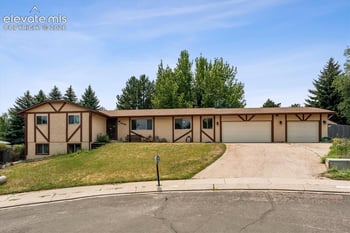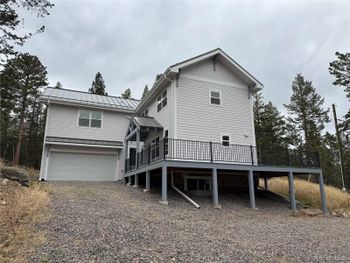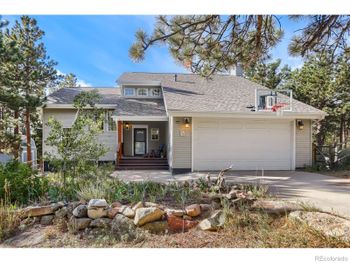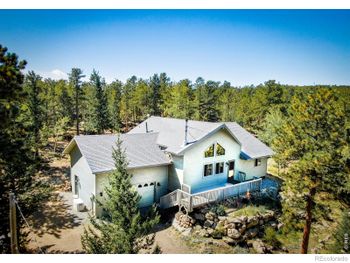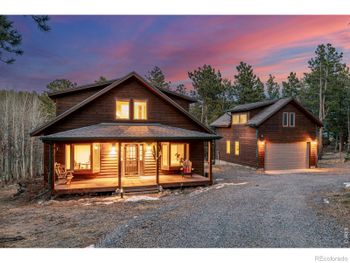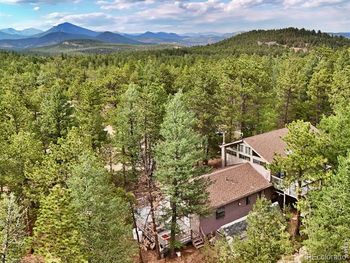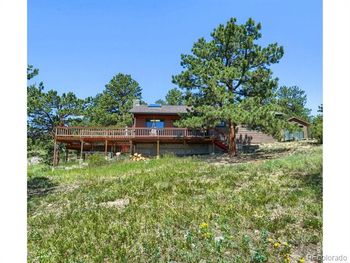
$849,900
Active
4
Beds
3
Baths
3674
Sqft
0.5436
Acres
2625 Brogans Bluff Dr, Colorado Springs, CO 80919
MLS#: 8374366
.jpg)



A 1031 exchange lets a real estate investor defer capital gains tax by reinvesting sale proceeds into another qualifying investment property under IRS Section 1031. For a Front Range investor selling a rental in Denver, Aurora or Colorado Springs, that deferral is a real advantage, but it comes with strict timelines and enough ways to disqualify the exchange that the rules matter as much as the tax benefit.
You sell an investment property, and instead of taking the proceeds directly, a qualified intermediary holds the funds and uses them to acquire a replacement investment property. Because you never take possession of the cash, the IRS treats it as a continuation of the same investment rather than a taxable sale, deferring the capital gains tax you would otherwise owe that year. This only works for investment or business property, not a primary residence.
After closing on the sale of your original property, you have 45 calendar days to formally identify potential replacement properties in writing to your qualified intermediary, and 180 calendar days total from the original closing to close on the replacement. Both clocks run simultaneously and neither extends for a slow Front Range closing process, a financing delay, or an inspection dispute on the replacement property. Missing either deadline disqualifies the exchange and the full capital gains tax becomes due.
Yes, for any exchange to qualify. The intermediary must be a neutral third party with no other financial relationship to you, your agent or your attorney within the two years around the exchange. Colorado title companies and 1031 exchange specialty firms commonly serve in this role; your closing agent can refer one, but confirm the intermediary is set up before your original property closes, not after.
Timeline risk is the most common way exchanges fail. Identifying a replacement property within 45 days in a competitive Front Range market, where well-priced investment properties can go under contract within days, pressures investors into rushed decisions. The second major risk is "boot", any cash or debt reduction left over that isn't reinvested, which becomes taxable even within an otherwise successful exchange. A third risk is over-using into a replacement property just to hit the deadline rather than because the numbers work.
| Scenario | Tax result |
|---|---|
| Full proceeds reinvested, equal or greater debt | Gain fully deferred |
| Some cash taken out ("boot") | That portion is taxable in the exchange year |
| Replacement property has less debt than the original | The debt reduction is treated as boot and taxed |
| 45-day identification or 180-day close missed | Entire gain becomes taxable |
Yes. Section 1031 applies to like-kind real property anywhere in the United States, so a Front Range investor can exchange a Denver metro rental for property in another state entirely, or the reverse. Many investors use this to move from active, hands-on rental management in Colorado into a passive structure elsewhere, or to consolidate several smaller properties into one larger asset.
A DST lets an investor exchange into a fractional, passive ownership interest in a larger institutional-grade property, such as a multifamily complex or commercial building, instead of managing another rental directly. For a Front Range landlord tired of handling snow removal, tenant turnover and maintenance calls personally, a DST can satisfy the exchange requirement while removing day-to-day management. It also involves lower liquidity and less control than owning a Colorado rental directly, so weigh that tradeoff against the reduced workload.
Cap rates on Denver metro rental property compress when purchase prices rise faster than rents, which has made some Front Range acquisitions less attractive on paper compared to other growth markets. An investor completing a 1031 exchange under deadline pressure should still run the actual numbers, vacancy assumptions and property tax projections on a specific replacement property rather than assuming a Colorado property will perform the same as the one being sold.
Colorado county assessors reassess property values periodically, and a rental purchased at a higher basis through a 1031 exchange can see a meaningfully higher tax bill after the next reassessment cycle than the seller was paying on the original property. Build a conservative property tax estimate into your return projections rather than using the current year's bill as a permanent number.
Yes, a single-family rental qualifies as replacement property as long as it's held for investment or business use rather than as a personal residence. Some investors moving out of active landlording use the exchange to buy into a lower-maintenance property type instead, such as a newer build with fewer near-term repair needs, while others move into a Front Range single-family rental precisely because it offers more appreciation potential than the commercial property they're exchanging out of.
Selling outright triggers capital gains tax in that tax year, calculated on the difference between your sale price and your adjusted basis, which grows substantial after years of appreciation on a Front Range property. A 1031 exchange defers that tax as long as you keep reinvesting in qualifying property, but it doesn't eliminate the liability; it carries forward to the replacement property's basis. Whether deferral makes sense depends on your timeline, your appetite for continuing to manage real estate, and whether you expect to eventually sell without exchanging again.
It makes sense for many single-property owners, particularly if the deferred tax bill is large relative to the investor's total portfolio and a suitable replacement property is realistically available within the timeline. For a smaller investor, the administrative cost of a qualified intermediary and the pressure of the 45-day window should be weighed against simply selling and paying the tax, especially if no immediate replacement property fits the criteria. This is worth modeling with a CPA before listing the original property, not after the clock has already started.
Doing the comparison properly means treating 1031 exchange properties as a category with its own risk profile, distinct from a straightforward buy-and-hold rental. National data on the single-family rental market is a useful backdrop for that comparison, and a side-by-side tool for comparing properties across markets can help narrow candidates before the 45-day clock starts, though local numbers from a Front Range agent should confirm any figures before you commit.
If you're weighing a 1031 exchange on a Front Range rental against your deadline and the current local inventory of qualifying replacement properties, the Kenna Real Estate Group can help you evaluate realistic replacement options before your 45-day window starts. Call or text 303-955-4220. A live person answers. Not a robot, not a phone tree. Or search every home for sale in Colorado to start identifying candidates now.
Questions about any home in Colorado? Call or text 303-955-4220. A live person answers.
45 calendar days from the closing of your original property, with no extensions for financing or inspection delays.
180 calendar days total from the original closing, running at the same time as the 45-day identification window.
Any cash or reduced debt left over that isn't reinvested into the replacement property; it becomes taxable even in an otherwise successful exchange.
Yes; Section 1031 applies to like-kind real property anywhere in the United States, not just within Colorado.
Yes; a neutral third party with no other financial relationship to you must hold the proceeds for the exchange to qualify.
It lets an investor exchange into a passive, fractional ownership interest in a larger property instead of managing another rental directly.