.jpg)


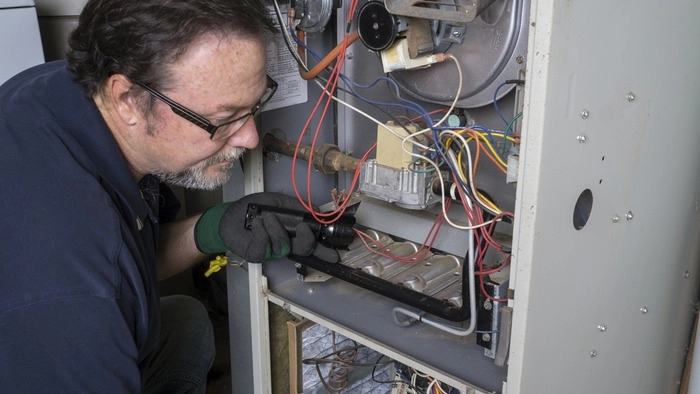
The highest-return HVAC efficiency fixes for a Front Range home are the ones that cost the least: sealing duct leaks, changing filters on schedule, and letting a smart thermostat handle the temperature swings Colorado's climate makes predictable. Bigger upgrades, like a high-efficiency furnace, pay back fastest when the home's ducts and insulation are already tight.
The efficiency fixes worth doing in order
Address the building envelope and duct system before spending on new equipment: air sealing and insulation first, duct sealing second, then thermostat and behavior changes, and only then a full equipment replacement if the load calculation still points to it. Doing the steps in that order lets a smaller, less expensive replacement unit handle the reduced load, instead of paying for a bigger system to compensate for a leaky house.
Start with the furnace, but check the altitude derating first
Every gas furnace installed above 2,000 feet needs a manufacturer high-altitude conversion, a different gas orifice sizing, and an input adjustment; Denver's 5,280-foot elevation always triggers this. A furnace installed without the correct altitude setup burns less efficiently and can run hotter than rated, wasting fuel on every cycle even if the unit itself is a high-efficiency model on paper.
What SEER rating makes sense on the Front Range
A 15-16 SEER system is a reasonable efficiency floor for Colorado's climate, balancing upfront cost against energy savings given the state's moderate number of full cooling days compared to a hot, humid state. Going above 18-20 SEER costs significantly more upfront and takes longer to pay back here than in a climate with a longer, harder cooling season.
Duct sealing: commonly the biggest single fix
Leaky ducts in an older Front Range home, especially one with ducts running through an unconditioned attic or crawl space, can lose 20% to 30% of conditioned air before it reaches a vent. Professional duct sealing runs roughly $1,500 to $4,000 depending on home size and duct accessibility, and it commonly delivers a faster payback than upgrading the furnace or AC unit alone.
Smart thermostats and Colorado's predictable temperature swings
Front Range days commonly swing 25 to 30 degrees between overnight lows and afternoon highs, and a smart thermostat that learns that pattern automates pre-cooling and pre-heating instead of forcing the system to react to it. Xcel Energy periodically runs rebate programs on qualifying smart thermostats; confirm current offers before buying since program terms change year to year.
Xcel Energy time-of-use pricing: when you run the system matters
Xcel's time-of-use rate charges more for electricity during summer afternoon and early-evening peak hours. Shifting heavy cooling load earlier in the day, and running major appliances after 9 p.m., can lower a summer bill without reducing total energy use. Heating season in Colorado runs on natural gas for most homes, so this mainly affects electric heat pump and AC households.
Insulation and air sealing: fix the envelope before the equipment
Attic insulation to R-49, the level recommended for Colorado's climate zone, and air-sealing gaps around recessed lights, plumbing penetrations and the attic hatch commonly cost $1.50 to $3.50 per square foot for insulation alone. This work reduces the heating and cooling load a furnace or AC has to meet in the first place, so it's worth doing before sizing a replacement system, not after.
Zoned systems: worth it for some Front Range floor plans
A zoned system with separate thermostats for upper and lower levels helps in a Colorado two-story home, where a walkout basement runs cooler naturally and an upper floor bakes under summer sun through west-facing windows. Retrofit zoning costs roughly $2,500 to $5,000 depending on duct layout; new construction can build it in for less.
Zoning works best when the existing ductwork already has reasonably separate supply runs for each level; a home with one shared trunk line sometimes needs duct modifications added to the zoning cost. A contractor doing a load calculation for a zoning retrofit can also confirm whether the existing furnace and AC are correctly sized for a split system, since an oversized unit short-cycles regardless of how well the zones are dampered.
Filter changes: cheap and easy to neglect
Change filters every one to three months, and monthly during Colorado's high-pollen spring or a smoky wildfire week in late summer, since dust and particulate load here is heavier than in many climates. A clogged filter forces the blower motor to work harder for the same output, adding measurable cost to every bill it's neglected on.
A higher-rated MERV 13 filter catches more dust and wildfire smoke particulate than a standard MERV 8, but confirm the blower motor can handle the denser media without losing airflow; an HVAC technician can check this during a routine visit rather than guessing from the filter's rating alone.
Programmable schedules that match a Front Range routine
Beyond a single setback temperature, program separate weekday and weekend schedules that account for Colorado's big daily temperature swing: most homes don't need heating or cooling running hard during the hours between a cool morning and a warm early afternoon. Reviewing a smart thermostat's usage reports after the first full season catches a schedule that's fighting the home's natural temperature swing instead of working with it.
What a high-efficiency furnace costs installed in Denver metro
A 95%+ AFUE high-efficiency furnace installed, with proper altitude conversion, runs roughly $4,500 to $8,500 in Denver metro depending on size and ductwork condition. Payback against a standard 80% AFUE unit commonly takes 7 to 12 years in Colorado's moderate heating climate, faster in a home with high gas usage and slower in one with light usage.
Radon mitigation and HVAC efficiency: check both together
Colorado has some of the highest indoor radon readings in the country because of uranium-bearing rock under much of the Front Range, and a radon mitigation fan pulls air from the same sub-slab area that leaky return ducts can also draw from. When both systems are present, have a technician confirm the HVAC ducts aren't competing with the radon fan for the same air pathway; fixing duct leaks can sometimes change how a radon system performs, so retest radon levels after a major duct-sealing project.
Evaporative cooling as an efficiency strategy, not just a cost-cutter
Because the Front Range stays dry outside of monsoon season, an evaporative cooler paired with the furnace's existing ductwork can cover most of a home's cooling need at a fraction of central air's electricity draw. It isn't a fit for every floor plan, especially homes without existing ductwork sized for airflow, but it's worth pricing against a full AC install before assuming central air is the only option.
Where to go next
- Preparing and adding value before selling
- Does a new HVAC system increase your home value?
- How HVAC system age impacts home value and negotiations
- Colorado home financing guide
- Homes for sale in Denver, CO
- Search every home for sale in Colorado
Talk to the Kenna Real Estate Group
The Kenna Real Estate Group can point buyers toward homes with efficient, well-documented HVAC systems and help sellers understand which efficiency upgrades actually move a Front Range sale price. Call or text 303-955-4220. A live person answers. Not a robot, not a phone tree. Ready to look at homes now? Search every home for sale in Colorado.
Homes for sale that match this post
- New construction: guide
- Homes with Walkout Basement in Denver
- Basement: guide
- All homes for sale in Denver
Guides
Questions about any home in Colorado? Call or text 303-955-4220. A live person answers.