.jpg)


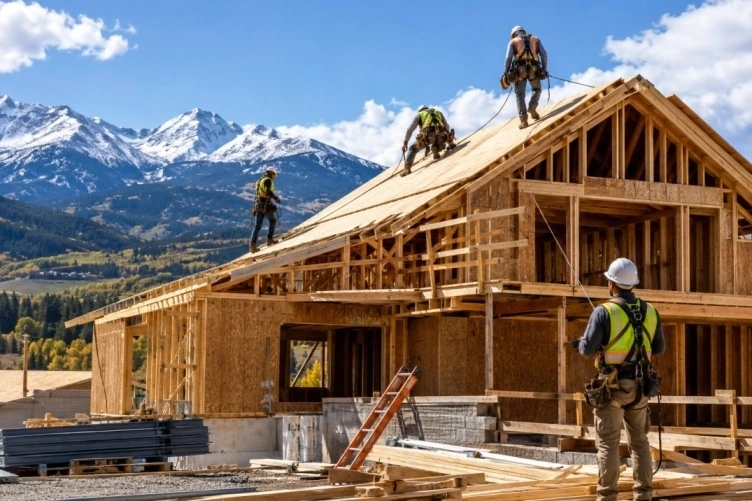
Second-story additions, full roof tear-offs, structural wall removal, and retaining wall work all put a crew at height or in a confined space on your property, and that changes what you need to check before signing a contract. The questions a contractor should ask themselves before taking a higher-risk job are the same ones you should ask them before hiring.
What counts as a higher-risk renovation project in Colorado?
Roof replacement and repair, second-story additions, structural wall removal, retaining wall construction on sloped Front Range lots, deep foundation and basement excavation, and any project involving scaffolding or work above the first-story roofline all fall into this category. These projects involve more subcontractors, more inspection points, and more exposure if something goes wrong than a standard interior remodel.
What should I check before hiring a contractor for roof or second-story work?
Start with license and insurance, not price. Confirm the contractor holds a current license in your specific city (Denver, Aurora, Lakewood, Littleton, Colorado Springs, and Fort Collins each run their own licensing programs, since Colorado has no statewide contractor license), and ask for a certificate of general liability insurance and workers' compensation coverage naming you as the property owner. Verify both directly with the insurance carrier rather than accepting a photocopy, since a lapsed policy still looks identical to an active one on paper. See Colorado's 4 Best Insurance Companies for Contractor Businesses for what full coverage on a Front Range job looks like.
Am I liable if a worker is hurt on my property?
A contractor's own workers' compensation insurance covers their crew, which is exactly why confirming that coverage is active matters to you directly. If a contractor carries no workers' compensation and a worker is hurt on your property, an injured worker or their dependents have grounds to pursue a claim against the property owner, not just the contracting business. This is the single biggest reason to verify insurance before signing rather than trusting a verbal assurance.
What insurance should my contractor carry for high-risk work?
| Coverage | What it protects |
|---|---|
| General liability insurance | Property damage and third-party injury claims tied to the project |
| Workers' compensation | Injuries to the contractor's own crew, protecting you from direct liability |
| Umbrella or excess liability | Additional coverage above standard limits for higher-risk scopes like roof and second-story work |
Ask for proof of all three on a project involving work above the first-story roofline, structural changes, or excavation, and confirm coverage dates span your entire project timeline.
Does high-risk renovation work need a permit in Denver?
Yes, in nearly every case. Roof replacement, structural wall removal, second-story additions, and retaining walls over a certain height all require a building permit in Denver and every Front Range city, and the permit triggers inspections at specific construction stages. A contractor who suggests skipping the permit on a higher-risk project is a warning sign, not a cost-saving offer; unpermitted structural work becomes a disclosure problem you have to address at resale.
How does Colorado's mechanic's lien law protect or expose me?
Colorado's mechanic's lien statute (C.R.S. Title 38, Article 22) lets an unpaid contractor, subcontractor, or supplier file a lien against your property even after you paid the general contractor in full. Higher-risk projects involve more subcontractors (a roofer, a structural engineer, an excavation crew) than a standard remodel in most cases, which multiplies your lien exposure. Require lien waivers from every subcontractor and supplier at each payment draw, and hold final payment until you have every waiver in hand.
What questions should I ask about a contractor's crew and training?
- Has this specific crew completed similar work at height or in a confined space before, and can you name two local addresses where they did it?
- Does the crew use fall protection equipment necessary to manage the specific hazards of roof and second-story work, and is it inspected before each use?
- What is the plan if a worker needs help getting down from height quickly?
- Who is the on-site lead I can reach directly if something changes mid-project?
- How do you handle a change in weather mid-day, given how fast Front Range conditions shift?
How does hail and snow season affect scheduling high-risk exterior work?
Colorado's hail season runs from spring through September, and roof and exterior crews book up during that window handling storm-damage claims across the Front Range. Scheduling roof or exterior structural work for late fall through winter means shorter contractor wait times in most cases, though winter brings its own scheduling factor: snow load and freezing temperatures pause work above the roofline for days at a time on occasion. Ask your contractor how they plan around both seasonal patterns before you sign a start date.
What is a rescue and communication plan and why does it matter to me?
A contractor working at height or in a confined space should have a plan for getting a worker down quickly if something goes wrong, and a clear line of communication with an on-site lead you can reach. As the property owner, you don't need to manage this plan, but a contractor who cannot describe one clearly when asked is telling you something about how the rest of the project will be run.
How do I verify a contractor before signing a contract?
- Call the building department in your specific city and confirm the license number and status directly.
- Call the insurance carrier listed on the certificate of insurance and confirm the policy is active for your project dates.
- Ask for two completed local projects of similar scope you can see in person.
- Confirm who pulls the permit and how lien waivers are collected from subcontractors at each payment stage.
What happens if a contractor gets hurt and has no insurance?
You face real exposure as the property owner if the contractor carried no workers' compensation coverage, even if the injury was entirely the contractor's own error. This is a real financial exposure, not a theoretical one, and it is the clearest reason to verify insurance before a higher-risk project starts rather than assuming a licensed contractor automatically carries adequate coverage.
Should I be on-site while high-risk work happens?
You don't need to supervise the technical work, but being reachable and periodically checking in on progress, permit postings, and whether the crew matches who you were told would be on-site, gives you an early read on whether the project is being run the way it was described in the contract.
Where to go next
- Denver ADU, Zoning, and Historic District Guide
- Colorado's 4 Best Insurance Companies for Contractor Businesses
- A Homeowner's Guide to Remodeling in Highlands Ranch
- Preparing and Adding Value Before Selling
- New Construction Homes in Colorado by Area
- Explore Denver homes
- Search every home for sale in Colorado
Talk to the Kenna Real Estate Group
The Kenna Real Estate Group helps Front Range owners confirm permit and licensing history before a project starts and before a home changes hands, and connects owners with licensed local contractors experienced in higher-risk scopes. Call or text 303-955-4220. A live person answers. Not a robot, not a phone tree. Or search every home for sale in Colorado to review permit history on homes you are considering.
FallTech's fall protection equipment necessary to manage the specific hazards of work at height is the kind of equipment standard your contractor's crew should already be using on any Front Range roof or second-story project; asking about it directly is a fast way to gauge how seriously a contractor takes crew preparation before you hire them.
Homes for sale that match this post
Guides
Questions about any home in Colorado? Call or text 303-955-4220. A live person answers.