.jpg)


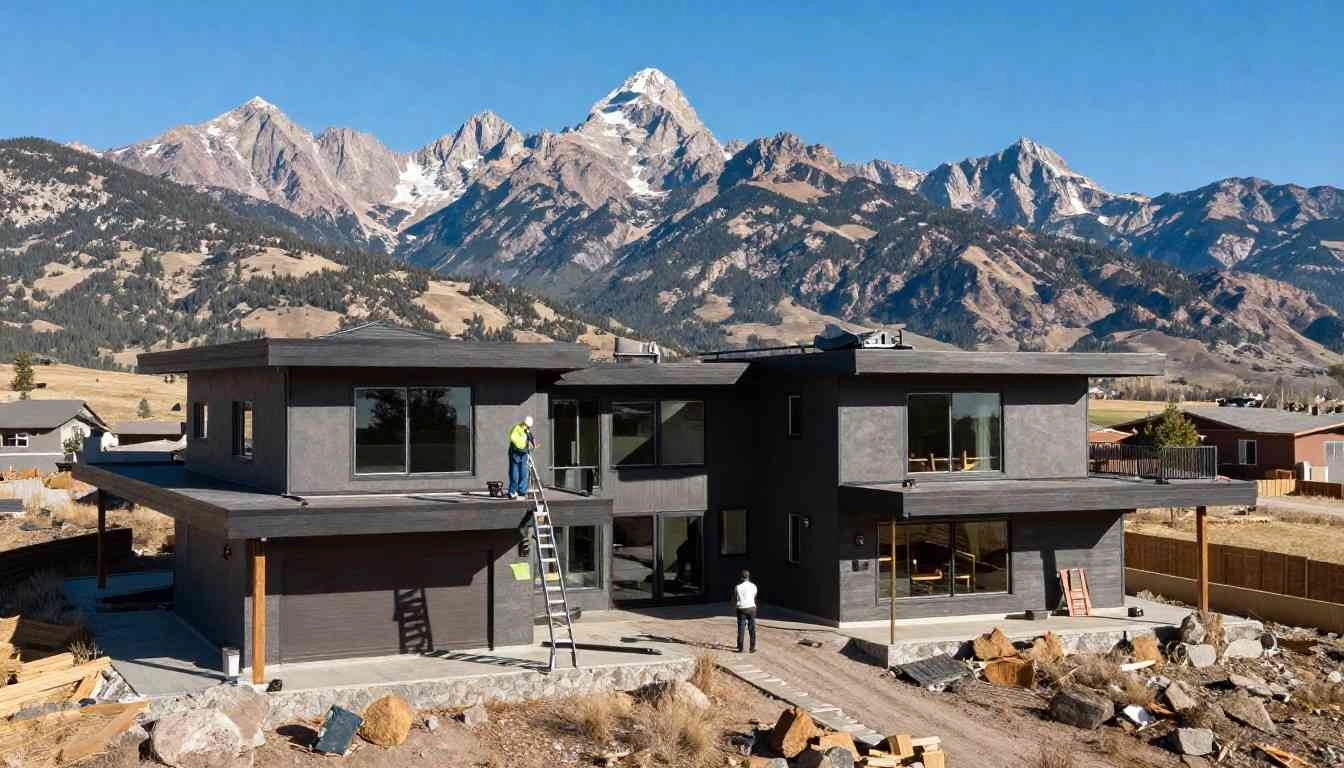
A flat roof in Colorado lasts 15 to 25 years depending on the membrane, roughly the low end of what the same material achieves in a milder, drier climate. The gap comes down to four things this state throws at a roof that most manufacturers' warranties do not fully account for: standing water from spring snowmelt, hail that pounds the membrane every summer, ultraviolet light that runs stronger at altitude, and dozens of freeze-thaw cycles each winter. Knowing which of those four is doing the most damage to a specific roof is what separates a $600 repair from a $15,000 replacement.
Ponding water is the most common cause of failure
Building code requires a minimum slope on a flat roof, a quarter inch of drop per foot at minimum, so water has somewhere to go. A roof that was built to code, or that has settled or developed a low spot over time, holds standing water after every storm and every spring snowmelt. Water sitting on a membrane for more than 48 hours accelerates seam failure and, on older built-up or modified bitumen roofs, adds weight the structure was not designed to carry long-term. A Colorado flat roof with a persistent low spot needs that drainage issue corrected, not just patched, or the same spot will fail again within a season or two.
Hail is a bigger factor here than almost anywhere else
Colorado's hail season runs from mid-April through mid-September, and the Front Range sits in one of the most hail-prone corridors in the country. Hail bruises and punctures a flat roof membrane in ways that are easy to miss from the ground, since the damage does not always leak right away. A single significant hailstorm can knock years off a membrane's remaining life even without an immediate leak, which is why an inspection after every major storm matters as much as a scheduled annual check.
UV at altitude breaks down materials faster
Denver sits at 5,280 feet, where ultraviolet exposure runs roughly 25 percent stronger than at sea level. On a flat roof, that extra UV dries out and embrittles membranes, particularly older single-ply or modified bitumen systems without a reflective or protective top coat. Reflective or "cool roof" membranes handle Colorado's UV load noticeably better than a dark, unprotected surface, and they cut summer cooling costs at the same time.
Freeze-thaw attacks seams and flashing
Colorado's temperature can swing 30 to 40 degrees in a single day, and the Front Range regularly cycles above and below freezing dozens of times each winter. Any water that gets into a seam, a flashing joint, or a penetration around a vent or HVAC unit expands when it freezes and works the joint looser with every cycle. Flashing and seam failures show up disproportionately at parapet walls, roof-mounted equipment curbs, and drains, so those are the points to check first on a Colorado flat roof.
Material lifespan comparison for Colorado
| Material | Typical lifespan here | How it handles Colorado's conditions |
|---|---|---|
| Built-up roofing (BUR, tar and gravel) | 15 to 20 years | Handles hail reasonably well; ponding and UV shorten life without a protective cap sheet |
| Modified bitumen | 15 to 20 years | Good hail resistance; seams need regular inspection after freeze-thaw seasons |
| EPDM (rubber membrane) | 18 to 25 years | Flexes well through freeze-thaw; dark surfaces absorb more UV unless coated |
| TPO or PVC (single-ply) | 18 to 25 years | Reflective surface handles high-altitude UV well; seams are heat-welded and hold up to temperature swings |
What extends a flat roof's life here
- Inspect twice a year and after every major hailstorm, not just once annually.
- Keep drains and scuppers clear of debris so water has somewhere to go after a storm.
- Recoat reflective membranes on the manufacturer's schedule to keep UV protection active.
- Fix a low spot that holds standing water instead of patching the same area repeatedly.
- Check flashing at every penetration each spring, since freeze-thaw works those joints loose over winter.
Repair or replace?
A flat roof with isolated seam failures, a small number of punctures, or flashing issues in an otherwise sound membrane qualifies for a targeted repair in most cases. Replacement makes sense once ponding is widespread, the membrane has multiple soft spots from trapped moisture, or the roof is past 80 percent of its expected lifespan and facing a major hail claim. For a residential single-ply system, a flat roof repair service can assess whether a localized fix will hold or whether the membrane has reached the point of full replacement. Understanding the materials available helps frame that decision before a contractor walks the roof.
Permits and cost on the Front Range
Most Front Range cities and counties require a permit for a full roof replacement, flat or sloped, and the contractor pulls it as part of the project. Flat roof replacement on a residential addition or a full commercial roof runs from roughly $6 to $14 per square foot depending on the material and the number of layers being removed, with commercial buildings pricing on a per-square-foot basis that can move outside that range based on drainage work and insulation upgrades.
Flat roofs and Colorado home insurance
Insurers weigh roof type, age, and material when pricing a policy, and a flat roof with documented recent maintenance or replacement underwrites more smoothly than one with an unclear repair history. If a flat roof is part of an addition, garage, or outbuilding on a home being sold, note its condition and any recent work in the listing, since it is one of the first things a buyer's inspector checks on a Colorado property with a mixed roof design.
Commercial flat roofs on the Front Range
Flat and low-slope roofs dominate Denver metro commercial and multi-family buildings, and the same four factors, ponding, hail, UV, and freeze-thaw, apply at a larger scale with a bigger repair bill attached. A commercial TPO or EPDM roof on a 20,000-square-foot building carries the same inspection priorities as a residential one: check drains after every storm, recoat reflective membranes on schedule, and address a low spot before it becomes a structural load issue. Building owners and investors evaluating a commercial purchase should ask for the roof's maintenance log and any past hail claims as part of due diligence, the same way they would review a lease abstract.
Flat roofs and resale
A flat roof section on an otherwise pitched-roof home, common on additions, garages, and modern infill builds across Denver, draws extra inspector attention because buyers and lenders know these systems fail differently than a shingle roof. Documented maintenance and a clear replacement date protect resale value the same way a sloped roof's age and warranty do. The preparing and adding value before selling guide covers how roof condition factors into pricing a Colorado home.
Where to go next
- Preparing and adding value before selling
- Colorado real estate investing guide
- Colorado market reports
- Roof replacement in Colorado: costs, lifespan, and best materials
- Colorado hail and roof costs: what to compare
- Search every home for sale in Colorado
Talk to the Kenna Real Estate Group
The Kenna Real Estate Group helps Colorado buyers and sellers understand what a flat or low-slope roof's condition means for a home's price and its insurability. Call or text 303-955-4220. A live person answers. Not a robot, not a phone tree. Or search every home for sale in Colorado right now.
Homes for sale that match this post
Guides
Questions about any home in Colorado? Call or text 303-955-4220. A live person answers.