New - 3 Days Ago

.jpg)


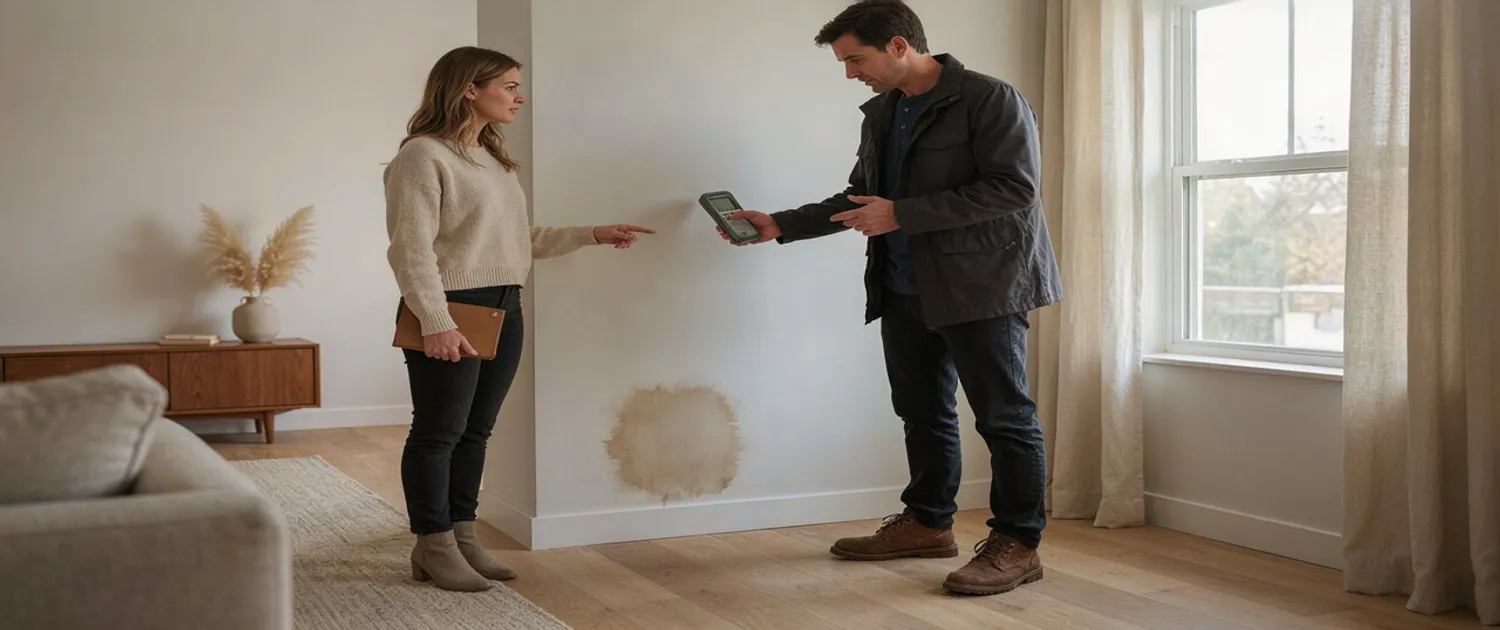
The water leaks that cost Colorado buyers the most are the ones a standard home inspection does not check: the sewer line running under the yard, a slab leak under the foundation, and pipe corrosion inside a wall. A general home inspector checks visible plumbing, fixtures and water stains, but does not run a camera down the sewer line or pressure-test pipe behind drywall. Those checks are add-ons a buyer has to request.
A general home inspection covers what is visible and accessible: fixtures, visible supply lines, the water heater, and any active staining on ceilings or walls. It does not include a sewer scope, a slab leak detection scan, or opening walls to check pipe condition. Add a sewer scope for $200 to $450 and a plumbing-specific inspection for $150 to $350 during your inspection window if the home is older or has a history you cannot verify.
A slab leak is a break in a water line running under a concrete foundation, common in homes built on Colorado's expansive, bentonite-heavy clay soils, which shift with moisture changes and stress the pipe joints below the slab. Signs include an unexplained spike in the water bill, a warm spot on the floor, or a faint sound of running water when every fixture is off. Left alone, a slab leak undermines the soil under the foundation and can lead to structural settling, not just a water bill.
A slab leak repair on the Front Range runs $500 for a simple reroute up to $4,000 to $15,000 if the slab has to be cut and the foundation repaired. Ask the seller directly whether the home has ever had a slab leak, and if so, request the repair documentation and any foundation follow-up work.
Homes built before 1970 in Denver's older neighborhoods, including parts of Park Hill, Washington Park and Berkeley, still run clay or Orangeburg sewer lines. Both materials crack over decades, and tree roots find their way into the joints, slowly restricting or blocking the line. A sewer scope camera run is the only way to see this condition before you own it. Root intrusion repair runs $3,000 to $10,000 for a full line replacement using trenchless methods, less for a spot repair.
Colorado's standard purchase contract sets an inspection objection deadline, negotiated in every offer, that is commonly 7 to 10 days after acceptance. A sewer scope or slab leak scan has to be scheduled and completed inside that window to give you grounds to negotiate a repair, credit, or price adjustment before the deadline passes. Ask your agent to build the extra time into the offer if the home's age or plumbing history raises questions.
Denver metro tap water runs moderately hard, and mineral buildup inside a water heater shortens its working life and lowers efficiency over time. A tank water heater lasting 12 to 15 years elsewhere runs closer to 8 to 12 years here without a water softener or regular flushing. Ask when the water heater was installed and whether it has been flushed annually; sediment buildup is one of the most common causes of a water heater leak.
Front Range winters bring stretches of single-digit overnight lows, and pipes running through an uninsulated crawlspace, garage wall or exterior wall can freeze and crack even in a home that otherwise looks well maintained. A frozen-and-thawed pipe leaks slowly inside a wall for weeks before a stain shows, which is exactly the kind of damage a standard inspection misses. Ask whether the home has any history of frozen pipes and whether exposed lines have been insulated since.
The U.S. Environmental Protection Agency estimates household leaks waste thousands of gallons a year in an average home; in a state where water rights and costs run high, that number matters to a Colorado buyer's utility budget too.
Most Colorado homeowners policies cover the sudden, accidental water damage a slab leak causes, but not the cost of locating and repairing the leaking pipe itself. Ask a seller for the specific claim breakdown if a past slab leak comes up, since the repair and the resulting damage are covered differently.
A sewer scope or slab leak finding during the inspection objection period gives a Colorado buyer grounds to request a repair, a credit, or in some cases to walk from the contract. Sellers who get a sewer scope done before listing avoid a surprise mid-transaction and can price the home with a clean report already in hand. See Preparing and Adding Value Before Selling for what to check before you list.
A sewer scope technician feeds a camera down the line from a cleanout or the toilet flange and records the full run to the street connection, then grades what they find. A clean line shows smooth walls and steady flow. A line with problems shows one or more of: root intrusion at a joint, a "belly" where the pipe has settled and holds standing water, an offset joint where two sections no longer line up, or a crack running along the pipe wall. The technician's report separates these into "monitor" issues that don't need immediate work and "repair now" issues that do, which gives a buyer a concrete list to negotiate from during the objection period rather than a vague pass/fail result.
Most Front Range water providers, including Denver Water and the suburban districts around it, let a customer request 12 to 24 months of billing history, either online or with a phone call to customer service. Plot the monthly usage side by side: a Colorado household's water use climbs in summer from outdoor irrigation and drops in winter, a normal seasonal pattern. A winter month that spikes above the household's own summer average, with no irrigation running, is the clearest early sign of an active leak somewhere in the system, whether that's a slab leak, a toilet flapper stuck open, or a sprinkler valve that never fully closed. Ask the seller for this history directly rather than relying on the listing agent's general assurance that "nothing's wrong."
The Kenna Real Estate Group helps Colorado buyers build sewer scopes and slab leak checks into the inspection objection window before it closes, and helps sellers get ahead of a hidden leak before it shows up in a buyer's report. Ask for the printable pre-inspection checklist in the form below and we email it the same day. Call or text 303-955-4220. A live person answers. Not a robot, not a phone tree. Or search every home for sale in Colorado right now.
Questions about any home in Colorado? Call or text 303-955-4220. A live person answers.
No. A standard inspection covers visible plumbing and fixtures only. A sewer scope is a separate add-on, $200 to $450, and has to be scheduled inside the inspection objection window.
A break in a water line running under a concrete foundation. Colorado's shifting clay soils stress these pipe joints, and repair runs from $500 for a simple reroute to $4,000 to $15,000 if the slab has to be cut.
Ask whether the home was built before 1970. Clay and Orangeburg lines from that era crack and let tree roots in over decades, and a sewer scope is the only reliable way to check the actual condition.
Colorado's standard contract sets an inspection objection deadline, commonly 7 to 10 days after acceptance. Sewer scopes and slab leak scans need to be completed and any findings submitted before that date.
Yes. Mineral buildup from Denver metro's moderately hard water shortens a tank water heater's working life to 8 to 12 years without a softener or annual flush, versus 12 to 15 years elsewhere.
Yes. A pipe that freezes and cracks in an uninsulated wall or crawlspace can leak slowly for weeks before a stain appears, which is exactly the kind of damage a standard inspection misses.
Most Colorado policies cover the sudden water damage a slab leak causes but not always the cost of locating and repairing the pipe itself. Confirm the claim breakdown with the seller if one comes up.
Ask for 12 months of water bills, any water damage insurance claims in the last 5 years, the sewer line's age, and the water heater's install and last-flush dates.