.jpg)


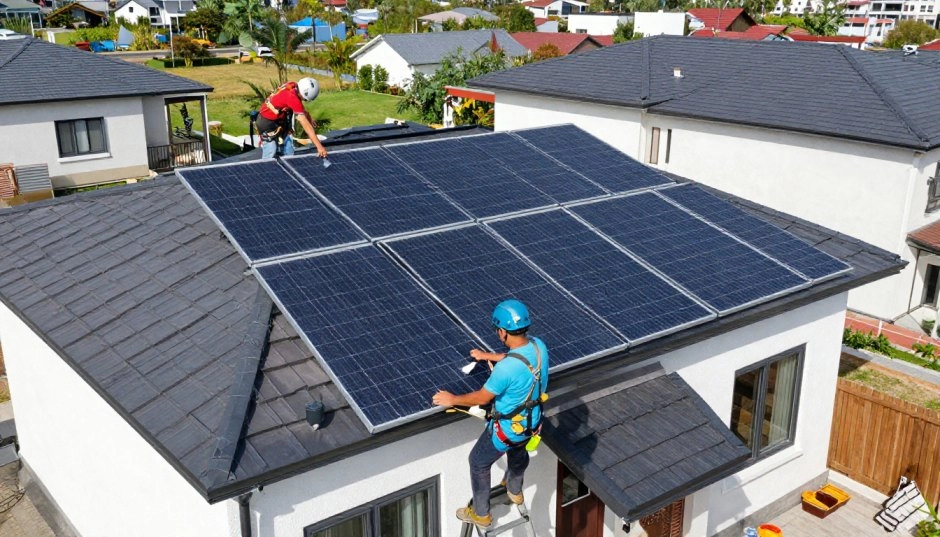
A professional solar installation on a Colorado roof follows a set sequence: site evaluation, permitting, HOA approval if you have one, the physical install, then utility interconnection. Colorado's roughly 300 days of sun a year make the payback math work faster here than in most states, but the roof underneath the panels has to be ready for the job first.
Site evaluation and roof readiness
A solar contractor checks roof pitch, orientation, shading from trees or neighboring structures, and — critically on the Front Range — the remaining life of the roofing material itself. If your shingles are more than 10 to 12 years old, most installers recommend replacing the roof before mounting panels, since removing and reinstalling a solar array to redo a roof underneath it roughly doubles the labor cost.
Permits and HOA approval before installation
Denver and most Front Range cities require an electrical and building permit for a residential solar install, handled by the contractor as part of the project. Colorado's solar rights law limits how far an HOA can restrict solar installations, but most associations still require a design review submission covering panel placement and visible equipment, so budget two to four weeks for that approval alongside the permit process.
Hail rating and snow load on a Colorado solar roof
Standard solar panels are tested to withstand hail up to roughly one inch in diameter at terminal velocity, and most residential panels sold today meet or exceed that standard — ask your installer for the specific hail rating in writing given how common significant Front Range hail is. Racking systems also need to account for Colorado snow load requirements, which vary by county and elevation, so a mounting plan engineered for a Front Range foothill property differs from one engineered for a flat Denver metro roof.
The installation sequence
- Racking and mounting: crews attach mounting rails to the roof deck, sealed at each penetration point.
- Panel placement: panels are set and wired into strings.
- Inverter and electrical work: the inverter converts panel output to usable power and ties into your electrical panel.
- Inspection: a city or county inspector signs off on the electrical and structural work.
- Utility interconnection: Xcel Energy or your local utility has to approve the system for net metering before it goes live.
Most residential installs take one to three days of on-site work, but the full process from signed contract to live system, including permitting and utility approval, commonly runs six to twelve weeks in the Denver metro.
Net metering with Xcel Energy
Net metering credits excess power your system sends back to the grid against what you draw at night or during low-sun periods, and Colorado's investor-owned utilities are required to offer it to residential solar customers. Ask your installer to walk through your specific utility's current net metering terms before signing, since credit structure and true-up timing vary by provider.
Cost, financing and property tax
A residential solar roofing installation in Colorado runs $15,000 to $30,000 before incentives for an average-size home system, with cost driven by system size, roof complexity and panel quality. Colorado exempts qualifying residential solar systems from added property tax assessment, so adding panels does not raise your property tax bill the way a room addition would. Some buyers roll a solar cost into their purchase or renovation financing; the Colorado home financing guide covers how renovation and energy-improvement financing works, and Mike Oswald at Rate (NMLS 261003, Equal Housing Lender) can walk through financing options for a solar addition — you are free to use any lender. See Kenna Credit Care mortgage readiness for a broader look at getting loan-ready before a purchase or a home-improvement loan.
How solar affects a Colorado home sale
An owned solar system, fully paid off, adds value at resale and is a selling point buyers ask about directly in a state with this much sun. A leased system or one with an active loan attached to the panels needs to be disclosed and either transferred or paid off at closing, and it is worth reviewing that paperwork with your agent well before you list. Our guide to preparing and adding value before selling covers which upgrades, including solar, actually move a Colorado buyer's offer.
Roof warranty and solar
Check your roofing manufacturer's warranty before installation; some warranties are voided or limited by roof penetrations from a third-party installer, and some solar installers offer their own workmanship warranty covering leaks at mounting points specifically. A reputable Colorado solar contractor will put both warranties in writing before work starts. For a hands-on look at what a professional install and a Colorado-based solar contractor covers, see this solar contractor overview and their solar panel installation process page — get at least two bids from Colorado-licensed installers before choosing one.
| Step | Typical timeline | Who handles it |
|---|---|---|
| Site evaluation and design | 1-2 weeks | Solar contractor |
| Permitting | 2-4 weeks | Contractor, city/county |
| HOA design review (if applicable) | 2-4 weeks, can run parallel to permitting | Homeowner, HOA architectural committee |
| Physical installation | 1-3 days on-site | Solar contractor crew |
| Inspection and utility interconnection | 2-4 weeks | City/county inspector, Xcel Energy or local utility |
Where to go next
- Search every home for sale in Colorado
- Colorado home financing guide
- Kenna Credit Care mortgage readiness
- Preparing and adding value before selling
- New construction homes in Colorado by area
- Talk to a Kenna Real Estate Group agent
Talk to the Kenna Real Estate Group
Whether you are buying a home with solar already installed or weighing an addition before you sell, the Kenna Real Estate Group helps Colorado buyers and sellers read the paperwork, ownership status and value impact correctly. Call or text 303-955-4220. A live person answers. Not a robot, not a phone tree. Or search every home for sale in Colorado right now.
Homes for sale that match this post
- Homes with Solar Panels in Denver
- HOA Rules and Fees Guide in Denver
- Property Taxes Guide in Denver
- All homes for sale in Denver
Guides
Questions about any home in Colorado? Call or text 303-955-4220. A live person answers.