.jpg)


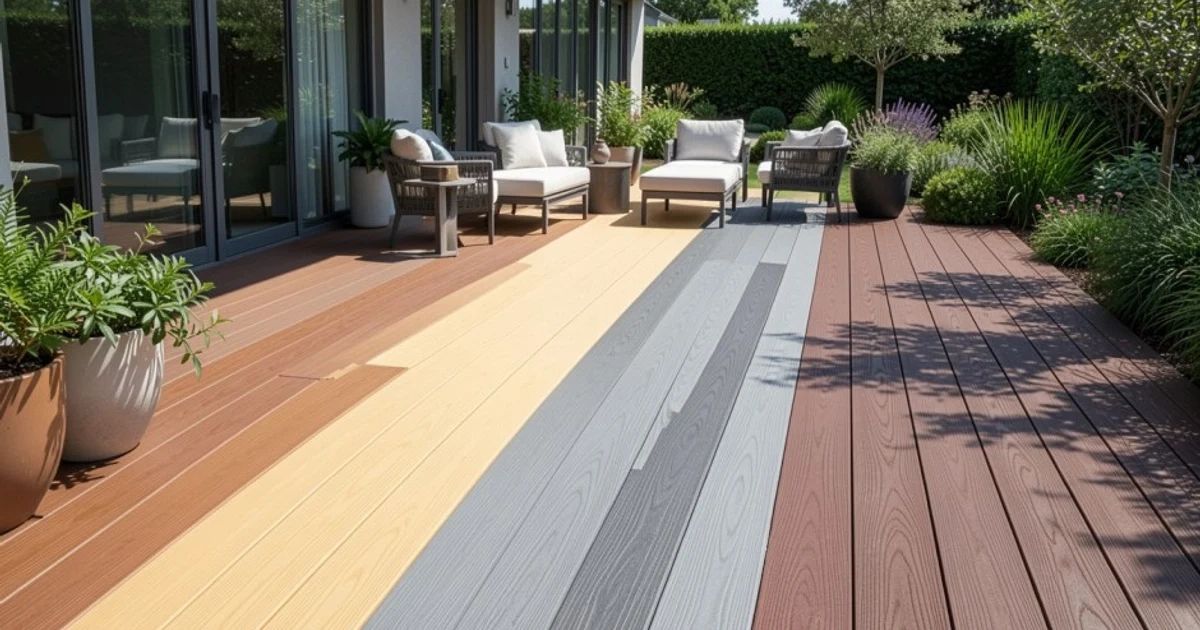
Mid-tone gray and driftwood composite decking colors wear best on the Front Range because they hide hail scuffs, fade less visibly under high-altitude UV and stay cooler underfoot than dark espresso and walnut tones. Dark colors still sell well in listing photos, but they show wear faster in Colorado's sun and storms.
Which composite decking colors do Front Range buyers respond to at resale?
Warm gray, driftwood and light-taupe tones photograph well against Colorado's blue-sky backdrop and read as low-maintenance to buyers touring in person. Deep browns and near-black tones look sharp in a listing photo but read hot and heavily worn in a five-year-old deck.
Does Colorado's intense UV fade composite decking faster?
At 5,280 feet and higher, UV intensity runs well above sea level. Darker colors — espresso, walnut, charcoal — show visible fade over a 10- to 15-year span faster than lighter grays and driftwood tones. Ask any composite decking installer for the UV-fade rating on the exact color before you order boards; see current popular composite decking colors for a side-by-side look at fade performance.
Which decking colors hide hail dents and scratches best?
Lighter, textured composite colors camouflage hail marks and scuffs better than dark, smooth finishes, where every dent and scratch shows as a bright contrast line. A wood-grain texture in a mid-tone color hides ordinary wear the longest between refinishing cycles.
What snow load does a Colorado deck need to hold?
Every Front Range building department sets its own required snow load for decks and roofs. Get the exact number for your address from the local permit office before your builder finalizes joist spacing and railing — it changes how the frame gets engineered underneath the boards.
Do Front Range cities require a deck permit?
Denver, Aurora, Lakewood, Littleton, Colorado Springs and Fort Collins each require a building permit for a deck attached to the home above a set size, plus inspection of the footings before boards go down. Skipping the permit creates a disclosure problem at resale.
Do foothills wildfire rules limit decking material or color?
In unincorporated wildfire zones near the foothills — parts of Jefferson County, Boulder County and El Paso County — some jurisdictions require Class A fire-rated decking or noncombustible material within the defensible-space zone closest to the home. Check with the local fire authority before you pick a product line.
Does an HOA approve deck color before installation?
Most Front Range HOAs and architectural review committees require plan and color approval before a deck goes up, and several restrict choices to a set list of approved composite color groups. Submit the sample board with your application, not after the boards arrive.
How does freeze-thaw affect composite decking boards and fasteners?
Colorado's freeze-thaw cycle expands and contracts boards and metal fasteners repeatedly through a single winter. Composite handles this better than untreated wood, but hidden fastener systems still need gap spacing set for Colorado's temperature swing, not a manufacturer's warm-climate default.
What does composite decking cost installed on the Front Range?
Expect $35 to $75 per square foot installed depending on brand, railing style and substructure work. A 300-square-foot deck runs $12,000 to $22,000 on most Front Range homes once permits and railing are included.
Composite vs. wood decking — which holds value better in Colorado?
Composite costs more upfront but skips the annual staining and sealing that Colorado's UV and freeze-thaw cycle demand of wood decking. Over a 15-year hold, composite's lower maintenance cost and steadier appearance in listing photos outweighs the higher install price for a seller planning to stay five or more years.
Does deck color affect furniture and cushion fading?
A light-reflective deck surface bounces UV back up onto outdoor cushions and furniture, fading fabric faster than a darker, more absorbent surface would. Factor that into cushion and umbrella choices, not just the boards themselves.
How do you clean mag-chloride residue off a composite deck?
Winter deicer tracked up from a driveway or walkway leaves a white haze on deck stairs and rails, especially visible on dark colors. A spring rinse with a mild soap solution and a soft brush clears it before it stains the surface.
Does a new deck add value at resale on the Front Range?
Yes — composite deck additions rank among the higher-return outdoor projects in national remodeling-cost studies, ahead of a pool addition and most fencing projects. Pair it with the right color for your buyer pool and it shows well in photos through closing.
Should sellers replace deck boards or refinish before listing?
If the structure is sound and the boards are composite, a deep clean and railing touch-up beats a full replacement before listing in most cases. A wood deck showing gray, splintered boards in photos is worth a stain refresh at minimum — see the full checklist in the preparing and adding value before selling guide.
Does composite decking need less maintenance than wood on the Front Range?
Composite skips the annual sanding, staining and sealing that keeps wood decking from checking and graying under Colorado's UV and freeze-thaw cycle. A yearly soap-and-water wash and a rail-hardware check cover most of what a composite deck needs to stay presentable through a listing and beyond.
Should you match deck color to the home's exterior or the color trending this year?
Match the home's siding and roof tone first. Trend colors shift every few years, but a deck that clashes with the house reads worse in photos than a slightly dated color that complements it. Neutral grays and warm taupes age better across a 10- to 15-year hold than a bold, of-the-moment tone.
Does a deck railing have code-required height and baluster spacing in Colorado?
Yes — local building code sets a minimum railing height and a maximum gap between balusters for a deck above a set height off the ground. Composite railing systems come pre-spaced to meet most Front Range codes, but confirm the exact requirement with your city's permit office before you order material, since it varies by jurisdiction and deck height.
Do lighter deck colors resell better than dark colors on the Front Range?
Lighter, mid-tone colors appeal to a broader pool of buyers in listing photos because they read clean and low-maintenance, while a very dark deck can look striking in one photo and worn in the next depending on lighting and season. A seller weighing a full color change purely for resale should stick to a widely appealing mid-tone rather than a niche trend color.
Does the substructure under a composite deck need the same attention as the boards?
Yes — the joists, ledger board and footings do the structural work, and a beautiful set of composite boards over an under-engineered frame is still a code problem waiting to surface at a buyer's inspection. Ask any contractor for the framing spec in writing, not just the decking brand and color, before signing off on the project.
Where to go next
- Preparing and adding value before selling
- Stone, brick or concrete — which is better for patios
- 8 curb appeal fixes for Front Range sellers
- Denver HOA rules and fees guide
- Meet the Kenna Real Estate Group agents
- Search every home for sale in Colorado
Talk to the Kenna Real Estate Group
The Kenna Real Estate Group can tell you whether your deck's color and condition help or hurt your listing photos before a buyer ever walks the property. Call or text 303-955-4220. A live person answers. Not a robot, not a phone tree. Search every home for sale in Colorado while you plan the project.
Homes for sale that match this post
Guides
Questions about any home in Colorado? Call or text 303-955-4220. A live person answers.