.jpg)


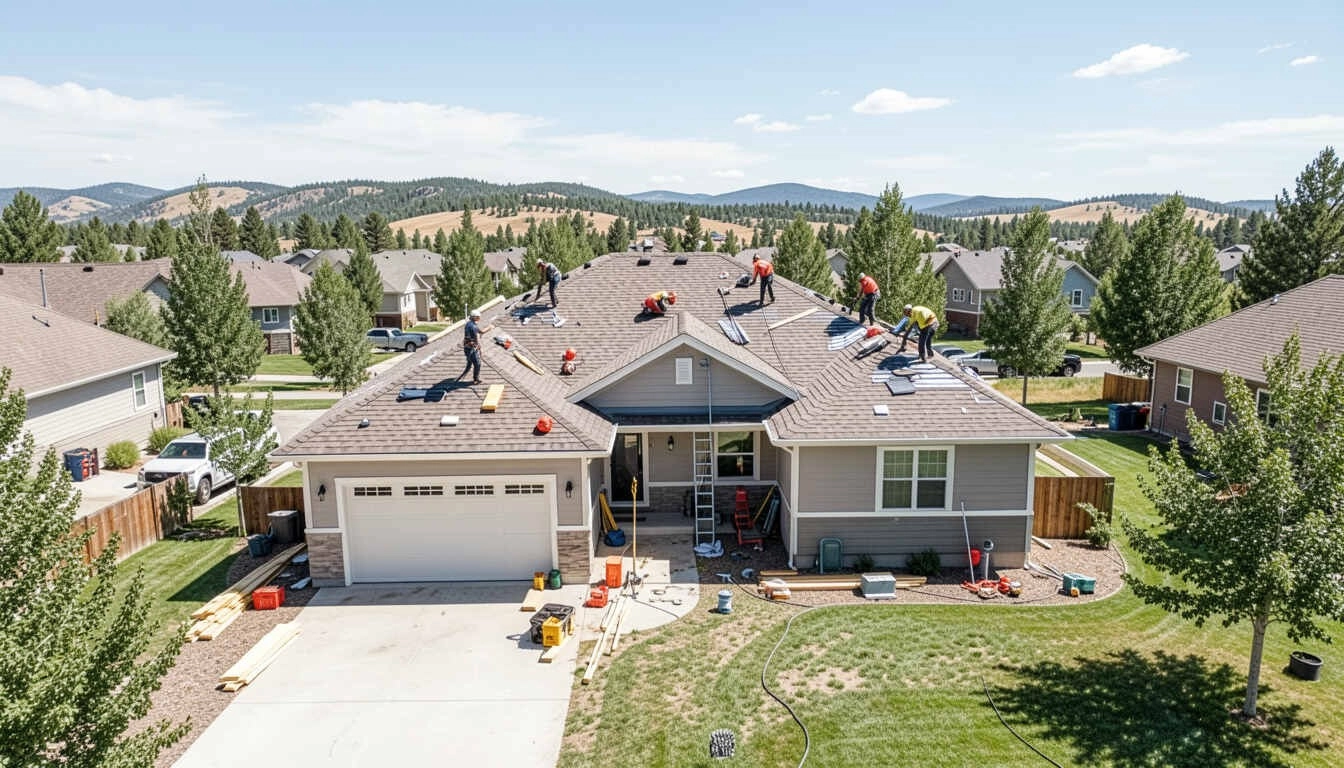
A new roof costs more on the Front Range in 2026 because Colorado roofs face hail, UV, and freeze-thaw damage that most of the country does not, which pushes homeowners toward thicker materials, impact ratings, and more frequent full replacements instead of repairs.
What Drives Roof Prices Up on the Front Range
Every roofing dollar in Colorado covers four things: material, labor, code compliance, and risk. Contractors carry higher insurance premiums in a hail-prone market, and that cost shows up in every bid. Labor is also tighter after a busy hail season, when every roofing crew on the Front Range is booked for months, and a limited supply of experienced crews pushes hourly labor rates higher than in a market with steadier, spread-out demand year-round.
Materials: Asphalt, Class 4, Metal and Tile Costs in Colorado Dollars
| Material (2,000 sq ft roof) | Front Range Installed Cost |
|---|---|
| Standard 3-tab asphalt shingle | $9,000 to $13,000 |
| Architectural asphalt shingle | $12,000 to $18,000 |
| Class 4 impact-rated asphalt shingle | $14,000 to $22,000 |
| Standing seam metal | $22,000 to $38,000 |
| Concrete or clay tile | $28,000 to $45,000 |
Class 4 shingles cost more up front but carry a real return in a hail market: Colorado law requires insurance companies to offer a premium discount for a Class 4 impact-rated roof, and many Front Range homeowners recover part of the upgrade cost within a few years through that discount alone.
Labor, Permits and Code Costs by City and County
Denver, Aurora, Colorado Springs, Lakewood, and most Front Range cities require a building permit and inspection for a full roof replacement, commonly $100 to $500 depending on the jurisdiction and the size of the home. Unincorporated Jefferson, Douglas, Arapahoe, and Adams counties permit through their own building departments rather than a city office, and timelines vary by a week or more between them.
Why Altitude and UV Push Colorado Roofs to Wear Faster
UV exposure increases roughly 4% for every 1,000 feet of elevation. At 5,280 feet in Denver, that is a meaningfully harsher dose of ultraviolet light than a roof gets at sea level, and it breaks down the asphalt binders in shingles faster. Combine that with roughly 300 days of Colorado sun a year and shingles rated for 25 years elsewhere commonly show granule loss and brittleness well before that mark on the Front Range.
Hail Season's Effect on Roofing Demand and Price
Colorado's hail season runs mid-April through mid-September, with the heaviest activity in late spring and early summer along the Front Range and eastern plains. A single significant hailstorm can generate thousands of roofing claims in one metro area within days, and that surge in demand is one of the clearest reasons roofing bids climb in the weeks right after a storm.
Insurance Claims, Deductibles and Colorado's Contractor Law
Colorado law (HB 13-1290) prohibits a roofing contractor from advertising that it will pay, waive, or rebate your insurance deductible, and it requires certain roofing contracts tied to an insurance claim to include a right to cancel within 72 hours. If a contractor's pitch centers on covering your deductible, treat that as a legal problem with the offer, not a discount.
Insurance Premiums and Contractor Overhead
Roofing companies operating in a hail-prone market pay more for their own liability and vehicle insurance than a comparable company in a state with fewer storms, and that overhead is built into every bid. Workers' compensation rates also run higher for roofing crews than for most other trades because of the fall risk, and Colorado's steep-pitch mountain-influenced architecture adds to that cost on certain homes.
Regional Material Supply and Shipping Costs
Colorado sits farther from major shingle manufacturing plants than states on the coasts, which adds freight cost to every bundle of material delivered to a Front Range supply house. After a large hail event, regional demand can also outpace local supply for a few weeks, which pushes prices up temporarily until distributors catch up.
DIY vs Professional: Why Colorado Roofs Are Not a DIY Project
A steep-pitch roof at altitude carries real fall risk, and a DIY repair that fails to match code on flashing or ventilation can create a bigger problem than the one it was meant to fix. Most homeowners insurance policies also require proof of professional installation to honor a workmanship warranty claim later, so a DIY reroof can leave you without recourse if something goes wrong.
Seasonal Timing: Booking a Roof Before or After Hail Season
Scheduling a preventive roof replacement in the fall or winter, outside the mid-April to mid-September hail window, regularly means shorter wait times and more attention from a crew that is not juggling a backlog of storm claims. Homeowners who wait until after a bad hail season compete with every other claim filed in the same few weeks.
Getting Multiple Bids the Right Way
Get at least three written bids that itemize material, labor, tear-off, and disposal separately, and confirm each bid includes the same scope: full tear-off versus overlay, decking replacement if needed, and underlayment type. National roofing companies publish their own bid checklists as a reference point; a company like Arlington Roof Contractor lists what a full roof inspection should cover, and what a roof replacement estimate should itemize is worth comparing your own Colorado bids against. You are free to use any licensed local roofer.
Financing a Roof Replacement Before You Sell
Homeowners who need a roof before listing sometimes finance the work rather than draining savings at closing. The Kenna Real Estate Group's Colorado home financing guide and Kenna Credit Care mortgage readiness program cover options for homeowners weighing that decision before a sale.
Why Labor Costs More for a Steep-Pitch or High Roof
A steep-pitch roof, common on mountain-influenced Front Range architecture, requires additional fall-protection equipment and slows crews down, which shows up as a labor surcharge on the bid. Two-story and three-story homes with a high roofline add scaffolding or lift rental to the cost as well. Ask any bid to break out a pitch or height surcharge separately so you can compare it against other bids on a similar home.
Roof Cost vs Home Value: What Actually Comes Back at Resale
A roof replacement rarely returns 100% of its cost as a line-item at closing, but a roof past its expected life is one of the fastest ways to trigger an inspection objection or a lower offer on a Colorado sale. A Smart Pricing Report factors roof age and condition into a realistic list price, and the adding value before selling guide breaks down which roof-related repairs matter most to Front Range buyers.
Where to go next
- Colorado Home Financing Guide
- Pricing Your Colorado Home to Sell
- Preparing and Adding Value Before Selling
- Roof Replacement in Colorado: Costs, Lifespan, and Best Materials
- Colorado Hail and Roof Costs: What South Denver Right-Sizers Actually Need to Compare
- Search every home for sale in Colorado
Talk to the Kenna Real Estate Group
The Kenna Real Estate Group helps Front Range homeowners weigh a roof replacement against its actual return at sale, and helps buyers understand what a roof's age means for their offer. Call or text 303-955-4220. A live person answers. Not a robot, not a phone tree. Ready to compare homes first? Search every home for sale in Colorado.
Homes for sale that match this post
Guides
Questions about any home in Colorado? Call or text 303-955-4220. A live person answers.