.jpg)


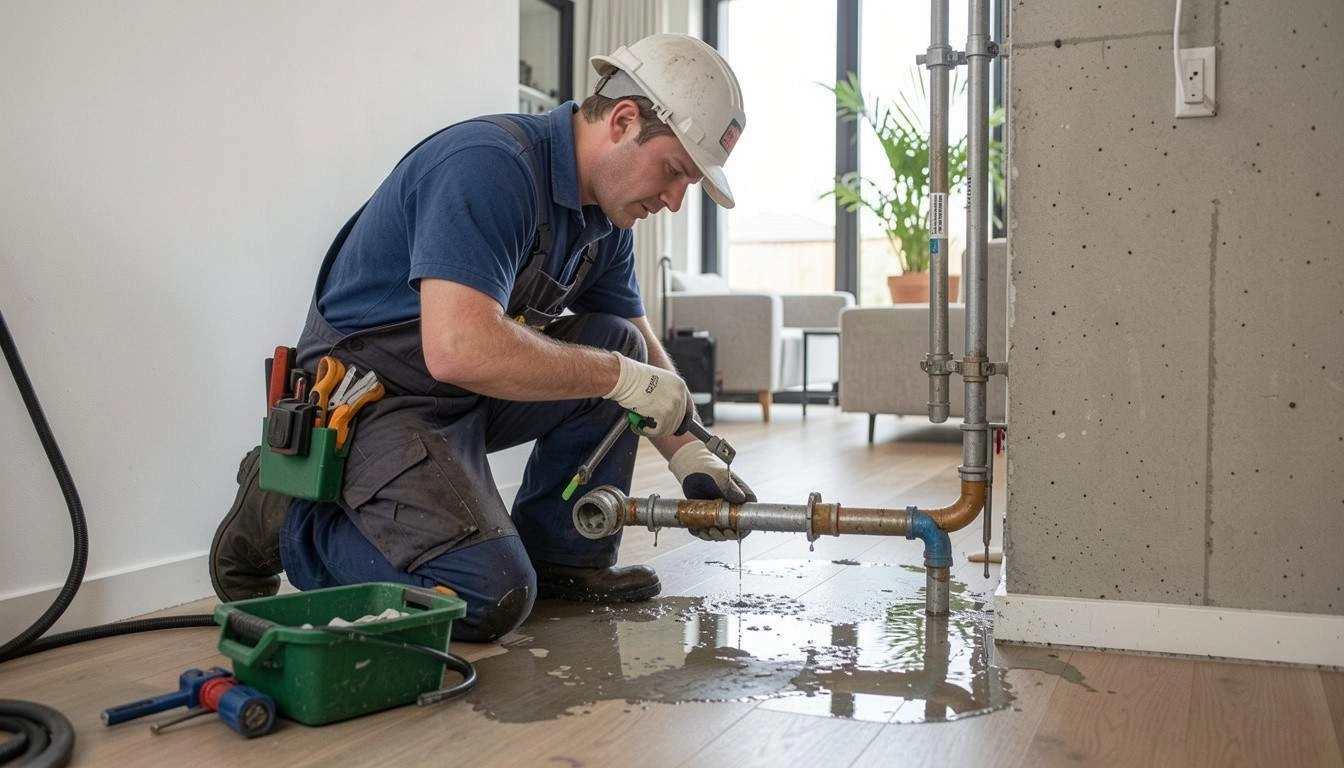
A burst pipe during a hard freeze puts water on the floor within minutes, not hours, and the difference between a $400 repair and a $15,000 basement rebuild comes down to how fast the water gets shut off. Front Range winters bring several nights below 10 degrees most years, and that is when Denver metro plumbers see the most emergency calls.
Why do Colorado pipes burst during a hard freeze?
Water expands about 9% as it turns to ice inside a pipe, and the pressure that builds between the ice blockage and a closed faucet splits the pipe wall well before the ice itself reaches that spot. Pipes running through an uninsulated crawlspace, an exterior wall, or a garage are the ones Front Range plumbers see burst first, since those areas sit closer to outdoor temperature than the rest of a heated home.
What counts as a plumbing emergency in Colorado?
- A burst or actively leaking supply line — water keeps flowing until the main shutoff is closed.
- A failed water heater — a tank that splits can empty 40 to 80 gallons onto a basement floor in minutes.
- A sewer backup — wastewater returning through a floor drain or lowest fixture is a health issue, not a maintenance item.
- No water at all in freezing weather — a sign of a frozen line about to split once it thaws.
Where is the main shutoff valve in a Front Range home?
Most Denver metro homes built after 1980 have the main shutoff in the basement or utility room near where the water line enters the foundation, close to the water heater or pressure-reducing valve. Homes on a crawlspace foundation place it near the crawlspace access, and homes on a slab place it in a utility closet or garage. Finding this valve before an emergency, not during one, cuts shutoff time from ten minutes of searching to under one.
What temperature puts Front Range pipes at the most risk?
Pipe freezing risk on the Front Range rises sharply once outdoor temperatures hold below 20 degrees for more than a few hours, and an uninsulated exterior-wall or crawlspace pipe can freeze even at higher outdoor readings if a wind chill drives the actual surface temperature down further. Leaving cabinet doors open under sinks on exterior walls and keeping a slow trickle running from the faucet farthest from the main line are the two lowest-cost steps that prevent most freeze events during a Front Range cold snap.
How fast can a failed water heater flood a basement?
A 40- to 50-gallon tank that splits at a weld or a corroded fitting can empty its full volume onto a basement floor in 10 to 20 minutes, and a water heater installed without a drain pan or a floor drain nearby sends that water straight into drywall, flooring and stored belongings before anyone notices. A water heater past 10 years old is the one that fails this way most, which is why replacing it proactively costs less in total than waiting for the emergency call.
What's a normal emergency plumber response time in Denver?
Denver metro emergency plumbers post response windows between 30 minutes and 2 hours for an active leak, depending on the company, the time of day and the weather event underway. During a Front Range cold snap, when dozens of homes call within the same few hours, response times stretch toward the long end of that range, which is the strongest argument for shutting off the main valve immediately instead of waiting for a technician to arrive to do it.
| Situation | After-hours cost, Front Range |
|---|---|
| Emergency call-out fee | $100 to $250 |
| Burst pipe repair (accessible) | $300 to $900 |
| Water heater replacement, same-day | $1,800 to $4,500 |
| Basement water extraction and drying | $3 to $8 per square foot |
Does homeowners insurance cover a frozen pipe burst in Colorado?
Most Colorado homeowners policies cover sudden and accidental water damage from a burst pipe, including a frozen-pipe break, but many policies exclude damage if the home sat unheated or vacant and the homeowner took no reasonable steps to prevent freezing. Photograph the damage and the source before cleanup starts, and call the insurer the same day — a delayed claim is harder to support once repairs are underway.
When should Front Range homeowners winterize sprinkler lines?
Denver metro sprinkler blowouts happen between early October and the first hard freeze, since irrigation lines left full of water when temperatures drop into the teens crack at the fittings and valves first. A missed blowout is one of the more preventable emergency calls plumbers take every fall.
Does a plumbing emergency affect a home sale in progress?
Under a Colorado contract to buy and sell, a plumbing failure discovered during the inspection period gives the buyer grounds to raise it before the inspection objection deadline, which falls 8 to 10 days after the contract date in most Front Range contracts. A seller who documents and repairs it before that deadline keeps the deal on schedule. A seller who waits past the deadline gives the buyer room to renegotiate price or walk.
Does a sewer backup count as a plumbing emergency?
Yes, and it ranks above a supply leak on the priority list most Front Range plumbers use, since wastewater returning into a home carries contamination risk in addition to the property damage. Stop using every drain and toilet in the house the moment a backup starts, since more water going down the line adds pressure behind whatever is blocking it and pushes more wastewater back up through the lowest fixture in the house, in most cases a basement floor drain or a basement bathroom.
Who fixes a shared-line emergency in an HOA or metro district?
A plumbing emergency inside a unit's own walls is the owner's responsibility in most Front Range HOA and condo agreements, while a break in a shared main line before it reaches the unit is the association's or metro district's responsibility in most cases. Reading the specific HOA governing documents before an emergency happens saves an argument about who calls the plumber during one.
What should I do first when I find standing water?
- Shut off the main water valve.
- Cut power to any outlets or fixtures in the flooded area at the breaker panel, not at the outlet itself.
- Call a licensed plumber and start moving valuables off the floor while you wait.
- Photograph the damage before extraction starts, for the insurance claim.
If you are researching who to call, companies such as A Plus Priority Plumbing are one example of a licensed Front Range emergency plumbing service — you are free to use any provider, and confirming a current Colorado plumbing license before the truck arrives is worth the extra minute.
Where to go next
- Preparing and adding value before selling a Colorado home
- Denver HOA rules and fees guide
- Colorado backflow preventers and sprinkler blowout guide
- How to prepare plumbing before selling your Denver home
- The Colorado home seller's guide
- Search every home for sale in Colorado
Talk to the Kenna Real Estate Group
The Kenna Real Estate Group helps Front Range sellers document and resolve a plumbing emergency fast enough to keep a sale on schedule, and helps buyers read an inspection report for the difference between a nuisance leak and a structural plumbing issue. Call or text 303-955-4220. A live person answers. Not a robot, not a phone tree. Search every home for sale in Colorado while you sort out next steps.
Homes for sale that match this post
- Basement: guide
- Homes with 2 Car Garage in Denver
- Special Districts Property Tax Guide in Denver
- Condo: guide
- HOA Rules and Fees Guide in Denver
- All homes for sale in Denver
Guides
Questions about any home in Colorado? Call or text 303-955-4220. A live person answers.