New - 22 Hours Ago
.jpg)


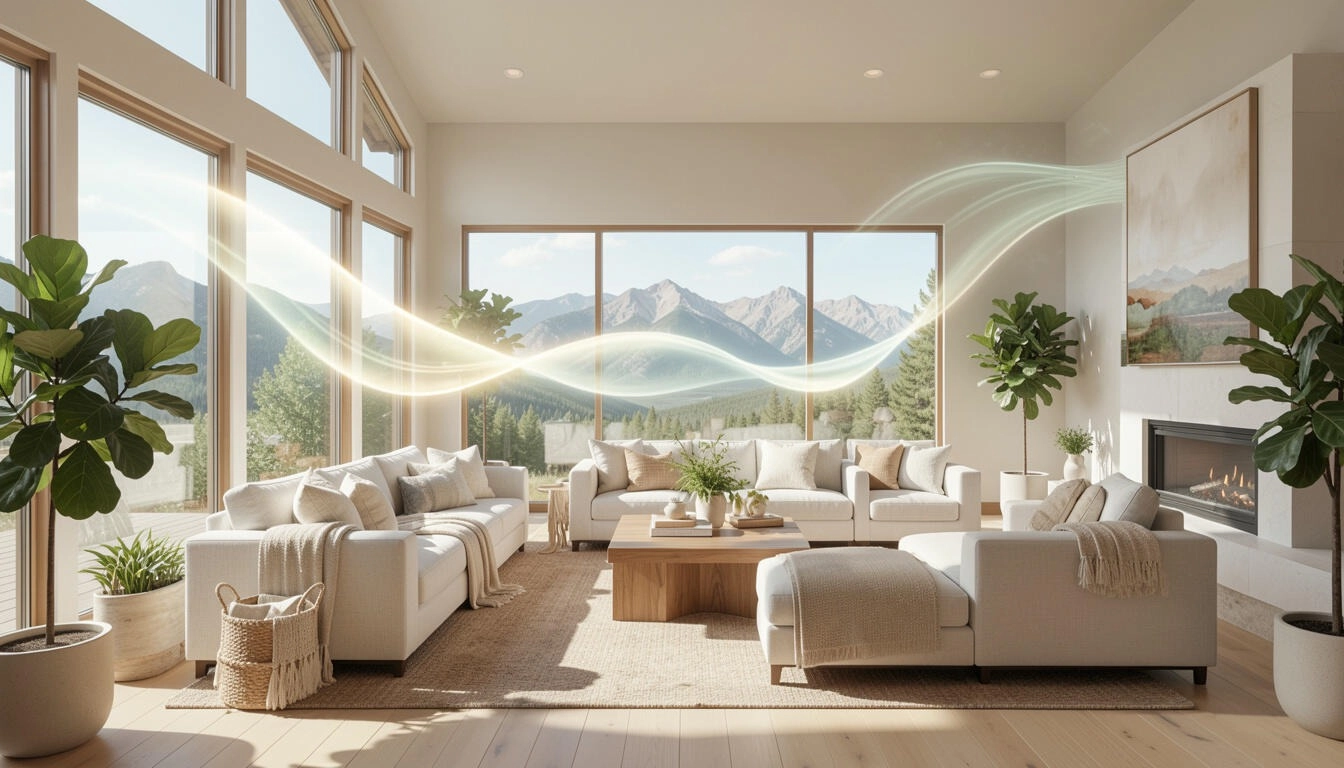
A Front Range home deals with three air quality challenges most homes elsewhere never see together: wildfire smoke drifting in from mountain and Western Slope fires, some of the lowest indoor humidity levels in the country, and radon gas rising through the region's soil. All three affect comfort, health, and what shows up on a pre-purchase inspection.
Denver metro homes sit at elevation in a semi-arid climate, which means both outdoor and indoor humidity run far lower than most of the country for most of the year. Add wildfire smoke that can blanket the Front Range for days during fire season, and radon gas that rises naturally through Colorado's soil and rock, and the air inside a sealed home needs more active management than in a humid, low-radon region.
Indoor air quality refers to the level of particulates, gases, humidity, and pollutants inside a building compared with fresh outdoor air. Dust, pollen, pet dander, off-gassing from new furniture or paint, and combustion byproducts from gas appliances all affect it, along with two Colorado-specific factors: wildfire smoke infiltration and radon.
Fine smoke particles pass through standard HVAC filters and gaps around doors and windows during heavy smoke days, even in a well-sealed home. A MERV 13 filter in the furnace, run continuously rather than on a thermostat cycle, captures a significantly higher share of smoke particulate than a standard MERV 8 filter. A portable HEPA air purifier in a bedroom adds a second layer of protection during the worst smoke days.
Colorado sits in an area the Environmental Protection Agency maps as higher-radon risk than the national average, and radon testing is one of the most common items a Front Range home inspection turns up. A short-term test runs 48 hours and costs $150 to $300 through a licensed tester; mitigation systems, if a test comes back above the EPA action level, run $800 to $1,800 installed. Buyers on the Front Range routinely test during the inspection period and negotiate mitigation as part of the purchase contract.
Colorado's seller disclosure form asks whether the seller is aware of a radon test or issue on the property; sellers disclose what they know, but are not required to test before listing. Buyers who want certainty order their own test during the inspection period.
Front Range indoor humidity drops into the 15% to 25% range during winter heating season, well below the 30% to 50% range most health guidance recommends for comfort. Low humidity dries out sinuses, skin, and wood furniture, and it also lets airborne dust and particulates stay suspended longer instead of settling out. A whole-home humidifier tied into the furnace, $400 to $900 installed, addresses this directly.
Furnaces and air handlers at Denver's elevation move a slightly different air volume than the same equipment at sea level, which is why HVAC contractors licensed in Colorado size and calibrate systems for altitude. Filters clog faster in Front Range dust than in many other climates; a 1-inch filter needs monthly checks, while a 4-inch or 5-inch media filter lasts three to six months.
| System | Typical Installed Cost | What It Addresses |
|---|---|---|
| MERV 13 filter upgrade | $50 to $150 | Smoke and dust particulate |
| Portable HEPA purifier | $150 to $600 | Single-room smoke and allergen relief |
| Whole-home humidifier | $400 to $900 | Winter dry-air comfort |
| Radon mitigation system | $800 to $1,800 | Sub-slab radon reduction |
Wildfire smoke odor absorbs into carpet, drapes, and HVAC ductwork during heavy smoke days and lingers after the air outside clears. Running the HVAC fan continuously with a fresh high-MERV filter, washing fabric window treatments, and having ducts inspected are the most effective steps; more on this in how to get smoke smell out of house.
A licensed technician can test actual indoor air changes per hour, inspect ductwork for leaks that pull in unconditioned attic or crawlspace air, and recommend the right filter and humidifier sizing for a specific Front Range home; Eastergard HVAC and similar Colorado-licensed contractors handle this kind of assessment.
Buyers touring older Front Range homes increasingly ask about furnace age, filter type, and whether the home has a radon mitigation system already installed, since a documented system on an older home removes a question mark that would otherwise come up during the inspection period. A seller who has already tested and, if needed, mitigated radon can point to that documentation early in a showing rather than waiting for it to surface as a buyer request later.
Front Range homes with an unfinished basement or a crawlspace foundation see more soil-gas infiltration, including radon, than a home on a full slab, simply because there is more exposed soil surface for gas to migrate through. A vapor barrier over exposed crawlspace soil reduces both radon entry and general moisture migration into the home, addressing two air quality issues with one relatively low-cost project.
New construction on the Front Range is built tighter to current energy code, which holds conditioned air in more efficiently but also means mechanical ventilation matters more, since a tightly sealed home does not exchange air with the outside as readily as an older, leakier one. Older homes leak more air naturally, which dilutes some indoor pollutants but also lets in more outdoor dust, pollen, and smoke during bad-air days. Neither profile is automatically better; both call for active filtration and, where soil conditions warrant it, radon testing.
Pet dander travels further and settles more slowly in Colorado's low-humidity air than it does in a more humid climate, which is part of why homeowners with pets on the Front Range need a higher-rated filter or a dedicated air purifier in main living areas. Vacuuming with a HEPA-filtered vacuum and washing pet bedding weekly reduces the dander load between HVAC filter changes.
The Colorado Department of Public Health and Environment issues air quality alerts during heavy wildfire smoke events, and the practical response for a homeowner is the same regardless of which fire is the source: close windows, switch the HVAC fan to run continuously with a high-MERV filter in place, and add portable HEPA filtration in bedrooms if the alert extends beyond a day or two. Checking the current alert level before opening windows on a smoky morning avoids pulling more particulate into the home than staying sealed up would.
Buying or selling a Front Range home means understanding what a radon test, a smoke event, or a dry Colorado winter does to a house. The Kenna Real Estate Group walks clients through what to test, what to fix, and what to negotiate. Call or text 303-955-4220. A live person answers. Not a robot, not a phone tree. Ready to start the search? Search every home for sale in Colorado.
Questions about any home in Colorado? Call or text 303-955-4220. A live person answers.
Front Range homes deal with wildfire smoke infiltration, some of the lowest indoor humidity in the country, and radon gas rising through regional soil, a combination most other climates do not face together.
Yes. Fine smoke particles pass through standard filters and small gaps around doors and windows. A MERV 13 filter run continuously and a portable HEPA purifier reduce indoor smoke levels significantly.
Colorado sits in an EPA-mapped higher-radon-risk area, and testing is one of the most common items a Front Range inspection turns up. A short-term test costs $150 to $300; mitigation runs $800 to $1,800.
Winter indoor humidity falls to 15% to 25% on the Front Range, well below the recommended range, which dries sinuses and skin and keeps dust suspended longer. A whole-home humidifier addresses it.
Most buyers order a short-term radon test during the inspection period and negotiate mitigation into the contract if the result comes back above the EPA action level, since sellers are not required to test before listing.
A MERV 13 filter upgrade runs $50 to $150. A whole-home humidifier runs $400 to $900. A radon mitigation system runs $800 to $1,800 installed.
Yes. Furnaces and air handlers move a different air volume at Denver's elevation than at sea level, so Colorado-licensed HVAC contractors size and calibrate equipment specifically for altitude.
A standard 1-inch filter needs a monthly check in Front Range dust. A 4-inch or 5-inch media filter lasts three to six months before it needs replacing.