New - Just Now

$2,495,000
Coming Soon
5
Beds
4
Baths
6079
Sqft
0.87
Acres
1 Brookside Dr, Greenwood Village, CO 80121
MLS#: 9700677
.jpg)


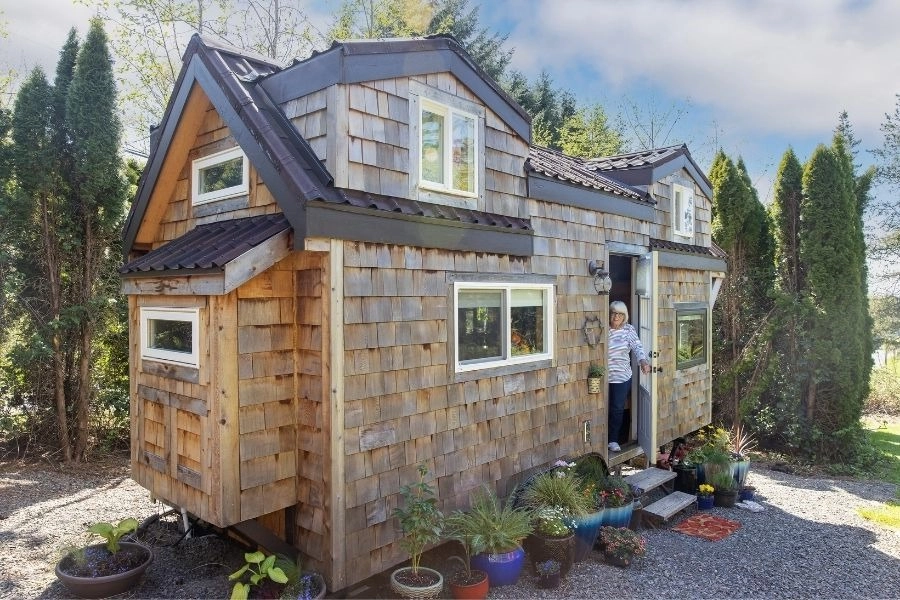
A tiny home cuts a retiree's housing cost on the Front Range in two ways: a smaller mortgage or cash purchase, and lower ongoing utility and maintenance costs than a full-size house. The catch is that not every Colorado city treats a tiny home the same way, and the zoning path matters as much as the home itself.
A tiny home built on a permanent foundation, as an accessory dwelling unit on an existing lot or as a standalone small home on its own lot, follows the same building code and permit process as any other structure in Denver and most Front Range cities. A tiny home on wheels, built to RV standards, is treated differently: it is not permitted as a permanent residence on most residential lots and needs an RV park or a specific zoning allowance.
An ADU, a small permanent structure on a homeowner's existing lot, is the more workable path for most Front Range retirees who want to downsize while staying near family or a familiar neighborhood. Denver's ADU rules currently allow more backyard and above-garage units than a few years ago; see Denver's new ADU policy for what changed. A tiny home on wheels offers more mobility but far less financing and resale flexibility.
Some Front Range cities and counties set a minimum square footage for a permanent residential structure, which rules out the smallest tiny home designs on a standalone lot in those jurisdictions even though the same design works as an ADU behind an existing house. Check the specific minimum with the city or county before choosing a lot or a design.
A tiny home permanently affixed to a foundation and titled as real property qualifies for a standard mortgage in most cases; a tiny home on wheels, titled like an RV, needs RV or personal-property financing instead, at different terms than a home loan. A retiree comparing the two should ask a lender directly which financing category a specific design falls into before assuming mortgage terms apply.
A smaller structure carries a lower assessed value and a smaller heating and cooling footprint than a standard single-family home, which lowers both the property tax bill and the monthly utility cost for a retiree living on a fixed income. The exact savings depend on the specific property and county assessment, not a fixed percentage.
Many Front Range HOAs and age-restricted communities set minimum home size requirements that rule out the smallest tiny home designs, even where the city allows them. Confirm size and design rules with the specific community before assuming a tiny home fits an age-restricted neighborhood you are considering; see Colorado 55+ communities by area for options with different size and design rules.
| Path | Typical Front Range cost range |
|---|---|
| Tiny home as an ADU on an existing lot | $100,000 to $250,000 including permits and site work |
| Tiny home on wheels, factory built | $50,000 to $120,000 |
| Standalone tiny home on its own purchased lot | $150,000 to $350,000+ including land |
A tiny home built as a permitted ADU on a standard lot sells with the main house and adds to its value; a standalone tiny home on its own small lot, or one built on wheels, has a smaller buyer pool and less established resale data than a conventional home. This matters most for a retiree who expects to sell again in ten or fifteen years rather than stay for the rest of their life.
The more common Front Range pattern is a permanent ADU behind an adult child's house or on a retiree's own downsized lot, not a standalone tiny home community. See senior real estate help in Colorado and the downsizing guide for Colorado baby boomers for how this fits into a broader downsizing plan.
A permanent ADU built for an aging parent, sometimes described as a multigenerational setup, follows the same Denver zoning path as a rental ADU, with an added benefit: it keeps a parent close while giving both households separate space. Confirm with the city whether an owner-occupancy requirement applies to the main house when the ADU houses a relative rather than a renter, since that rule has changed in recent years.
Some Colorado retirees choose a larger shared multigenerational home instead of a standalone tiny home, splitting costs and staying close without a separate structure. See why some Colorado retirees choose a bigger shared home instead of downsizing for how that comparison plays out financially against a tiny home or ADU path.
A small structure loses heat fast relative to its size in a Colorado winter, which makes insulation quality matter more per square foot than it does in a larger house. A well-insulated tiny home or ADU keeps utility costs low through Front Range cold snaps; a poorly insulated one erases much of the cost advantage a smaller footprint is supposed to deliver.
A tiny home built on its own purchased lot needs the same water, sewer or septic, and electrical connections as a full-size house, and those site costs do not shrink along with the structure. Budget for utility hookups separately from the home's purchase or construction price when comparing a standalone lot to an ADU that already sits on serviced land.
Building a permitted ADU or standalone tiny home on the Front Range takes several months from permit application to move-in once design, review and construction are added together, longer than buying an existing small home outright. A retiree on a tight timeline compares both paths before committing to a from-scratch build.
Weighing a tiny home, an ADU or a standard downsize for retirement on the Front Range? The Kenna Real Estate Group works with Colorado retirees on all three paths and what each one costs and returns. Call or text 303-955-4220. A live person answers. Not a robot, not a phone tree. Or search every home for sale in Colorado.
Questions about any home in Colorado? Call or text 303-955-4220. A live person answers.
A tiny home on wheels is treated like an RV and is not permitted as a permanent residence on a standard residential lot. It needs an RV park or a specific zoning allowance.
For most Front Range retirees, yes. An ADU on an existing lot follows standard building code, qualifies for conventional financing when permanently affixed, and adds value to the main property.
Many set minimum home size requirements that rule out the smallest tiny home designs. Confirm with the specific community before assuming it fits.
Yes, if it is permanently affixed to a foundation and titled as real property. A tiny home on wheels, titled like an RV, needs RV or personal-property financing instead.
A smaller structure carries a lower assessed value, which lowers the property tax bill, but the exact amount depends on the specific property and county assessment.
A permitted ADU sells with the main house and adds to its value. A standalone tiny home or one on wheels has a smaller buyer pool and less established resale data.


