New - 10 Hours Ago

.jpg)


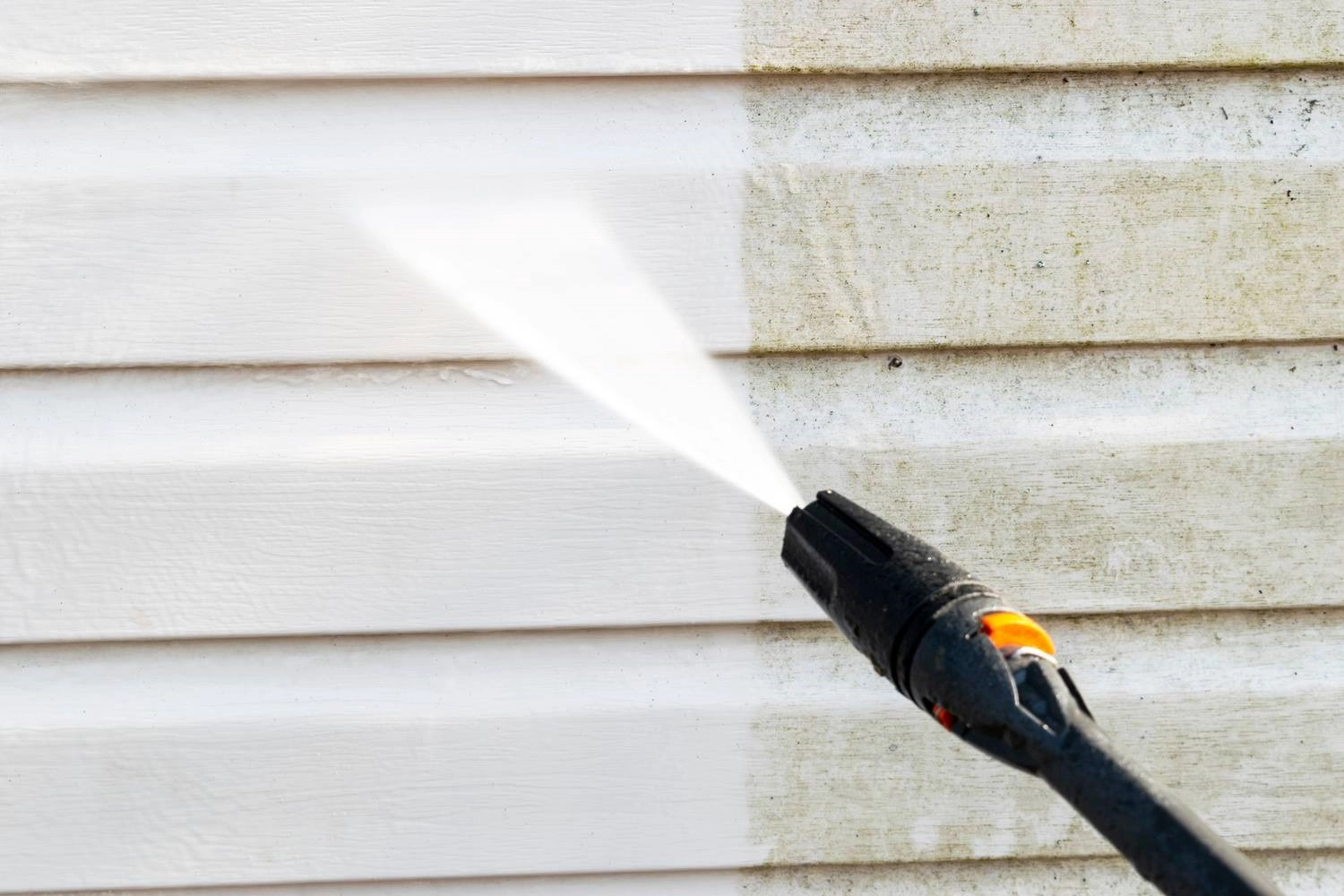
Pressure washing a Colorado home takes different judgment than pressure washing one in a wet climate, because dry, UV-baked wood, hail-dented siding, and hard mineral water all change what a pressure washer does to your exterior. Here are the mistakes that show up most on Front Range homes and how to avoid them.
Late spring, after the last hard freeze but before hail season builds through the summer, is the best window. Washing in early spring also clears winter mag chloride residue before it bakes onto siding and concrete in the summer sun, making a mid-summer touch-up unnecessary in most years.
Indirectly, yes. Colorado's hail season runs from spring through September, and siding that's already caked with grime and mineral deposits hides small cracks and chips that a hailstorm turns into bigger problems. A clean, dry exterior also makes post-storm insurance inspection photos more useful, since damage shows up clearly against a clean surface instead of getting lost in existing dirt and staining.
Stucco, a common Front Range exterior finish, needs a low-pressure setting, under roughly 1,500 PSI, with a wide fan tip, since high pressure drives water behind the finish coat and causes it to crack or delaminate. Vinyl siding tolerates a moderate setting around 1,500 to 2,000 PSI. Brick and concrete handle higher pressure, up to 3,000 PSI, but the mortar joints between bricks are the weak point and need the same caution as stucco, especially on a home built before 1960 with original lime mortar.
Yes. Gas-powered pressure washer engines lose some output at Denver's roughly 5,280-foot elevation and higher, the same way any small combustion engine does, so a unit rated for sea-level performance delivers less PSI at altitude than its rating suggests. Electric pressure washers aren't affected the same way, which makes them a more predictable choice for homeowners at higher elevations along the Front Range foothills.
Yes, more easily than in a humid climate. Colorado's roughly 300 days of sun a year dries out exterior wood trim and fascia, making the wood fibers more brittle and prone to gouging under high pressure. Test an inconspicuous spot first at the lowest effective setting, and hold the wand at a consistent distance rather than pausing in one spot, which is where most trim damage happens.
Magnesium chloride deicer, used across the Front Range on roads and sometimes driveways, leaves a sticky white film that plain water doesn't fully lift. A mild detergent pre-treatment followed by a moderate-pressure rinse removes it more completely than water alone, and doing this in early spring keeps the residue from baking onto concrete and painted surfaces once summer heat arrives.
Many Front Range HOAs and metro districts include exterior cleanliness standards in their covenants, and some issue a notice for visible mold, mildew, or heavy grime buildup on siding or roofing. Check your specific HOA's covenant before assuming a schedule, since requirements vary widely between communities.
Some Front Range cities and water districts, particularly Denver Water customers and communities under drought-stage restrictions, limit outdoor water use on certain days or hours. Pressure washing falls under general outdoor water use rules in most cases, rather than irrigation-specific restrictions, but check your local water provider's current rules before scheduling a large job during a dry summer.
Only with extreme caution, and on a designated landmark property, exterior cleaning method changes sometimes need a Certificate of Appropriateness from Denver Landmark Preservation. Original lime-mortar joints are softer than modern mortar and damage easily under pressure. A low-pressure rinse or a professional specializing in historic masonry is the better route on any brick home built before 1960.
Below about 40 degrees Fahrenheit, water can freeze on contact with siding, gutters, and walkways, creating an ice hazard and reducing cleaning effectiveness. Front Range spring and fall days can swing widely, so check the forecast for the full workday, not just the morning temperature, before starting a job.
Once a year, in late spring, covers most Colorado exteriors. Homes shaded by mature trees or facing north, where mold and algae grow more persistently, sometimes need a second cleaning in early fall before winter.
Yes. Clean siding, walkways, and a clean driveway are among the highest-return, lowest-cost improvements before listing photos are taken, and buyers notice grime immediately walking up to a home. Pair a professional cleaning, such as one from Platinum Pressure Washing or a comparable local service, with a fresh coat of paint on trim for the biggest curb-appeal jump for the cost.
A dedicated mildew remover applied before rinsing breaks down mold and algae growth better than water pressure alone, especially on a north-facing wall that stays damp longer after snowmelt. Let the product sit per the label's instructions before rinsing at a moderate setting.
Soft washing uses a low-pressure sprayer combined with a cleaning mixture to break down mold, algae, and grime chemically instead of blasting it off with water force. Roofing, painted wood siding, and delicate stucco finishes respond better to soft washing on the Front Range, since it removes the same buildup without the risk of forcing water behind flashing or trim. Reserve high-pressure washing for concrete driveways, brick pavers, and other hard, non-porous surfaces that can handle the force without damage.
Shut off power to any exterior outlet, light fixture, or doorbell camera in the work area before starting, and keep the spray angled away from outlet covers, junction boxes, and meter panels throughout the job. Water forced into an outdoor electrical box can trip a breaker or, worse, create a shock hazard the next time someone uses that outlet. A wide-angle nozzle and a slower approach near any fixture reduces the risk significantly.
A standard single-family home exterior runs $250 to $600 depending on square footage, siding material, and the amount of buildup, with driveway and walkway cleaning priced separately at $150 to $350. Homes needing soft washing for roof algae or extensive mag chloride removal after a rough winter fall toward the higher end of that range. Get two or three quotes, since pricing on the Front Range varies more than in markets with a larger pool of established pressure washing companies.
The Kenna Real Estate Group at Keller Williams DTC helps Front Range sellers prioritize exterior fixes, including pressure washing, that actually move the needle with buyers before listing. Call or text 303-955-4220. A live person answers. Not a robot, not a phone tree. Curious what your home is worth in today's market? Search every home for sale in Colorado.
Questions about any home in Colorado? Call or text 303-955-4220. A live person answers.
Under roughly 1,500 PSI with a wide fan tip. Higher pressure drives water behind the stucco finish coat and causes cracking or delamination.
Yes. A gas engine loses some output at Denver-area elevation the way any small combustion engine does, delivering less PSI than its sea-level rating. Electric units aren't affected the same way.
Late spring, before Colorado's hail season builds through the summer. Cleaning first also makes post-storm damage easier to spot and photograph for an insurance claim.
Yes, if the mortar is original lime mortar, which is softer than modern mortar and can erode under pressure. A historic property sometimes requires a Certificate of Appropriateness before an exterior cleaning method change.
Pre-treat with a mild detergent, then rinse at moderate pressure. Doing this in early spring keeps the residue from baking onto concrete once summer heat arrives.
Once a year, in late spring, is enough for most homes. Shaded or north-facing exteriors with persistent mold or algae sometimes need a second cleaning in early fall.
Below about 40 degrees Fahrenheit, water can freeze on contact and reduce cleaning effectiveness. Check the full day's forecast, not just the morning temperature, before scheduling.
Yes. Clean siding, walkways, and driveways are one of the highest-return, lowest-cost improvements before listing photos, since buyers notice grime immediately on arrival.


