.jpg)


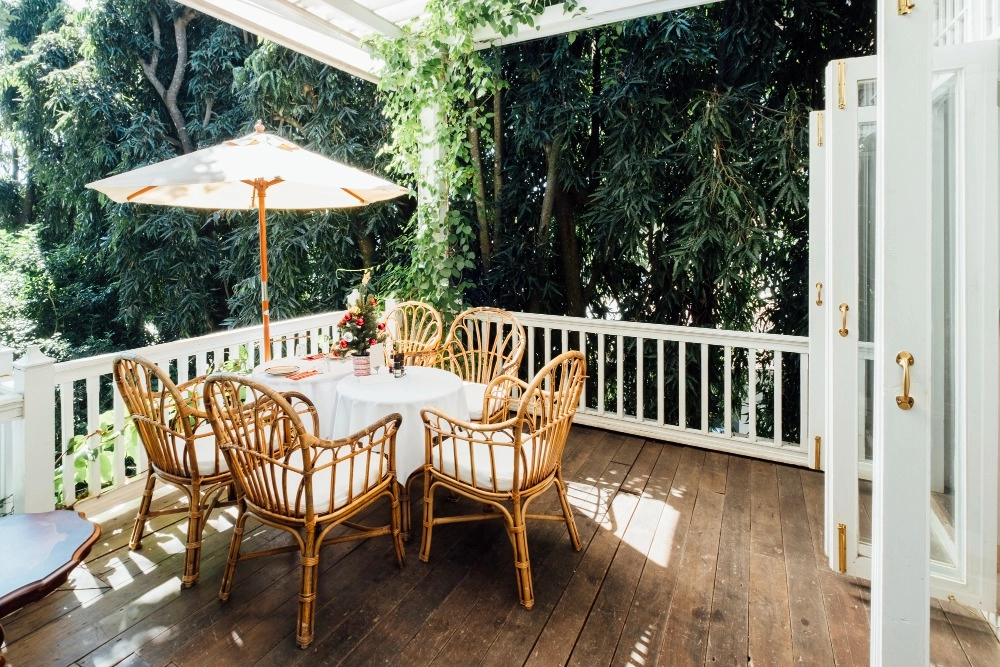
Colorado's backyard furniture has to survive three things most climates do not combine: intense high-altitude UV, hail season that runs from spring through September, and 40-degree daily temperature swings that stress joints and finishes. Material choice matters more here than in a mild, stable climate.
What outdoor furniture material holds up best to Colorado hail?
- Powder-coated aluminum: dents less than steel, does not rust, and is the most hail-resistant metal option.
- High-density polyethylene (HDPE) resin: the material used in quality synthetic wicker, flexes under impact instead of cracking.
- Teak and other dense hardwoods: hold up to impact well but need periodic oiling to resist Colorado's dry-air cracking.
- Thin wrought iron or cast aluminum with a brittle finish: the most prone to chipping or denting in a hailstorm.
Does high-altitude UV fade patio furniture faster than at sea level?
Yes. Denver's 300 days of sun a year and elevation of 5,280 feet mean cushion fabric, resin, and finished wood all fade and break down faster than the same products at sea level. Solution-dyed acrylic fabric, where the color runs through the fiber rather than sitting on top, resists UV fading far longer than printed or surface-dyed cushion fabric.
When is hail season on the Front Range?
Hail season runs from spring through September, with the Front Range corridor from Denver to Colorado Springs seeing some of the most frequent large-hail events in the country. Furniture left uncovered during a storm risks dents in metal, cracks in resin, and torn cushion fabric from hail larger than an inch.
Does covering furniture protect it during hail season?
A quality cover reduces cushion and fabric damage but does not stop dents in thin metal or cracks in brittle resin from large hail. Moving furniture under a covered patio or into a garage during a forecasted severe storm is the only reliable protection for anything not rated for direct hail impact.
What furniture survives 40-degree daily temperature swings?
Materials that do not expand and contract much with temperature, aluminum, HDPE resin, and stone-look concrete composites, hold their finish and joints longer than wood or wicker, which swell and shrink with the Front Range's wide daily temperature range. A rapid swing from a 70°F afternoon to a 30°F evening is common in shoulder-season months and puts real stress on glued or woven joints.
Does freeze-thaw damage wood or wicker outdoor furniture?
Yes, especially natural wicker and unsealed wood, which absorb moisture that then freezes and expands, cracking the material over a winter or two. Synthetic (HDPE) wicker does not absorb moisture the same way and holds up through repeated freeze-thaw cycles far better than natural rattan.
How much should I budget for a Front Range patio furniture set?
| Set type | Material | Denver metro cost |
|---|---|---|
| 4-piece conversation set | HDPE resin wicker | $600 to $1,800 |
| 6-piece dining set | Powder-coated aluminum | $1,200 to $3,500 |
| Lounge chair pair | Teak | $800 to $2,000 |
| Budget bistro set | Steel with basic coating | $150 to $400 |
Compare frame material and cushion fabric first, since both drive how a set holds up outdoors far more than style does. A commercial-grade resilience rating, the kind used for restaurant patio furniture, is a good gauge of how a residential set will handle a Front Range backyard, since it is tested for the same daily sun and weather exposure your patio sees.
What cushion fabric resists Colorado's dry air and intense sun?
Solution-dyed acrylic (branded lines like Sunbrella are the common example) resists both UV fading and the dry-air brittleness that breaks down cheaper polyester cushion covers within a season or two. Bringing cushions inside or under cover overnight extends fabric life further, since the daily swing between hot sun and a cold Front Range evening stresses fibers even when the fabric itself is UV-rated.
Does Colorado's dry climate affect outdoor wood furniture?
Yes. Low humidity dries and cracks unsealed or unoiled wood faster than in a humid climate, so teak and other hardwood pieces need oiling twice a year on the Front Range instead of once, and a wood sealant reapplied every one to two years. Sustainably sourced hardwood and recycled HDPE resin are the two lower-impact material choices worth comparing before a purchase, since both hold up to Colorado's UV and freeze-thaw cycling as well as or better than the alternatives.
Do HOAs on the Front Range regulate visible patio furniture?
Many Denver metro HOAs, especially in townhome and patio-home communities, have architectural guidelines covering furniture visible from the street or a shared common area, sometimes limiting color or requiring approval for a pergola or fixed structure. Check your community's covenants before a major backyard furniture purchase if your patio faces a street or common area.
What outdoor furniture adds resale value to a Colorado backyard?
Furniture itself rarely stays with the sale and does not directly add appraised value, but a well-furnished, photograph-ready patio helps a Front Range listing show its outdoor living space, which matters to Denver metro buyers given how much of the year is spent outside; see our piece on why Denver's outdoor lifestyle keeps housing demand strong for the buyer side of that equation. Staging a patio with durable, weather-appropriate furniture for listing photos is a low-cost way to show that space at its best.
Should outdoor furniture be stored in winter on the Front Range?
Cushions and fabric pieces should come inside or into a shed or garage for winter; frames built from powder-coated aluminum or HDPE resin can stay out year-round without damage. Wood and wicker last longer with winter storage, since repeated freeze-thaw cycling is what breaks those materials down fastest, not a single cold snap.
Is metal or resin furniture better for a hailstorm-prone backyard?
Resin (HDPE) flexes under a hail strike and rarely shows permanent damage from anything short of a major storm, while metal dents visibly, with aluminum denting less than steel or thin wrought iron. For a backyard with no covered patio to move furniture under during a storm, resin is the sturdier long-term choice given how frequently the Front Range sees hail between spring and September.
Does Colorado's climate change what warranty coverage is worth checking?
Yes. Ask specifically whether a manufacturer's warranty covers hail impact and UV fading, since a generic patio furniture warranty written for a milder, low-altitude climate leaves out both kinds of coverage. A frame warranty of 5 years or longer and a fabric warranty naming UV resistance by name are worth more on the Front Range than a longer warranty period with vague wording. Keep the receipt and warranty documentation with the furniture; a Colorado retailer or manufacturer processing a hail-damage claim will ask for both.
Where to go next
- Stone, Brick, or Concrete: Which Is Better for Patios?
- How to Choose the Right Design for Your Outdoor Deck
- Preparing and Adding Value Before Selling
- Denver HOA Rules and Fees Guide
- Search homes for sale in Colorado Springs
- Search every home for sale in Colorado
Talk to the Kenna Real Estate Group
Whether you are staging a Front Range patio before listing or sizing up a backyard on a home you are about to make an offer on, the Kenna Real Estate Group can help you see the outdoor space the way a Colorado buyer will. Call or text 303-955-4220. A live person answers. Not a robot, not a phone tree. Or search every home for sale in Colorado to find one with the backyard you want.
Homes for sale that match this post
- Homes with Fenced Yard in Denver
- Homes with 2 Car Garage in Denver
- Townhome: guide
- Staging: guide
- All homes for sale in Denver
Guides
Questions about any home in Colorado? Call or text 303-955-4220. A live person answers.