.jpg)


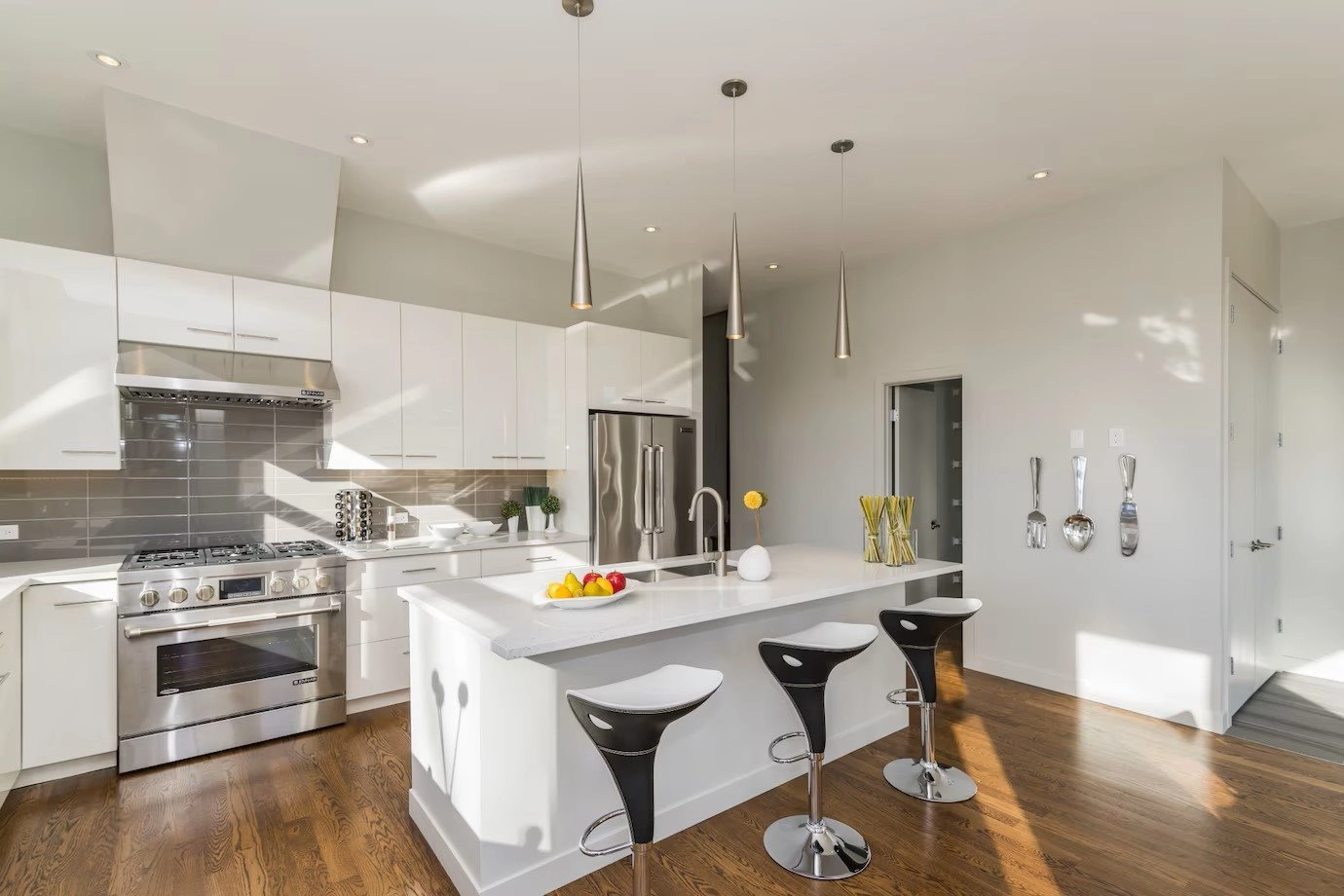
Seven renovations turn a Colorado fixer-upper into a home that sells in under 30 days: a kitchen refresh, a bathroom update, new flooring built for dry air, interior and exterior paint rated for high-altitude UV, a xeriscaped yard, the structural items Colorado buyers refuse to skip (roof, sewer line, windows, radon), and a short list of smart-home features. In the Denver metro those seven cost $60,000 to $130,000 on a 1,800-square-foot ranch and return 80% to 120% of the spend at sale, because a finished, inspected, permitted home clears the buyer pool that a project house never reaches.
This page gives Front Range costs, returns, and the permit and inspection rules for each of the seven. It applies to a fix-and-flip investor in Aurora and to an owner in Lakewood who bought the worst house on the block and wants to sell the best one.
1. Kitchen: refresh, do not gut, unless the comps say otherwise
The kitchen decides the listing photo set and the first five minutes of every showing. In the Denver metro, a minor kitchen remodel returns more than a full gut on any home under $800,000:
- Minor remodel, $20,000 to $35,000: paint or reface the existing cabinet boxes, new doors and hardware, quartz counters, undermount sink and faucet, stainless appliance package, LED can lights, tile backsplash. Returns 80% to 95% at sale.
- Full gut, $60,000 to $110,000: new layout, new cabinets, island, electrical and plumbing moved, permits for both. Returns 45% to 60% and adds 6 to 8 weeks to the project.
Do the full gut only when the sold comps within a half mile show remodeled kitchens selling for $80,000 or more above original ones. Quartz beats granite in Colorado for one reason: it does not need sealing in 15% winter indoor humidity. Read a homeowner's guide to remodeling in Highlands Ranch for how HOA rules affect the same choices.
2. Bathroom: fixtures first, tile second
Buyers forgive a small bathroom; they do not forgive a stained tub, a cultured-marble vanity top, or a fan that does not vent outside. The Front Range order of operations:
- Refresh, $2,500 to $6,000: new toilet, vanity with a quartz top, faucet, showerhead, mirror, light bar, exhaust fan vented to the roof, fresh caulk and grout. Returns 100% or more.
- Midrange remodel, $18,000 to $30,000: tile tub surround or walk-in shower, new tile floor, new vanity and fixtures, permit for any plumbing moved. Returns 60% to 75%.
Colorado's water is hard along most of the Front Range, so replace every chrome fixture with scale on it. A shower valve replacement ($400 to $900) fixes the weak-pressure complaint that comes up in half the showings on a 1970s home.
3. Flooring built for Colorado's dry air
Indoor humidity in a Denver home drops to 10% to 20% from November to March. Solid hardwood installed in summer opens gaps by January; cheap laminate cups at the seams. The floors that hold up here and sell:
- Luxury vinyl plank (LVP), $4 to $8 per square foot installed: waterproof, stable in dry air, right for basements, kitchens, and whole-house flips under $600,000.
- Engineered hardwood, $8 to $14 per square foot installed: stable in low humidity; the choice for main floors on homes over $600,000.
- Refinishing existing oak, $3 to $5 per square foot: most Denver homes built from 1900 to 1975 in Wash Park, Berkeley, Park Hill, and Lakewood have red or white oak under the carpet. Refinish it and the listing photos sell themselves.
- Carpet in bedrooms only, $2 to $4 per square foot: neutral, mid-grade, with an 8-pound pad.
The full comparison is in top flooring choices that boost home value in Denver's market.
4. Paint that survives 5,280 feet of UV
Interior: one neutral color throughout, flat on ceilings, eggshell on walls, semi-gloss on trim, $4,000 to $8,000 on an 1,800-square-foot home. Exterior is where Colorado differs. UV at this elevation fades and chalks a standard exterior paint in 5 to 7 years, and hail chips it. Use a 100% acrylic exterior rated for UV on siding and trim, and an elastomeric coating on stucco, which flexes through freeze-thaw and bridges hairline cracks.
On stucco and masonry, waterproofing paints need a clean, dry, primed surface and two coats to earn their rating; you are free to use any product or contractor. An exterior repaint on the Front Range runs $5,000 to $12,000 for a two-story home and photographs as a new house.
5. Landscaping: xeriscape sells in Colorado
A dead lawn is the first thing a buyer sees and the first thing a flip fixes. In Colorado the fast-sale yard is a low-water yard: Denver Water and most metro utilities pay turf-replacement rebates, and buyers read a xeriscaped front yard as a lower water bill and less weekend work. The numbers:
- Xeriscape conversion, $8 to $15 per square foot: rock or mulch beds, drip line, native grasses, yarrow, Russian sage, blue grama, and two or three boulders.
- New sod with a repaired sprinkler system, $1.50 to $3 per square foot plus $1,500 to $4,000 for irrigation: still the right call in HOA neighborhoods that require turf in the front.
- Concrete walk and step repair, $1,500 to $5,000: freeze-thaw and mag chloride crack Front Range concrete; a lifted slab at the front step is a tripping hazard the inspector writes up.
- Tree trimming and dead-tree removal, $500 to $4,000: emerald ash borer has killed ash trees across Boulder, Broomfield, Arvada, and Denver; a dead ash over the roof is an inspection item.
Our Front Range xeriscaping guide lists the plants and the rebates.
6. The structural items Colorado buyers refuse to skip
A flip in the Denver metro sells fast only when the buyer's inspector finds nothing on these five lines. Skip any one and the sale goes back to the negotiating table.
| Item | Denver-metro cost | Why Colorado buyers insist |
|---|---|---|
| Roof, Class 4 impact-resistant | $15,000 to $30,000 | Hail season May to September; insurers discount Class 4 and refuse old roofs |
| Sewer line scope and repair | $150 scope; $6,000 to $20,000 replacement | Clay pipe under pre-1980 homes; every buyer scopes it |
| Windows, double-pane vinyl | $600 to $1,200 per window installed | UV and 60-degree daily temperature swings kill old seals |
| Radon mitigation | $1,200 to $2,500 | Every Colorado county is EPA Zone 1; half of tests exceed 4.0 pCi/L |
| Egress windows in basement bedrooms | $3,000 to $6,000 each | Required by code to count a basement room as a bedroom |
Furnace and air conditioning belong on the same list: a furnace over 20 years old or an AC over 15 becomes a $6,000 to $12,000 credit request. Read the mechanical upgrades buyers want in the Front Range and roof replacement in Colorado: costs, lifespan, and materials before setting the budget. A fiberglass front door ($1,500 to $4,000) finishes the exterior and holds up to hail where steel dents.
7. Smart home features that move a Denver listing
Three items, under $1,000 total, that buyers under 45 ask about and that photograph in the listing: a smart thermostat ($150 to $300, with Xcel Energy rebates on qualifying models), a smart lock ($150 to $300), and a video doorbell ($100 to $250). Add a smart garage opener ($100 to $200) on a home with a detached garage in an alley-loaded Denver neighborhood. Skip whole-house automation on a flip; buyers do not pay for it and inspectors do not understand it.
Vendors sell these smart home gadgets as packages; you are free to use any provider, and any hardware-store brand that works with a phone app does the job on a Front Range flip.
Permits: what a flip needs in Denver and the metro counties
Denver Community Planning and Development, Aurora, Lakewood, Arapahoe County, Jefferson County, Adams County, and Douglas County all require permits for electrical, plumbing, mechanical, structural, roof, and egress work. A kitchen or bath that moves a drain or adds a circuit needs a permit and an inspection. Unpermitted work is the fastest way to lose a sale in Colorado: the appraiser will not count an unpermitted basement bedroom, the buyer's lender flags it, and the Seller's Property Disclosure asks the seller directly. Budget $500 to $2,500 in permit fees and 2 to 6 weeks of review, and pull them before the drywall goes up. Denver's historic districts add Landmark review for exterior work; our Denver ADU, zoning, and historic district guide covers which blocks that touches.
Where the fixer-uppers are on the Front Range
The 1950s to 1970s ranches and bi-levels that flip best sit in original Aurora, Lakewood, Northglenn, Thornton south of 104th, Englewood, Denver's Montbello, Westwood, and Barnum, and Colorado Springs' older neighborhoods west of Academy. Pueblo has the lowest entry prices in the state and the thinnest resale margins. Greeley and Evans draw investors with prices $150,000 under the Denver metro.
HUD homes, bank-owned foreclosures, and estate sales are the sources. Start with our Colorado distressed homes buyer guide, the Colorado HUD homes guide, and the Aurora home search, then read the full Denver fix-and-flip guide for the inspection checklist we use before an investor writes an offer.
Pricing the flip: after-repair value and the 70% rule
Front Range investors price a purchase at 70% of the after-repair value minus the renovation budget. On a Lakewood ranch with an ARV of $600,000 and a $90,000 renovation, that puts the maximum purchase at $330,000. Holding costs on the Front Range add $3,500 to $6,000 a month: hard-money interest at 10% to 13% plus 1 to 3 points, property taxes, insurance on a vacant home, and Xcel and water bills. A 4-month project and a 30-day sale mean 5 months of carry, so speed on the seven renovations is itself a line in the budget.
An owner-occupant buying a fixer-upper to live in uses an FHA 203(k) or conventional renovation loan instead of hard money. Mike Oswald, VP of Mortgage Lending at Rate, NMLS 261003, Equal Housing Lender, quotes those on Colorado homes; you are free to use any lender. See the Colorado home financing guide. The exit price comes from a Smart Pricing Report on the finished home, and our adding value before selling page ranks which of the seven pay back first when the budget is short.
Where to go next
- Colorado real estate investing guide
- Fix and flipping in Colorado: the comprehensive guide
- Colorado foreclosure and REO homes guide
- How the Kenna Real Estate Group sells the finished home
- Explore Pueblo homes for sale
- Meet the Kenna Real Estate Group agents
Talk to the Kenna Real Estate Group
We find the fixer-upper, run the after-repair value against real sold comps, tell you which of the seven renovations the block pays for, and list the finished home to sell in its first two weeks. Call or text 303-955-4220. A live person answers. Not a robot, not a phone tree. To see what is on the market today, search every home for sale in Colorado.
Homes for sale that match this post
- Fixer Upper Homes in Denver
- Homes with Gourmet Kitchen in Denver
- Pool: guide
- HOA Rules and Fees Guide in Denver
- All homes for sale in Denver
Guides
Questions about any home in Colorado? Call or text 303-955-4220. A live person answers.