.jpg)


If you own a home anywhere along Colorado's Front Range, you've probably watched your water bill climb and your lawn struggle through another bone-dry summer. You're not alone. Hotter, drier seasons have pushed Colorado homeowners to rethink the traditional grass lawn, and xeriscaping has become one of the smartest upgrades you can make, both for your wallet and for your home's resale value.
At The Kenna Real Estate Group, we tour hundreds of homes every year from Fort Collins down to Colorado Springs. Properties with thoughtful, low-water landscaping consistently photograph better, show better, and often sell faster than homes with patchy, water-hungry turf. Here's a practical, step-by-step guide to transforming your yard into a drought-tolerant landscape that actually adds value to your home.
What Xeriscaping Really Means (and What It Doesn't)
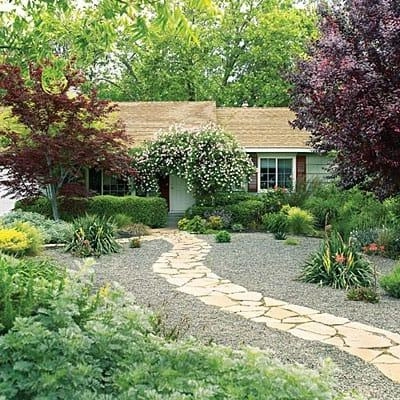
Let's clear up a common misconception. Xeriscaping is not "zero-scaping." It is not a yard full of gravel and three sad cacti. A well-designed xeric landscape is lush, colorful, full of texture, and alive with pollinators. The difference is that every plant in it is chosen to thrive in Colorado's semi-arid climate without constant watering.
Done right, xeriscaping can cut your outdoor water use by 50 to 75 percent while delivering a yard that looks intentional, professional, and current with what today's buyers actually want.
Step 1: Walk Your Yard Before You Buy a Single Plant
The biggest mistake homeowners make is heading to the garden center on day one. Before you spend a dollar, spend a weekend observing your property.
Grab a notepad and sketch out your yard. Track which areas get full sun, partial shade, and full shade throughout the day. Notice where rain naturally pools, where downspouts drain, and where the soil dries out fastest. These observations let you divide your property into what landscape designers call hydrozones — areas grouped by how much water the plants in them will need.
Most Front Range yards end up with three zones:
- High-water zone: Vegetable garden, herb beds, or whatever turf you decide to keep around a patio or play area.
- Moderate-water zone: The transition area, often planted with perennials that need occasional watering during the hottest stretches.
- Low-water zone: The bulk of your xeric design, filled with plants that thrive on Colorado's natural precipitation once established.
Step 2: Know Your Soil and Pick the Right Plants
Soil along the Front Range varies dramatically. Homes closer to the foothills (think Golden, Lone Tree, or western Castle Rock) tend to have rocky, fast-draining soil that most xeric plants love. Homes east of I-25 and out into Aurora, Parker, and the eastern suburbs typically sit on heavy clay that holds water and compacts easily.
Plants that love your neighbor's yard in Evergreen may struggle in your Centennial backyard. A few proven Colorado performers worth knowing:
- For sunny, dry spots: Russian sage, blue avena grass, blanket flower, yarrow, hyssop, sulphur flower, and prairie zinnia.
- For pollinator appeal: Rocky Mountain penstemon, salvia, catmint, and Colorado native milkweeds.
- For structure and year-round interest: Dwarf rabbitbrush, mountain mahogany, three-leaf sumac, and ornamental grasses like little bluestem.
- For ground cover: Creeping veronica, ice plant, and woolly thyme.
Resource Central's Garden in a Box program is an excellent shortcut for Front Range homeowners. They offer pre-designed xeric garden kits matched to Colorado conditions, complete with planting maps.
Step 3: Get Rid of the Grass (Without Losing Your Mind)
This is where most projects stall. Removing an established lawn feels overwhelming, but you have options depending on your timeline and how much physical work you want to do.
Option A: Dig It Out
For small areas, a sharp shovel or a rented sod cutter will get the job done in a weekend. This is the fastest method and lets you plant immediately. Just be careful around sprinkler lines.
Option B: Solarize It
Mow your grass as short as possible, soak it thoroughly, and cover it with clear plastic sheeting anchored at the edges. Colorado sun does the rest. After about six weeks, the grass will be dead and you can plant directly into it without hauling anything away. The decomposing turf actually feeds your new plants.
Option C: Sheet Mulch It (the Lasagna Method)
Mow short, lay down 6 to 10 layers of cardboard or newspaper (skip the glossy ad inserts), top with several inches of compost and bark mulch, soak it down, and walk away for a few months. You'll be left with rich, plantable soil and a dead lawn underneath. This method takes patience but produces the best long-term soil.
Step 4: Plant, Mulch, and Add Hardscape
Once your canvas is ready, the fun begins. A few field-tested tips from years of watching Colorado yards mature:
- Space generously. Plant perennials 18 to 24 inches apart and shrubs even further. Xeric plants get bigger than the nursery tag suggests.
- Water deeply, not often. Long, infrequent soakings train roots to grow deep, which is exactly what makes a plant drought-tolerant. Daily light watering creates lazy, shallow roots that die in the first hot week.
- Mulch matters. Use rock or gravel mulch around true xeric plants and bark mulch (dye-free) around perennials that prefer a bit more moisture retention.
- Don't skip the rocks and pathways. Flagstone, boulders, and river rock add structure and four-season interest. You don't need to spend a fortune; even a few well-placed boulders elevate the whole design.
- Give it a season. First-year xeric plants need regular watering to establish roots. By year two, most need very little supplemental water.
The Real Estate Angle: Does Xeriscaping Add Value?
This is the question we get most often. The short answer: yes, when it's done well.
Buyers moving to Colorado in 2026 are increasingly water-conscious. Many are coming from states with severe drought restrictions and they understand the value of a yard that looks great without a $300 summer water bill. A professionally designed, well-maintained xeric front yard signals a thoughtful, lower-maintenance home — exactly what most buyers want today.
What hurts value is half-finished xeriscaping: bare dirt, struggling plants, or weed-filled gravel beds. If you're going to do it, commit to a real design, even if you phase the work over a couple of seasons.
A few cities along the Front Range, including Aurora, Castle Rock, and Westminster, also offer turf replacement rebates that can cover a meaningful portion of your project costs. Worth checking your local water provider before you start.
Thinking About Selling? Let's Talk Before You Landscape
If you're planning to list your home in the next year or two, the type of landscaping that maximizes resale value depends heavily on your neighborhood, price point, and buyer profile. A xeric design that wins in Highlands Ranch may not be the right call in Cherry Creek, and vice versa.
The Kenna Real Estate Group has been helping Front Range homeowners make smart pre-sale decisions for over 25 years. If you'd like a free consultation on which improvements will actually move the needle on your home's value, reach out anytime. We're happy to walk your property and give you straight answers.
The Kenna Real Estate Group at Keller Williams DTC — Helping You Find Your Pad™