New - 16 Hours Ago

.jpg)


A Colorado home needs a water booster pump when its water pressure drops below 40 psi at the fixtures, most commonly from elevation change between the water main and the house, a long run from a rural water source, or multiple bathrooms drawing water at once. Here is how to tell if that is the problem, what a booster pump costs installed on the Front Range, and what Colorado's well-water and HOA rules mean for the fix.
City and county water utilities target 40 to 80 psi at a home's main shutoff. Anything under 40 psi shows up as a weak shower, a slow-filling dishwasher, or a sprinkler zone that barely reaches the far end of the yard. A pressure gauge on an outdoor spigot, sold for under $15 at any hardware store, gives an exact number in under a minute and is the first step before spending money on a pump.
Elevation change inside a single property matters more in Colorado than in flat states, because the Front Range and foothills have real grade between the street and the house. Every 2.3 feet of elevation gain from the water main to the highest fixture costs about 1 psi. A hillside lot in Golden, Morrison, or the foothills west of Boulder can lose 10 psi or more just from the climb up the driveway and into a second-story bathroom.
A household running a shower, a dishwasher, and an irrigation zone at the same time splits the available pressure three ways. Homes with four or more bathrooms, or with an owner who waters a large lawn on the same line as the house, see the sharpest pressure drops during peak morning and evening use. A booster pump restores full pressure to every fixture running at once instead of forcing the household to stagger use.
A home on Denver Water, Aurora Water, or another Front Range municipal system shares pressure with every other connection on the same main; a neighborhood built out with more homes than the main was sized for sees pressure drop at peak hours across the block, not just at one house. A home on a private well, common in unincorporated Douglas, Elbert, Weld, and Park County, depends instead on the well pump and pressure tank; a booster pump there works alongside the existing well system rather than replacing it, and a well contractor should confirm the well's output before adding one.
A sprinkler system needs consistent pressure at every head to water a Front Range lawn or xeriscape bed evenly; heads at the far end of a zone that dribble instead of spray point to a pressure problem, not a broken head, when every other head in the zone tests fine. A booster pump sized for outdoor use keeps every zone watering evenly, which matters under Denver Water's and Aurora Water's scheduled summer watering days, when the whole system runs during the same narrow windows as every other yard on the block.
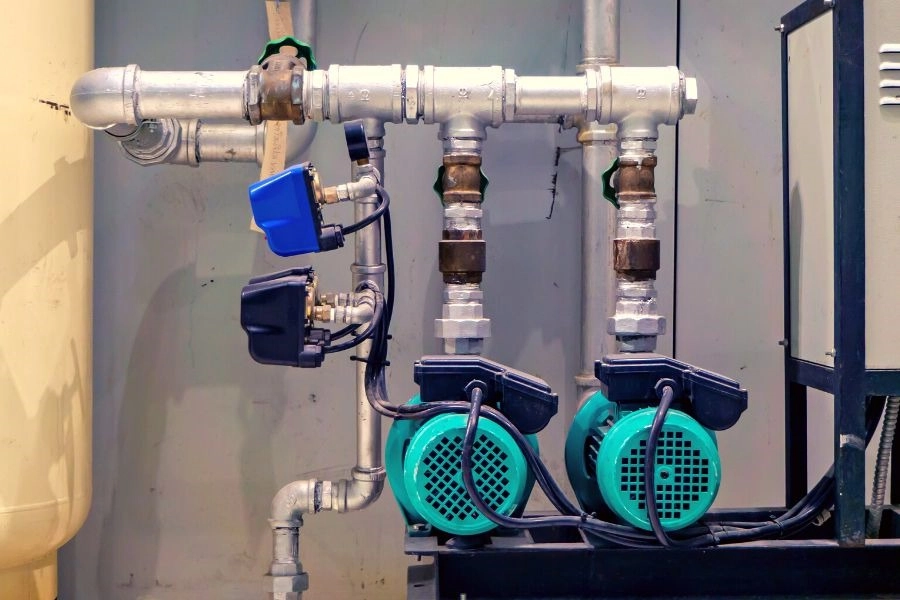
A booster pump sits on the main water line, most commonly in a mechanical room, basement, or crawlspace, and uses an electric motor to add pressure before water reaches the fixtures. Most residential units include a pressure tank that stores a reserve so the pump does not cycle on and off with every faucet turn. Sizing depends on the home's square footage, number of fixtures, and the pressure drop measured at the gauge test above; an undersized pump will not fix the problem and an oversized one wastes electricity and wears out faster.
A whole-house booster pump installed by a licensed plumber on the Front Range runs $1,200 to $3,500 for the equipment and labor, depending on pump size and whether a pressure tank is added. A pump dedicated to outdoor irrigation only, sized smaller, runs $600 to $1,500 installed. Denver, Aurora, and most Front Range cities require a licensed plumber to pull a permit for any work that ties into the main water line; confirm permit requirements with your city or county building department before scheduling the install.
| Pump type | Best for | Installed cost |
|---|---|---|
| Whole-house constant-pressure pump | Multiple bathrooms, hillside lots, low-pressure municipal mains | $1,200 to $3,500 |
| Irrigation-only pump | Long sprinkler runs, large lots, uneven zone pressure | $600 to $1,500 |
| Well-system booster | Private well homes with an undersized pressure tank | $1,500 to $4,000 |
Get at least two quotes from Front Range plumbers, since pump sizing recommendations vary and an oversized unit adds cost without adding benefit. Ask each plumber to show the pressure test results that led to their recommendation, not just a quote for a generic unit.
Most Front Range HOAs regulate what exterior equipment is visible from the street, including pump housings, so an outdoor-mounted unit needs screening or placement approval before installation. An indoor-mounted whole-house pump in a basement or utility room avoids that review entirely, which is one more reason most installers default to an indoor location when the layout allows it.
A booster pump fixes pressure loss caused by elevation, distance from the main, or simultaneous fixture use. It does not fix pressure loss caused by corroded galvanized pipe, a partially closed main shutoff valve, or a failing pressure-reducing valve. A plumber should rule out those causes with a pressure test at multiple points in the home before recommending a pump; adding a pump on top of a clogged pipe wastes the equipment cost without solving the actual problem.
A documented, permitted booster pump is a selling point on a Front Range listing, especially for a hillside lot or a home on a shared municipal main known for peak-hour pressure drops. List the install date, the permit number, and the pump brand on the seller's disclosure. A buyer's inspector checks water pressure during a standard inspection, and a home that already solved a known pressure issue avoids a negotiation point during the inspection objection period.
If low pressure turns up during a buyer's inspection on a home without a pump, expect it to become part of the inspection objection, either as a request for a credit or as a request that the seller install the fix before closing. Colorado's inspection objection deadline is a specific number of days after the inspection, set in the purchase contract, so a seller who suspects a pressure problem is better served testing it before listing than reacting to it mid-contract.
The Kenna Real Estate Group helps Front Range buyers spot pressure problems before closing and helps sellers document a fix so it reads as a selling point instead of a red flag during inspection. Call or text 303-955-4220. A live person answers. Not a robot, not a phone tree. Or search every home for sale in Colorado to see what's on the market right now. Ask for the printable pre-listing plumbing checklist in the form below and we email it the same day.
Questions about any home in Colorado? Call or text 303-955-4220. A live person answers.
Below 40 psi at the fixtures counts as low. A gauge on an outdoor spigot gives an exact reading and costs under $15 at a hardware store.
Every 2.3 feet of elevation gain between the water main and the highest fixture costs about 1 psi, so a hillside lot on a steep foothills grade loses pressure just from the climb into the house.
A whole-house unit runs $1,200 to $3,500 installed on the Front Range. A pump sized for outdoor irrigation only runs $600 to $1,500.
Yes, but it works alongside the well pump and pressure tank rather than replacing them. A well contractor should confirm the well's output before adding a booster pump.
Yes. Any work that ties into the main water line needs a licensed plumber and a permit from the city or county building department.
No. Corroded galvanized pipe, a partially closed shutoff valve, or a failing pressure-reducing valve need their own repair; a pump added on top of one of those problems does not fix it.
Most Front Range HOAs review exterior equipment visible from the street. An indoor-mounted pump in a basement or utility room avoids that review.