New - 5 Hours Ago

$3,999,000
Coming Soon
6
Beds
8
Baths
9625
Sqft
3.15
Acres
4790 E Belleview Ave, Greenwood Village, CO 80121
MLS#: 5026422
.jpg)


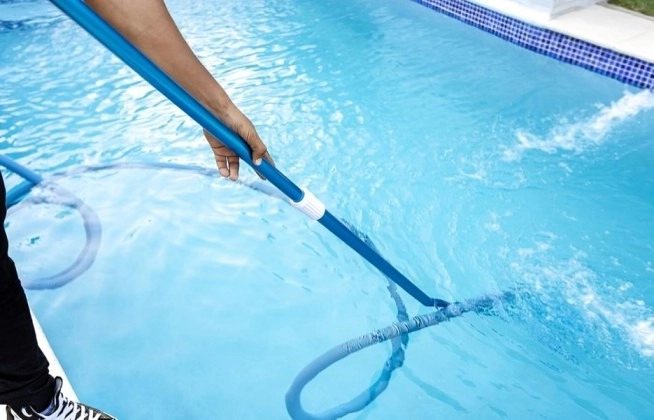
Front Range pool season runs about fourteen to sixteen weeks, roughly Memorial Day to Labor Day, and that short window changes the math on pool care. Skim daily, test chemistry twice a week, and close the pool correctly before the first hard freeze, and a Colorado pool stays clear for its whole season instead of half of it.
Most Denver metro and Colorado Springs pools open in mid-to-late spring once overnight lows stay above freezing and close by mid-September, ahead of the first hard freeze. That is a shorter window than pool guides written for warmer states assume, so opening day prep and a clean close matter more here than routine mid-season upkeep.
At 5,280 feet, sunlight is more intense and chlorine burns off faster than it does at sea level. Test free chlorine every two to three days instead of weekly, and add a stabilizer (cyanuric acid) to slow the loss. Keep pH between 7.2 and 7.6 and total alkalinity between 80 and 120 ppm; both drift faster in the thin, dry Front Range air.
Denver metro and Colorado Springs water runs hard, commonly 100 to 200+ ppm of calcium carbonate. Hard fill water builds scale on tile lines, heaters and pump housings and can cloud the water when calcium hardness climbs above 400 ppm. Test calcium hardness at each opening, use a scale inhibitor if your fill water tests high, and brush tile lines weekly so scale never gets a foothold.
Front Range cottonwoods drop fluff by the bagful in early summer, and dry spells send dust and grit into open water on windy days. Both clog skimmer baskets and feed algae if they sit. Skim daily during cottonwood season and after any wind event, and rinse or backwash the filter more frequently than the label suggests during a dusty stretch.
Keep pH at 7.2 to 7.6 and free chlorine at 1 to 3 ppm, checked two to three times a week with a reliable test kit. Add stabilizer at the start of the season so UV does not strip chlorine as fast, and re-check after any heavy rain or a hailstorm, since runoff and debris shift the balance quickly.
Warm, sun-baked afternoons and calm evenings push algae fast once chlorine or circulation drops. Brush walls and steps weekly, run the pump long enough to turn over the full volume of water once a day, and add algaecide before a hot, still stretch rather than after green water shows up.
Given the extra debris load from cottonwood fluff, dust and hail-shredded leaves, a robotic cleaner that runs daily is worth the cost for most Front Range owners. It handles the floor and walls automatically so a short pool season is not spent chasing debris by hand.
Denver Water and most Front Range providers restrict outdoor watering days and hours during the summer season, and some limit or require a permit for a full pool fill. Check your provider's current summer watering rules before a first fill, a drain-and-refill, or a large top-off, and plan the work around the assigned watering days for your address.
Installing an inground or a large above-ground pool requires a building permit in every Front Range city, plus an electrical permit for the pump and any lighting. Check with your city or county building department before a new install, and confirm HOA or metro district design review if your neighborhood has one; approvals can add several weeks to a project timeline.
Front Range building codes require a code-compliant barrier, commonly a fence at least 48 inches tall with a self-closing, self-latching gate, around any pool. Requirements vary by city, so confirm the exact height, gate hardware and setback with your local building department before installing or replacing fencing.
Colorado hail season runs spring through September, the same months a pool is open. Hail shreds vinyl solar covers, dents pump housings and can crack skimmer lids. Check your homeowner's policy for hail coverage on pool equipment, store a spare cover, and inspect equipment after every significant storm rather than waiting for the next scheduled service.
Close the pool before the first hard freeze, commonly by mid-to-late fall on the Front Range. Balance chemistry, lower the water level below the skimmer, blow out and plug the lines, and add antifreeze rated for pool lines to any equipment that can trap water. A rushed or skipped closing is the single most common cause of a cracked pipe or a damaged heater by spring.
Front Range winters cycle above and below freezing repeatedly rather than staying frozen, and water that gets into small cracks in concrete decking or coping expands and contracts with each cycle. Seal hairline cracks in the fall, keep decking sloped away from the pool, and re-seal coping joints every few years to keep water out of the joint.
A well-maintained inground pool draws interest from some Denver metro buyers, but the short season, insurance costs and upkeep make Colorado buyers weigh it differently than buyers in warmer climates. A pool that shows clear water, sound equipment and current permits at listing photographs well and avoids the inspection objections a neglected one invites. Our preparing and adding value before selling guide covers which backyard features pay off at listing in this market.
Many Front Range HOAs and metro districts regulate pool fencing materials, cover storage, above-ground pool visibility from the street and pool equipment noise or screening. Read your governing documents or ask the HOA before installing, replacing or resurfacing a pool, and keep any approval letter with your closing file for a future sale.
Weekly professional service on the Front Range commonly runs $100 to $200 a month during the open season, with opening and closing service billed separately, commonly $200 to $400 each. National providers such as Aqua Clear Pool Care publish maintenance checklists worth following even when you hire a local Front Range company for hands-on service; you are free to use any provider.
| Task | Off-season (sea level guide) | Front Range reality |
|---|---|---|
| Chlorine testing | Weekly | Every 2-3 days (UV loss at altitude) |
| Filter cleaning | Monthly | Every 2-3 weeks during dust or fluff season |
| Scale/calcium check | Rarely mentioned | Each opening (hard Front Range water) |
| Season length | 20-26 weeks in warm climates | 14-16 weeks, Memorial Day to Labor Day |
Whether a Front Range pool is a selling point or a repair list on your next home purchase, the Kenna Real Estate Group can put current permits, HOA rules and resale numbers in front of you before you decide. Call or text 303-955-4220. A live person answers. Not a robot, not a phone tree. Or search every home for sale in Colorado right now.
Questions about any home in Colorado? Call or text 303-955-4220. A live person answers.
Skim daily during cottonwood fluff season and after wind events; brush walls, steps and tile lines at least once a week to stop scale and algae before they start.
Yes, most robotic cleaners come in models built for above-ground pools; match the cleaner to your pool's size and surface type before buying.
Keep chlorine and pH balanced, run the pump daily long enough to turn over the whole pool volume, and add algaecide before a hot, calm stretch rather than after algae appears.
Many Front Range HOAs and metro districts set rules on fencing material, cover storage and pool visibility from the street; check your governing documents before you buy either one.
Close before the first hard freeze, commonly by mid-to-late fall on the Front Range, and blow out the lines fully to avoid a cracked pipe by spring.
Yes. Every Front Range city requires a building permit and an electrical permit for a new inground or large above-ground pool; check with your city or county building department first.
Untreated hard water builds calcium scale on heaters, pumps and tile lines; test calcium hardness each opening and use a scale inhibitor if your fill water tests high.
A clean, permitted pool with current equipment draws interest from some buyers; a neglected one commonly becomes an inspection objection, so budget for a proper closing before you list.


