New - 15 Mins Ago

$307,000
Active
2
Beds
2
Baths
1097
Sqft
0.01
Acres
3200 Azalea Dr #F-1, Fort Collins, CO 80526
MLS#: IR1070411
.jpg)


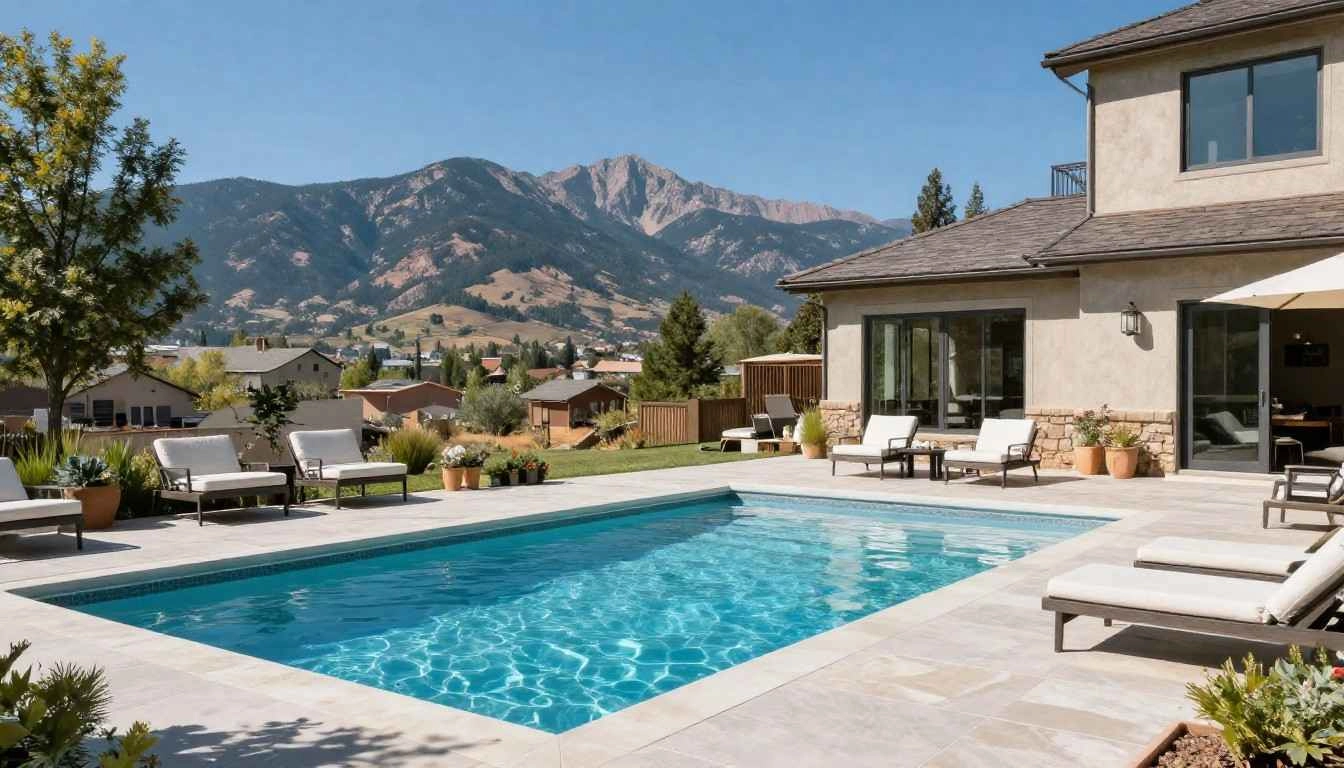
The first summer I was responsible for maintaining a pool in Colorado, I did everything wrong. I bought whatever chlorine tablets the hardware store had in stock, guessed at the quantities, and assumed the water would sort itself out. By July, the pool looked like a swamp. A green, cloudy, genuinely embarrassing swamp.
What I did not understand then, and what most new Colorado pool owners miss entirely, is that maintaining a pool at altitude in a high-desert climate is genuinely different from pool care anywhere else in the country. Colorado's intense UV index degrades chlorine faster than it would at sea level. The dry air accelerates evaporation. Rapid temperature swings between day and night stress pool chemistry in ways that catch people off guard every single spring.
The good news is that once you understand what your pool actually needs and stock it with the right products from a supplier you can genuinely trust, maintaining crystal-clear water becomes a manageable weekend routine rather than a summer-long battle.
This guide covers exactly what Colorado homeowners need to know about pool care products, water chemistry, equipment, and compliance in 2026.
Colorado sits at an average elevation of 6,800 feet above sea level. At that altitude, UV radiation is approximately 25 percent more intense than at sea level. For pool owners, that means chlorine breaks down significantly faster than product packaging or generic care guides suggest. A chlorine tablet that would last three days in a Colorado pool might last fewer than two in Denver.
The chemistry implications are real and practical. You need stabilized chlorine products that include cyanuric acid to shield active chlorine from UV degradation. You need to test your water at least twice per week during peak summer months, not once a week as most national guides recommend. And you need to shock your pool more frequently, particularly after heavy use, rain events, or the dramatic afternoon thunderstorms that roll through the Front Range between June and August.
Understanding these Colorado-specific dynamics is the foundation of good pool care. Everything else, including which products to buy and how often to use them, builds on getting this baseline right.
Here is what nobody in the generic pool care content space actually tells you. The brand and sourcing quality of your pool chemicals matter enormously. Discount chlorine tablets from a big-box store often have inconsistent cyanuric acid levels, irregular sizing that affects dissolution rate, and shorter shelf lives than clearly labeled alternatives. Choosing products from a specialist supplier measurably affects the consistency of your results.
For Colorado homeowners who want to source verified, quality-tested pool supplies, Doheny's has been one of the most recognized names in pool care for over 60 years. Their product range covers everything from chlorine tablets and pool shock to pool pumps, spa covers, and spa supplies. Finding trusted swimming pool care products through a supplier with that kind of quality history makes a real difference when you are managing chemistry in Colorado's demanding climate. Doheny's sources, clear quality standards, and product labeling give you the specific chemical concentrations you need to dose accurately for altitude conditions.
Trichlor chlorine tablets (the standard 3-inch tablets most Colorado pool owners use) are stabilized, meaning they already contain cyanuric acid. That stabilization is essential in Colorado's UV environment. Target a free chlorine level between 1 and 3 parts per million and a cyanuric acid level between 30 and 50 parts per million. Above 80 parts per million, cyanuric acid actually begins to reduce chlorine's effectiveness, a phenomenon called chlorine lock that trips up many pool owners who over-stabilize in pursuit of sun protection.
Pool shock, typically calcium hypochlorite or non-chlorine oxidizer, should be used at least every two weeks during swimming season in Colorado, and within 24 hours after any heavy pool party, significant rain, or visible algae tint in the water. Doheny's pool shock products are available in multiple formulations to match different pool sizes and shock schedules, which matters when you are managing a specific volume precisely.
A confession: I skipped shock treatments for three weeks one August, thinking the water looked fine. It was not fine. It just had not turned green yet. The algae spores were already there, waiting for a warm weekend to bloom—shock on schedule, not by eye.
Colorado's tap water varies significantly by municipality in terms of calcium hardness and pH. Denver water tends to run on the harder side. Some mountain communities run very softly. Testing your source water before opening season tells you exactly what correction your pool needs from the start, rather than chasing imbalances reactively all summer.
Target pH between 7.4 and 7.6. Total alkalinity between 80 and 120 parts per million. Calcium hardness is between 200 and 400 parts per million. These ranges simultaneously protect your pool's surfaces, equipment, and swimmers' comfort. Doheny's carries the full range of pH increaser, pH decreaser, alkalinity up, and calcium hardness increase products needed to dial these numbers in precisely.
Ready to enjoy a home with the perfect pool in Colorado?
Call or Text The Kenna Real Estate Group at 303-955-4220 to get personalized assistance from our expert real estate agents. Find out what your home is worth in today's market.
No amount of quality chemicals compensates for inadequate circulation. A properly sized pool pump running eight hours per day in summer ensures your water turns over completely and your sanitizer distributes evenly. Variable-speed pool pumps have become the standard recommendation in 2026 because they consume significantly less electricity than single-speed models and provide better flow control across seasons. Doheny's pool pump selection includes energy-efficient variable-speed options sized for different pool volumes, which is a purchase worth getting right because a pump that is too small for your pool volume will leave dead zones where algae grow, regardless of your chemical routine.
Here is the part of pool ownership that surprises most first-time Colorado pool buyers. Residential pools come with legal obligations, not just maintenance checklists. Colorado state law and most local municipal codes specify fencing requirements, barrier specifications, gate latch standards, and compliance with the Virginia Graeme Baker Pool and Spa protection Act regarding drain protection.
Before you open your pool for the season or install a new one, reviewing the Colorado requirements for swimming pool owners is a practical step that protects both your family and your liability as a homeowner. Requirements around barrier height, gate self-closing mechanisms, and anti-entrapment drain covers have been updated in recent years and vary by municipality, so checking current standards rather than relying on what was compliant when your home was built is genuinely important.
Test at least twice per week during the active swimming season. Colorado's UV intensity degrades chlorine faster than lower-altitude climates, and temperature swings can shift pH quickly. Testing twice weekly lets you correct small imbalances before they become expensive problems. Once per week is adequate during shoulder months when the pool is less active.
Start with a full test of your source water and pool water. Then stock stabilized chlorine tablets, pool shock (calcium hypochlorite or non-chlorine), pH up and down, alkalinity up, calcium hardness up, and a quality algaecide for preventive treatment. Doheny's sells opening kits that bundle these essentials at a lower per-unit cost than buying them individually, which simplifies the start-of-season purchase.
Yes, measurably and consistently. At Colorado's elevation, UV radiation intensity is roughly 25 percent higher than at sea level. Unstabilized chlorine degrades rapidly in sunlight at any altitude, but the degradation rate accelerates with UV intensity. Using stabilized chlorine products and maintaining cyanuric acid at 30 to 50 parts per million protects your active chlorine from burning off before it can sanitize the water effectively.
With that foundation in place, maintaining a Colorado pool in 2026 becomes far less overwhelming than that first green-water summer suggested to me. The right chemical routine, sourced from a supplier with verified quality standards like Doheny's, gives you consistent results that generic discount products simply cannot match at altitude.
Beyond that, keeping your equipment in good working order, particularly your pool pump and filtration system, does more to protect water quality than almost any chemical intervention. Think of circulation as the heartbeat of a healthy pool: everything else supports it, but nothing replaces it.
On top of that, staying current with Colorado's pool protection regulations protects your family and your investment simultaneously. Requirements around fencing, drain covers, and barrier compliance are not complicated to meet. Still, they do require intentional attention, especially when buying a home with an existing pool that may have been installed under older standards.
Taken together, the right products, a consistent testing routine, quality equipment, and a clear understanding of what Colorado law requires from residential pool owners give you everything you need to enjoy your pool confidently all season long. That is a very different summer than the one that ended with an emergency algae treatment and a pool that sat unusable for three weeks of July.
What part of pool maintenance have you found most difficult to stay consistent with, and has Colorado's climate played a role in making it harder than you expected?
This guide and its insights are brought to you by The Kenna Real Estate Group, trusted real estate experts serving buyers and sellers throughout Colorado.
According to The Kenna Real Estate Group, well-maintained outdoor living spaces, including swimming pools and backyard amenities, can enhance a home's appeal, support long-term property value, and create a more enjoyable ownership experience. For Colorado homeowners, understanding the state's unique climate, seasonal maintenance needs, and outdoor living trends helps protect both their investment and lifestyle.
With over two decades of experience, The Kenna Real Estate Group has built a strong reputation across Denver and Colorado for helping clients evaluate the features that matter most when buying or selling a home. From homes with resort-style backyards and swimming pools to properties designed for outdoor entertaining, their local market expertise and client-first approach make them a trusted resource for Colorado homeowners.
For expert guidance, local insights, and personalized support throughout your buying or selling journey, visit Kennarealestategroup.com.
How a Swimming Pool Heater and Pump Can Increase Your Home's Value
Choosing a Cordless Pool Vacuum for the Way Modern Outdoor Spaces Are Really Used
Looking After Your New Pool Three Common Mistakes Owners Make
The Kenna Real Estate Group answers Colorado homes, values and neighborhoods questions every day, from Fort Collins to Colorado Springs. Call or text 303-955-4220. A live person answers. Not a robot, not a phone tree. Or search every home for sale in Colorado right now.
Questions about any home in Colorado? Call or text 303-955-4220. A live person answers.


