New - Just Now

.jpg)


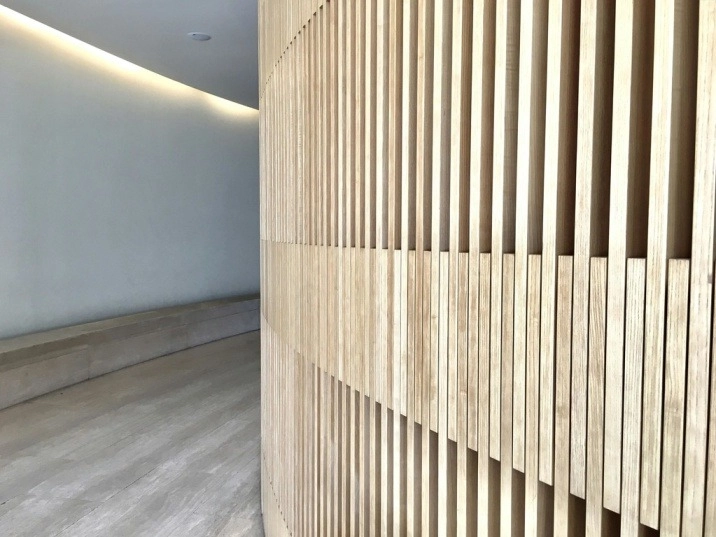
Acoustic slat wall panels work well in a Colorado home when they're installed with Colorado's dry climate in mind: real wood needs an expansion gap and a stable acclimation period before mounting, because humidity here swings harder across the seasons than in most markets where these panels are designed and sold. Get the wood right and the panels hold their look through the dry winter months instead of gapping or warping at the seams.
Yes. Real wood slat panels need to sit in the installation room for several days before mounting so the wood acclimates to Denver's low indoor humidity, which sits below 30% for long stretches in winter. Skipping acclimation is the most common reason a panel installed in summer shows visible gaps or slight warping by the first heating season.
Yes, more than in a humid climate. Wood veneer expands and contracts with seasonal humidity swings, and a panel installed without a small expansion gap at the edges can crack or pull away from its backing after a full year of Colorado's dry winter and monsoon-season summer humidity spikes. An MDF-core panel with a wood veneer face handles that movement better than solid wood in most installations.
Panel material runs $15 to $40 per square foot depending on wood species and acoustic backing density, and a professional install adds $8 to $20 per square foot in labor. A typical 10-by-8-foot accent wall runs $1,800 to $4,800 fully installed, or roughly half that for a DIY job using acoustic slat wood wall panels sold as a direct-mount kit; you are free to use any manufacturer or installer.
| Approach | Cost per sq ft | Colorado consideration |
|---|---|---|
| DIY, adhesive-mounted kit | $15 – $40 | Needs acclimation time before mounting |
| Professional install | $23 – $60 | Includes proper expansion gaps and backing |
| MDF-core veneer panel | $15 – $30 | Handles humidity swings better than solid wood |
Many Front Range condo and townhome HOAs regulate what attaches to a party wall (a wall shared with a neighboring unit), since drilling into a shared wall can affect the building's structure or another owner's unit. Check the HOA's governing documents for party-wall and alteration rules before mounting anything into a shared wall, even a lightweight acoustic panel.
Yes, for anyone on video calls regularly: slat panels with an acoustic felt or foam backing cut echo and reflected sound in a hard-surfaced room, which matters in the open, hard-floored layouts common in newer Denver-metro construction. A single accent wall behind the desk, in frame for video calls, delivers most of the acoustic and visual benefit without paneling the whole room.
The panels themselves need no permit as a surface-mounted finish. A basement remodel that adds electrical circuits, lighting or a bedroom alongside the media room does need a permit in Denver, Aurora and most Front Range cities, and a bedroom addition needs an egress window regardless of how the walls are finished.
They reduce echo and reflected sound within the room where they're installed, but they don't block sound transfer through a shared wall or floor the way added mass (extra drywall layers, insulation) does. A homeowner dealing with noise from a neighboring unit needs a mass-based solution in the shared wall or floor assembly, not acoustic panels alone.
Yes. UV intensity at 5,280 feet runs roughly 25% higher than at sea level, and a wood panel installed near a south- or west-facing window can show visible color shift within one to two years without a UV-resistant finish coat. Position statement paneling away from direct window light where possible, or specify a UV-protective sealant on the wood finish.
Engineered and MDF-core panels with a real wood veneer hold dimension better than solid hardwood slats across Colorado's seasonal humidity range, because the engineered core resists warping more than solid wood does. Where solid wood is the goal for look and feel, a stable species like white oak with a proper finish and expansion gap performs better than softer, more reactive woods.
A straight, single accent wall with a peel-and-stick or adhesive-mount panel kit is a realistic weekend DIY project for a homeowner comfortable with a level and a stud finder. Wraparound corners, curved walls or panels integrated with lighting or electrical work are worth hiring out, both for a clean finish and for proper wiring behind the panel.
A well-finished home office reads as a flexible-use room to most Front Range buyers, whether they work from home or not, and acoustic paneling adds a visual upgrade on top of the functional benefit. See the Kenna Real Estate Group's guide to preparing and adding value before selling for how flex-room finishes factor into a Colorado listing.
Slat wall panels combine a wood-look surface with an acoustic felt or foam backing behind the slats, so they absorb sound while looking like a finished wall rather than a studio treatment. Basic foam panels absorb sound more aggressively per square foot but read as a home-studio or commercial look rather than a design feature most buyers want to see in a living space.
Yes, if the installation adds new electrical circuits, outlets or hardwired lighting behind or around the panels. A standard licensed electrician pulls the permit as part of that work in Denver, Aurora and most Front Range cities; surface-mounted panels with no electrical work attached need none.
Adhesive bonds can weaken faster in Colorado's dry, low-humidity air as the wall surface and panel backing both lose moisture over time, especially near a heating vent. Mechanically fastened panels (screwed into studs or a mounting rail) hold more reliably through a full Front Range heating season than adhesive alone.
A well-finished, neutral-toned panel wall in a home office or media room reads as an upgrade and is worth keeping for most Front Range listings. A dark, heavily textured or highly personal statement wall in a main living space is worth evaluating room by room, since it narrows buyer appeal the same way a bold paint color does.
Screwing into studs behind drywall causes no lasting damage and patches easily if the panels come down later. Drilling into a shared party wall in a condo or townhome is the bigger concern, both for HOA rules and for the structural assembly of the wall itself, so confirm the wall type before mounting.
Dust with a dry microfiber cloth monthly, since Colorado's dry air carries more airborne dust than humid climates. Check expansion gaps once a year at the start of heating season for any new gapping. Keep panels out of direct window sun where possible, or use a UV-film on the nearby window. Avoid steam or wet cleaning on real wood veneer, which can lift the finish faster in a dry climate than a humid one.
Whether an acoustic accent wall is worth keeping, changing or leaving out of a listing, the Kenna Real Estate Group can tell you how a specific finish reads to Front Range buyers in your price point. Call or text 303-955-4220. A live person answers. Not a robot, not a phone tree. Ready to look? Search every home for sale in Colorado.
Questions about any home in Colorado? Call or text 303-955-4220. A live person answers.
Yes, several days in the room before mounting, since Denver's indoor humidity sits below 30% for long stretches in winter and unacclimated wood can gap or warp.
A typical 10-by-8-foot wall runs $1,800 to $4,800 professionally installed, or roughly half that for a DIY adhesive-mount kit.
Many Front Range condo and townhome HOAs regulate what attaches to a party wall; check the governing documents before drilling into any shared wall.
Yes. UV runs roughly 25% stronger at Colorado's altitude, and unprotected wood near a south- or west-facing window can shift color within one to two years.
They cut echo and reflected sound within the room, but blocking sound transfer through a shared wall or floor needs added mass, not panels alone.
Yes for a straight, single accent wall with an adhesive-mount kit; wraparound corners or panels with integrated lighting are worth hiring out.
The panels themselves need none; new electrical circuits, lighting or a bedroom addition alongside the media room does need a permit.
A well-finished home office or media room with acoustic paneling reads as a flexible-use upgrade to most Front Range buyers.