New - 2 Hours Ago

.jpg)


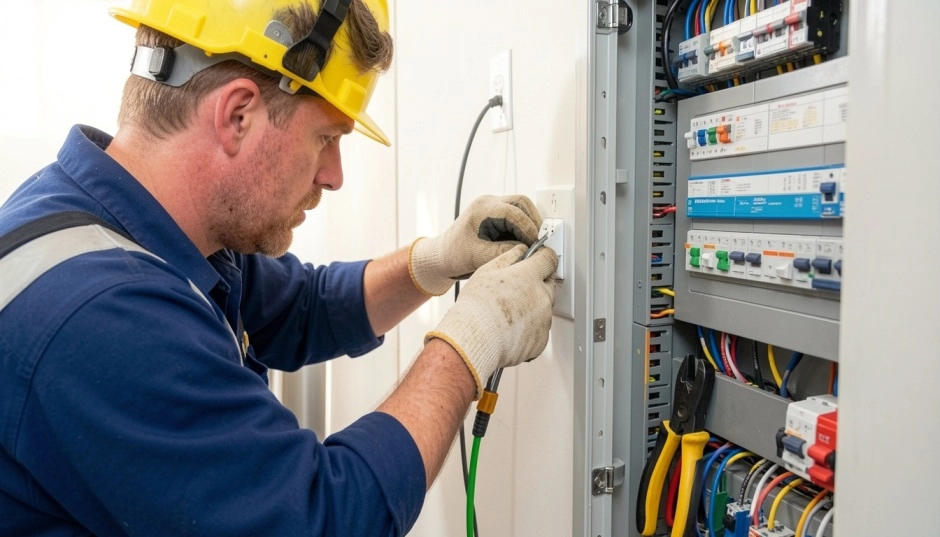
GFCI and AFCI sound almost identical and protect against two completely different hazards. A GFCI protects a person from electric shock; an AFCI protects the structure from an electrical fire. Most Colorado homes need both, and knowing where each one belongs matters whether you're wiring a remodel or reading a home inspection report.
A ground fault circuit interrupter (GFCI) watches for current leaking from its intended path, the kind of imbalance that happens when a person contacts a live wire, and cuts power in a fraction of a second. An arc-fault circuit interrupter (AFCI) watches for the electrical signature of arcing, current jumping across a gap in damaged or loose wiring, which generates heat that can ignite insulation or framing inside a wall. One protects people at the outlet; the other protects the home's wiring from the panel out.
It continuously compares outgoing and returning current on the circuit. In a normal circuit those two numbers match exactly. When a GFCI detects even a small imbalance, a few milliamps, it means current is escaping through an unintended path, possibly a person, and it interrupts power before a shock becomes serious. This matters most anywhere water and electricity meet, which is why code concentrates GFCI outlets in kitchens, bathrooms, laundry rooms, garages, and any exterior outlet.
An AFCI sits in the electrical panel rather than at the outlet, so it monitors the entire length of a circuit's wiring, including the sections hidden behind drywall. It recognizes the pattern of a dangerous arc, distinct from the small, harmless spark of unplugging a device, and shuts the circuit down before heat builds enough to ignite nearby material. Because arc faults draw too little current in many cases to trip a standard breaker, they can go undetected for a long time without this protection.
Current code requires GFCI protection in kitchens, bathrooms, laundry areas, garages, unfinished basements, crawl spaces, and all exterior outlets. Denver and most Front Range jurisdictions follow the National Electrical Code with local amendments, so a permitted remodel touching any of these rooms should bring the outlets up to current GFCI requirements as part of the work.
Code requires AFCI protection on most branch circuits serving living areas: bedrooms, living rooms, family rooms, dining rooms, hallways, and closets. The requirement has expanded over successive code cycles, so a home built even ten years ago can have less AFCI coverage than current code calls for.
A home is not automatically required to be retrofitted to current code, but older Denver metro housing stock, especially homes built before the 1990s, commonly has no GFCI protection in kitchens and bathrooms and no AFCI protection anywhere. Retrofitting is a straightforward upgrade for an electrician and closes a real gap, since older wiring and older device insulation are exactly where arc faults tend to develop.
Colorado allows a homeowner to do electrical work on a home they own and occupy in many jurisdictions, but a permit is still required for the work, and the wiring has to pass inspection. An AFCI breaker installed incorrectly, or a GFCI outlet wired with the line and load reversed, can fail to protect the circuit while appearing to work normally, which is why many homeowners have an electrician handle the panel-level work and confirm the outlets test correctly.
Yes. Any work touching the panel, including adding AFCI breakers, requires a permit and inspection in Denver and virtually every Front Range jurisdiction. A licensed contractor like Risen Power Electric pulls the permit as part of the job, which also protects a homeowner at resale, since unpermitted panel work is a common flag on a pre-listing inspection.
A single GFCI outlet replacement runs roughly $150 to $250 installed. A whole-panel AFCI breaker upgrade for a typical Front Range home runs $1,500 to $4,000 depending on the number of circuits and panel condition. Combining both into one project, common during a kitchen or basement remodel, costs less than tackling them separately.
A repeatedly tripping GFCI is doing its job: it's detecting a real current leak somewhere on the circuit, not malfunctioning on its own. Common causes include a worn appliance cord, moisture inside an exterior outlet box, or a downstream connection that has degraded. Repeated tripping is a reason to call an electrician, not to reset it and move on.
Some Colorado insurers offer a premium credit for an updated electrical panel with modern breaker protection, since it lowers the statistical risk of a fire claim. Even without a direct discount, updated wiring reduces the odds of the kind of claim that raises future premiums or triggers a nonrenewal after a loss.
A home inspector will note missing GFCI protection in kitchens and bathrooms and outdated panels lacking AFCI breakers as part of a standard report. These items commonly show up in a buyer's inspection objection during a Colorado transaction, so sellers who address them ahead of listing avoid a negotiation over a relatively inexpensive fix.
A GFCI outlet protects only the outlet itself and any outlets wired downstream of it on the same circuit; a GFCI breaker protects the entire circuit from the panel out. Bathrooms and kitchens commonly use outlets; whole-circuit protection for something like a hot tub or exterior circuit is handled with a breaker instead.
Indirectly. Colorado's dry air and wide temperature swings can accelerate wear on older wire insulation, and the state's wildfire risk raises the stakes on any electrical fault that starts inside a wall in a home near wildland vegetation. Keeping AFCI protection current is one of the few home upgrades that directly reduces an internal ignition source.
Ask for the panel's age and whether it has AFCI breakers, and check whether kitchens, bathrooms, and exterior outlets have GFCI protection. A home built before 2000 without any updates to the panel is a reasonable place to budget for an electrical upgrade as part of the purchase.
The Kenna Real Estate Group helps Front Range buyers read an inspection report's electrical findings in plain terms and helps sellers decide which panel and outlet upgrades are worth doing before listing. Call or text 303-955-4220. A live person answers. Not a robot, not a phone tree. Ready to see what's on the market? Search every home for sale in Colorado.
Questions about any home in Colorado? Call or text 303-955-4220. A live person answers.
A GFCI protects a person from electric shock by detecting current leaking off its intended path. An AFCI protects the home's wiring from fire by detecting the signature of a dangerous arc.
Kitchens, bathrooms, laundry areas, garages, unfinished basements, crawl spaces, and every exterior outlet.
Most living-area branch circuits: bedrooms, living rooms, family rooms, dining rooms, hallways, and closets.
Yes, most Front Range jurisdictions require a permit for electrical work even on a single outlet, and the work has to pass inspection.
Roughly $1,500 to $4,000 depending on the number of circuits and the panel's existing condition.
It's detecting a real current leak, from a worn appliance cord, moisture in the box, or a degraded connection downstream, and it needs an electrician's diagnosis rather than a repeated reset.
Homes built before the 1990s commonly have no AFCI protection and limited or no GFCI protection in kitchens and bathrooms, since the code requirements expanded well after those homes were built.
Yes, it's a standard item on a Colorado home inspection report and a common source of a buyer's inspection objection.


