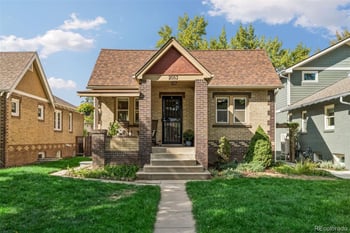
New - 2 Hours Ago
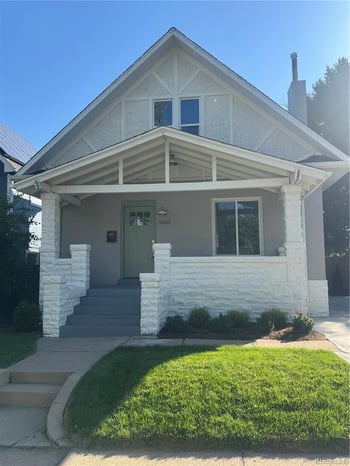
$1,225,000
Coming Soon
5
Beds
5
Baths
2683
Sqft
0.14
Acres
3860 Vrain St, Denver, CO 80212
MLS#: REC2805142
.jpg)


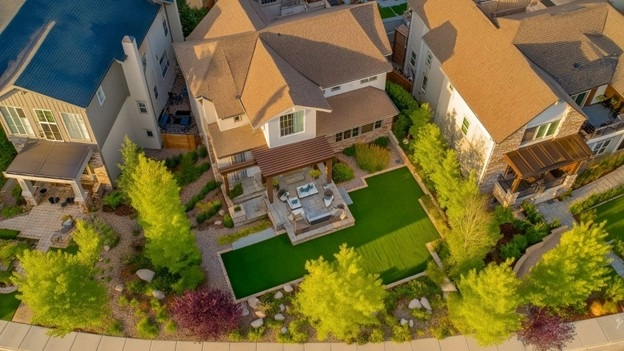
Artificial grass in the Denver metro costs $12 to $20 per square foot installed, needs zero irrigation, and holds its color through 300 days of sun at 5,280 feet. Built on a compacted rock base over Colorado's bentonite clay, it lasts 15 to 20 years and removes the summer watering schedule from your life. Built on bare dirt, it heaves in the first freeze-thaw cycle and reads as a defect to buyers.
This guide answers the questions Front Range homeowners ask before they replace a lawn with synthetic turf: what it costs, what the HOA and state rules say, how it handles hail, snow and dogs, and what it does to your price when you sell.
Plan on $12 to $20 per square foot for a professional installation in the Denver metro. That puts a 1,000 square foot front lawn at $12,000 to $20,000. The price covers removal of the old sod, 4 to 6 inches of compacted crushed rock, the turf, seaming, edge nailing and infill. Premium turf with a 16-year warranty and a cooling infill sits at the top of that range.
A do-it-yourself job runs $5 to $7 per square foot in materials, which matches the typical estimates turf suppliers publish for Denver. Base rock alone is $1.50 to $4.00 per square foot. A plate compactor rents for $80 to $120 a day. Skipping compaction is the number one reason turf fails on Colorado clay.
| Front Range yard option | Installed cost per sq ft | Summer irrigation | Yearly upkeep | Service life |
|---|---|---|---|---|
| Kentucky bluegrass sod | $1.50 to $3.00 | 15,000 to 25,000 gallons per 1,000 sq ft | $500 to $1,000 (mowing, fertilizer, sprinkler repairs) | Indefinite with care |
| Xeriscape (rock, mulch, native plants) | $8 to $15 | 30% to 60% less than sod | $200 to $500 (weeding, drip repairs) | Indefinite |
| Artificial turf | $12 to $20 | None (rinse only) | $100 to $300 (brushing, infill top-up) | 15 to 20 years |
Yes, for a private home. Colorado House Bill 24-1151 bans nonfunctional turf and artificial turf on new commercial, industrial, institutional and common-interest-community common-area landscapes starting January 1, 2026. That law targets developers and HOA common areas. A homeowner's own front and back yard are outside it.
City codes differ. Several Front Range cities cap the share of a new front yard that any turf covers, and a grading or drainage change triggers a permit in some jurisdictions. Call the city planning desk before you order, and get the answer in writing.
Not in the backyard. Colorado Revised Statutes 38-33.3-106.5, amended in 2021, bars an HOA from prohibiting nonvegetative turf grass in the backyard of a home. The same statute stops an HOA from banning xeriscape and drought-tolerant plantings.
The front yard is different. An HOA sets front-yard appearance standards and requires design review. In Highlands Ranch, the HRCA reviews every exterior change; submit the product sample, the pile height and the drainage plan before you order. Our Denver HOA rules and fees guide explains how design review works and what a violation costs.
Bentonite clay swells when wet and shrinks when dry, and it moves anything that sits directly on it. Excavate 4 to 6 inches, lay geotextile fabric, then place 4 to 6 inches of 3/4 inch minus crushed granite or Class 6 road base and compact it in 2 inch lifts. Grade the base to fall 1% to 2% away from the foundation so snowmelt never pools against the house.
Install from mid-April through early June, or in September and October. Frozen ground stops compaction, and 100 degree days turn the base to dust and stretch the turf. Nail the perimeter every 4 to 6 inches with galvanized nails, and glue seams with outdoor urethane adhesive on seam tape.
Infill is the granular layer brushed between the blades. It holds the turf down against wind, keeps the fibers upright and controls heat and odor. Envirofill artificial grass infill is a coated, rounded silica sand with an antimicrobial treatment, rated by its maker for 16 years. It costs $25 to $30 per 50 pound bag against $10 to $15 for plain silica sand. Spread 1 to 2 pounds per square foot; an 800 square foot yard takes about 24 bags, roughly $720.
Yes, when the base drains and the infill resists odor. Denver metro buyers with dogs are a large share of every showing, and a dog run that stays green with no mud is a selling point in listing photos. Rinse the run weekly from June through September, apply an enzyme cleaner monthly, and pick up solids daily. Turf with a perforated backing rated at 30 inches of drainage per hour or better keeps urine from sitting in the base.
Denver Water's summer rules run May 1 through October 1: no watering between 10 a.m. and 6 p.m., and no more than three days a week. Aurora Water and Centennial Water (Highlands Ranch) run similar schedules. A 1,000 square foot bluegrass lawn on the Front Range drinks 15,000 to 25,000 gallons over that season. Removing it takes $100 to $300 off a household's summer water bills and ends the sprinkler repair line entirely.
One catch: the lawn-replacement rebates Denver Water offers through Resource Central pay for living water-wise plantings, not synthetic turf. Our Denver utility providers and costs guide lists who serves each suburb and what a summer bill looks like. Highlands Ranch owners get the water district specifics in the Highlands Ranch HRCA and water guide.
It adds value when it looks real and drains, and it subtracts value when it is wrinkled, faded or laid on bare dirt. Appraisers treat turf as landscaping, not a line item. The return shows up in days on market and in offer strength from the buyers who want it: dog owners, second-home owners, buyers over 55 leaving lawn care behind, and buyers in cities with tight watering rules.
Buyers who want a living lawn for a garden read a full-turf yard as a project to remove, at $2 to $4 per square foot for demolition and haul. The middle path holds resale value best: turf in the backyard dog area or a shaded side yard, water-wise plantings and a clean walkway in front. In a Denver metro market where a detached home trades between $550,000 and $650,000, a $15,000 yard that photographs well earns its cost back in a faster sale; a $15,000 yard the buyer wants gone does not.
Before you spend, read our guide to preparing and adding value before selling, which ranks exterior projects by return. The Smart Pricing Report shows what comparable homes with and without turf sold for on your street. Buyers over 55 who want no yard work at all are the audience for the Denver metro downsizing guide.
Both remove the sprinkler system. Xeriscape costs less per square foot, qualifies for utility rebates, and supports pollinators; it looks bare for the first two seasons while plants fill in. Turf costs more, gets no rebate, and looks finished the day it is installed. Homes with a mature water-wise yard sell to a growing buyer pool; see our Front Range xeriscaping guide and the xeriscaped homes buyer's guide before choosing. For the rest of the exterior, the 8 curb appeal fixes for Front Range sellers covers paint, lighting and concrete.
The Kenna Real Estate Group at Keller Williams DTC tells you which yard projects return money in your neighborhood and which ones buyers pay to undo, then prices your home with a Smart Pricing Report built on sold comps. Call or text 303-955-4220. A live person answers. Not a robot, not a phone tree. When you are ready to look, search every home for sale in Colorado.
Questions about any home in Colorado? Call or text 303-955-4220. A live person answers.
$6,000 to $10,000 installed with a compacted rock base and coated silica infill. A do-it-yourself build with rented compactor runs $2,500 to $3,500 in materials.
No. The 2026 ban covers new commercial, industrial, institutional and HOA common-area landscapes. A single-family homeowner's yard is not covered.
15 to 20 years for UV-stabilized polyethylene turf with an 8 to 16 year color warranty. Uncoated bargain turf fades in 3 to 5 summers at Front Range elevation.
Only a blower with a rubber or plastic paddle, set with the skids raised. Metal augers and metal shovel blades tear the fibers. Most Front Range owners let snow melt.
No. Denver Water's lawn-replacement rebates through Resource Central pay for living water-wise landscaping. Synthetic turf is not eligible, though it still removes 15,000 to 25,000 gallons of summer irrigation per 1,000 square feet.
Buyers with dogs, second-home owners and buyers over 55 favor it and it shortens days on market. Buyers who want a garden discount for removal at $2 to $4 per square foot. Turf in back and plantings in front sells to both groups.
Mid-April through early June, or September and October. The ground is thawed, temperatures stay under 90 degrees, and the base compacts without turning to dust.