.jpg)


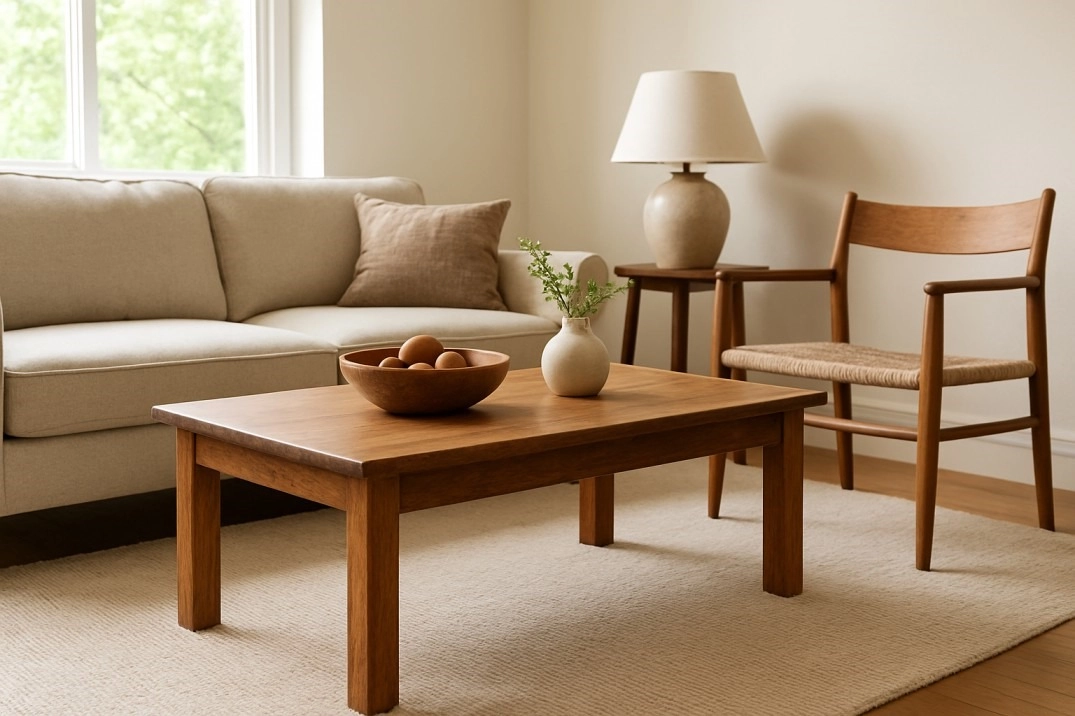
Furniture that survives a move to Colorado has to survive two things most other states do not test for as hard: the move itself, and the state's low humidity and altitude afterward. Choosing pieces built with real joinery and solid materials, and giving new furniture time to acclimate once it arrives, keeps a Front Range home's furniture from cracking, sagging or opening at the seams within the first year.
What makes furniture survive a cross-country or Front Range move?
Solid mortise-and-tenon or dovetail joinery, kiln-dried hardwood, and hardware that can be tightened rather than glued-only construction hold up to the vibration and handling of a move far better than particleboard case goods held together with cam locks and staples. Ask a mover to blanket-wrap and crate anything with exposed joints or a glass top rather than shrink-wrapping it directly.
How does Colorado's dry, high-altitude air affect solid wood furniture?
Colorado's indoor humidity commonly drops into the teens to twenties during the winter heating season, and wood furniture built or acclimated for a more humid state loses moisture fast enough to shrink, crack at the joints, and open gaps at drawer fronts within the first year. A humidifier running near solid wood pieces through the heating season, and a slower initial acclimation period, prevent most of that damage.
Does leather furniture need special care after a move to Colorado?
Yes. Leather dries out and stiffens faster in Colorado's low humidity than in a coastal or humid-climate home, and cracks develop at stress points like the seat edge and arms without regular conditioning. Apply a leather conditioner every three to four months during the heating season, a shorter interval than most owners are used to in a wetter climate.
Should a buyer moving to Denver buy furniture before or after closing?
After closing, or at minimum after the final walkthrough, since furniture dimensions need to match the actual room layout and Colorado's freight timelines for made-to-order pieces commonly run six to twelve weeks. Measure doorways, stairwells and elevator dimensions at the new home before ordering anything oversized, since Front Range older homes and downtown Denver buildings commonly have narrower entry points than a new-construction home.
What furniture is worth buying new versus buying used when relocating?
Buy new for mattresses, sofas and anything with direct hygiene contact; buy used or gently pre-owned for solid wood case goods, dining tables and dressers, which a local consignment shop or estate sale in the Denver metro prices at 40% to 60% below new for comparable quality. A piece built with real joinery holds its value and function used far better than a mass-produced piece does.
How does sun exposure in a Colorado home affect furniture over time?
With close to 300 sunny days a year and stronger UV at 5,280 feet and higher, upholstery, wood finishes and leather near a south- or west-facing window fade and dry out unevenly within a year or two of placement. Rotate furniture position periodically, use UV-filtering window film, or choose solution-dyed fabric for any piece that has to sit in direct light.
What furniture holds up best for a household that moves within Colorado again later?
Modular and sectional pieces that break down into smaller components move through doorways and stairwells more easily on a second or third Front Range move than a single oversized piece, and well-built modular furniture from a maker like Covered Bridge Furniture is designed to be reconfigured rather than replaced as room layouts change from one home to the next.
How should furniture be prepared for a move to altitude from a low-elevation state?
Let solid wood furniture acclimate in the new home for one to two weeks before pushing it fully against a wall or filling drawers, since the wood needs time to adjust to Colorado's lower humidity gradually rather than all at once. Keep the piece away from a direct heating vent during that period, which accelerates uneven drying.
Does furniture quality matter for a home that will eventually sell?
Yes, indirectly: well-maintained, quality furniture photographs and stages better during a future sale, and design choices that have proven durable tend to read as timeless rather than dated in listing photos. Architectural Digest's list of enduring design touchstones is a useful reference for a homeowner choosing pieces meant to last through a full ownership period, not just the next few years.
What is the cost difference between handcrafted and mass-produced furniture over ten years?
Mass-produced case goods commonly need full replacement within five to eight years of regular use, while handcrafted solid wood furniture with real joinery can be refinished, reupholstered or repaired instead, which spreads the higher upfront cost over two to three times the usable life. A $2,000 handcrafted dining table refinished once in ten years costs less per year of use than three $600 replacement tables over the same period.
How long should a homeowner expect quality furniture to last?
Solid wood case goods with real joinery last 20 to 30 years or more with basic care; upholstered pieces with a hardwood frame last 10 to 15 years before the frame or springs need attention; fabric or leather needs refreshing sooner depending on use and sun exposure.
What should a buyer check before purchasing from an out-of-state retailer?
Confirm the wood species and joinery method in writing, ask whether the piece ships pre-finished or needs on-site finishing, and check the freight carrier's Colorado delivery timeline before committing to a move-in date around the delivery. A retailer unwilling to answer construction questions directly is worth skipping regardless of price.
Does furniture placement affect resale staging in a Front Range home?
Yes. Oversized furniture crowds a room in listing photos and during showings, while right-sized, well-maintained pieces let a buyer picture their own layout in the space. Review the Kenna Real Estate Group's guide to preparing and adding value before selling for how furniture scale affects a room's photographed size.
What furniture materials resist Colorado's freeze-thaw swings near windows and entries?
Engineered wood cores with a veneer finish and metal-frame furniture resist the expansion and contraction that solid wood experiences near a drafty window or entry where temperature swings widest through a Front Range winter. Keep any solid wood piece at least a foot from an exterior door or a single-pane window if the home has not been updated with newer windows.
Should a homeowner acclimate new furniture before placing it in a Colorado home?
Yes, for solid wood pieces especially. Unbox and let the piece sit in the room it will live in for a few days before final placement and hardware installation, which gives the wood time to respond to the home's specific humidity level before it is locked into a fixed position.
Where to go next
- Moving to Denver
- Colorado Front Range relocation checklist
- Preparing and adding value before selling
- Best moving companies for Colorado downsizers
- Why Amish furniture is a smart choice for a sustainable home in Colorado
- Search every home for sale in Colorado
Talk to the Kenna Real Estate Group
The Kenna Real Estate Group works with buyers relocating to the Front Range on move timing, closing dates and neighborhood fit, so furniture, movers and move-in day line up without a gap in housing. Call or text 303-955-4220. A live person answers. Not a robot, not a phone tree. Start by browsing to search every home for sale in Colorado.
Homes for sale that match this post
Guides
Questions about any home in Colorado? Call or text 303-955-4220. A live person answers.