New - 1 Hour Ago

$305,000
Active
2
Beds
2
Baths
1150
Sqft
--
Acres
8500 E Jefferson Ave #10G, Denver, CO 80237
MLS#: 1994128
.jpg)


A home built in Denver before 1970 was almost certainly plumbed with a clay sewer line, and clay pipe cracks at its joints over 50-plus years of Front Range freeze-thaw cycles and expansive soil movement, which is exactly where tree roots get in. A sewer scope inspection, run before the Colorado contract's inspection objection deadline, is the only reliable way to know whether that line is sound or headed for a collapse.
Vitrified clay pipe was the standard sewer material across Denver's older neighborhoods, Park Hill, Washington Park, Berkeley, Sunnyside, Congress Park, and similar bungalow-era areas, until PVC pipe became common from the 1970s forward. Clay pipe itself lasts a long time as a material, but the joints between sections are the weak point: they were sealed with mortar or oakum rather than the solvent-welded joints PVC uses, and those joints separate slightly over decades of ground movement. Once a joint gap opens even a quarter inch, it becomes an entry point for roots, groundwater and sediment.
Denver's older neighborhoods are known for mature elm, cottonwood and honeylocust trees planted along parkways decades ago, and those root systems reach toward any consistent water source, including the moisture seeping from a clay sewer joint. Once a root finds that gap, it grows into the pipe and expands, first slowing drainage, then catching debris, then eventually cracking the pipe from the inside. A slow drain on the lowest fixture in the house, a bathtub or basement floor drain backing up first, is a classic early symptom of root intrusion in an older Denver sewer line. Homeowners notice it seasonally, worse in spring when soil moisture from snowmelt swells root growth, and easing off some in the drier late-summer months.
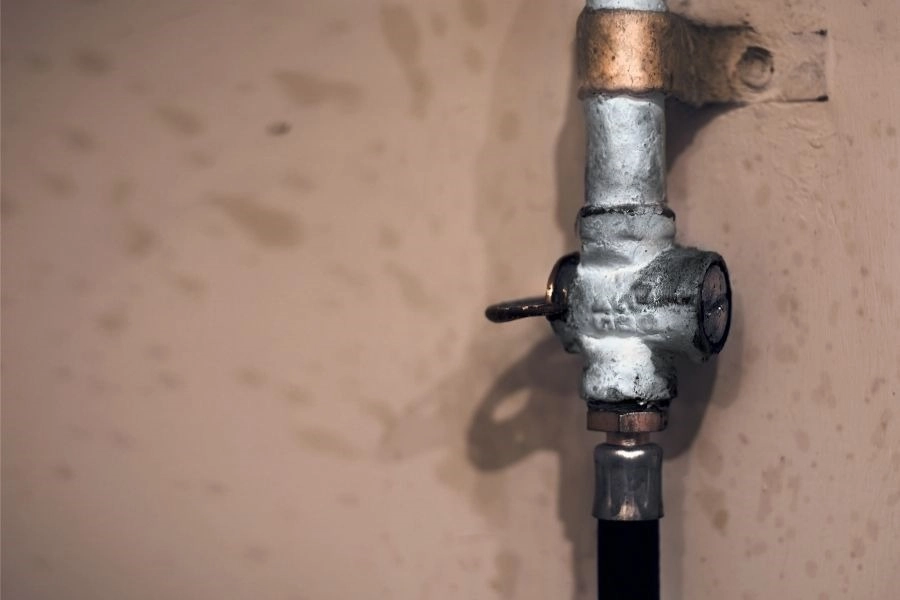
Homes from the same era commonly paired clay sewer lines with galvanized steel supply pipe, which corrodes from the inside over decades until the interior diameter narrows enough to choke water pressure, and eventually rusts through. Front Range homes also sit on bentonite clay soil that swells when wet and shrinks when dry; that movement puts uneven pressure on rigid pipe runs under a foundation or through a crawl space, which is a distinct failure mode from corrosion or root intrusion and shows up as a sudden break rather than a slow decline.
A sewer scope runs a camera through the line from a cleanout or the main stack, recording the full run out to the city connection. It shows joint separation, root intrusion, pipe bellies (a low spot where the line has settled and debris collects), corrosion, and any prior repair. The inspection costs $250 to $450 in the Denver metro and takes under an hour, cheap compared with the alternative of finding out from a backed-up basement after closing.
Colorado's standard contract sets a specific inspection objection deadline, a fixed date by which a buyer must raise any inspection finding, including a sewer scope result, and request repair, a credit or termination. A sewer scope is not part of a standard home inspection; a buyer has to schedule it separately, so on an older Denver home it needs to happen early in the inspection period, not as an afterthought a day before the deadline. Missing that window means the buyer owns whatever the line turns out to be, repair cost included.
| Repair type | Typical Denver-metro cost |
|---|---|
| Root removal and hydro-jetting, line otherwise sound | $300 to $700 |
| Spot repair, single cracked or bellied section | $2,500 to $6,000 |
| Trenchless pipe lining, full line | $6,000 to $12,000 |
| Full dig-and-replace sewer line | $8,000 to $20,000+, depending on depth and landscaping |
Trenchless lining, which inserts a resin-coated liner inside the existing clay pipe, avoids digging up a mature yard or a driveway and finishes in one to two days, which is why it has become the default fix for a sound-but-aging clay line in Denver's older neighborhoods.
A standard Colorado homeowners policy excludes gradual damage, which is how most insurers classify a slow root-caused sewer failure, unless the homeowner carries a specific service line or sewer backup endorsement. That endorsement costs $30 to $60 a year and covers sudden collapse and the resulting backup damage; a buyer of an older Denver home without documented sewer line work should add it at closing rather than assume the standard policy covers a clay line failure.
Denver metro water runs moderately hard, and mineral buildup narrows galvanized supply pipe from the inside faster than it would with softer water, compounding the corrosion that already comes with a pipe's age. A home inspector or plumber can check water pressure at multiple fixtures during a showing; a significant drop between the street-level pressure and what reaches an upstairs bathroom points to galvanized pipe nearing the end of its life rather than a fixture-level problem.
A seller aware of a sewer line issue, past or present, must answer the Colorado seller's property disclosure completely; failing to disclose a known problem creates liability after closing. A seller who has already had a line repaired or lined should keep the invoice and any camera footage from the work, since it answers a buyer's sewer scope finding before it becomes a negotiation point.
A sewer scope finding does not have to kill a deal on a home with good bones otherwise; it is a negotiation point like a roof or an aging furnace. Buyers should budget for the possibility of a $2,500 to $12,000 repair on any pre-1970 Denver home without documented sewer line replacement, and sellers can get ahead of it by running a scope before listing rather than leaving it for a buyer to discover during their inspection window. The Kenna Real Estate Group's guide to preparing and adding value before selling covers which pre-listing repairs actually move a buyer's offer on an older home, and the Colorado Home Buyer's Guide walks through the inspection timeline in full.
Touring an older Denver bungalow or a Park Hill fixer-upper, the Kenna Real Estate Group can tell you which sewer scope findings are routine and which ones are a real negotiating point before your objection deadline passes. Call or text 303-955-4220. A live person answers. Not a robot, not a phone tree. Ready to look now? Search every home for sale in Colorado.
Questions about any home in Colorado? Call or text 303-955-4220. A live person answers.
Most do, since vitrified clay pipe was the standard material until PVC became common in the 1970s; a buyer should confirm the material with a sewer scope rather than assume.
$250 to $450 and takes under an hour; it is a separate service from a standard home inspection and has to be scheduled specifically.
Yes. Roots grow toward the moisture at a cracked clay joint, expand inside the pipe, and eventually break it from the inside, common in Denver's mature, tree-lined older neighborhoods.
It is the fixed date in the purchase contract by which a buyer must raise inspection findings, including a sewer scope result, and negotiate repair, a credit or termination.
Yes. Trenchless lining inserts a resin liner inside the existing pipe from an access point, finishing in one to two days without excavating a mature yard or driveway.
Yes. Bentonite clay soil common along the Front Range swells and shrinks with moisture, putting uneven pressure on rigid pipe runs and causing sudden breaks distinct from root or corrosion damage.
Yes. The standard Colorado seller's property disclosure asks directly about known sewer and plumbing issues, and incomplete answers create liability after closing.