.jpg)


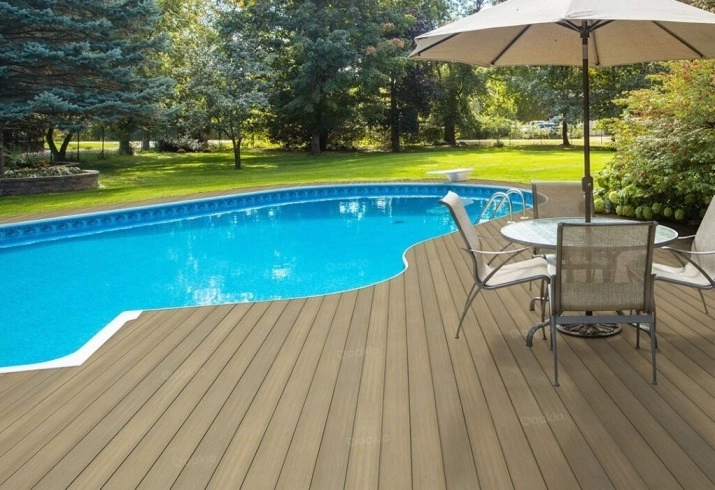
Composite decking turns a small Front Range balcony or rooftop into usable space without the yearly refinishing a wood deck needs, and it holds up to two things Colorado throws at exterior surfaces harder than most climates do: intense ultraviolet exposure at altitude and repeated freeze-thaw cycles through the winter.
Here is what composite decking costs installed, what the climate does to it, and how to lay out a small balcony or rooftop space once it's down.
Why composite decking fits Colorado's climate
Composite decking resists rot, will not warp with moisture the way wood does, and needs a wash once or twice a year rather than annual staining or sealing. On a rooftop or balcony exposed to close to 300 days of sun a year, that low-maintenance profile matters more than it does on a shaded ground-level deck, since UV-driven fading and drying are the main things that shorten a deck's life at altitude.
UV resistance at altitude
Composite boards use UV-stabilized capping that resists fading better than uncapped composite or wood, which matters given the intensity of Colorado's sun at 5,280 feet and higher. A homeowner comparing products checks whether the board has a full cap on all four sides, not just the top surface, since an uncapped edge fades and weathers differently than the rest of the board over a few seasons.
Freeze-thaw and expansion
Composite boards expand and contract with temperature more than wood does, and Colorado's freeze-thaw cycles and 40-degree daily swings put that movement to the test season after season. Installers leave gap spacing between boards specifically to accommodate this movement; a board installed too tight in summer can buckle once winter temperatures pull it back.
What does composite decking cost installed?
A composite deck runs roughly $30 to $60 per square foot installed on the Front Range, including the substructure, depending on board brand, railing choice and site accessibility for a rooftop or upper-floor balcony. A 100 sq ft balcony project lands in the $3,000 to $6,000 range; a larger rooftop deck with railing and lighting runs higher. A seller weighing the cost against list price uses the Pricing Your Colorado Home to Sell guide to see where an outdoor upgrade fits the budget.
Structural support for balconies and rooftops
A rooftop or balcony deck adds load to a structure that was not necessarily built with a deck in mind. A structural engineer checks whether the existing balcony or roof framing carries the added weight before composite decking goes down, and this step is not optional on an older building or a balcony that already shows any sag or movement. Composite decking is lighter than most stone or tile options, which helps, but it still adds weight the structure needs to carry.
Drainage and ventilation
Water needs a clear path off a rooftop or balcony deck, since standing water freezes and expands against the deck boards and the surface below in winter. Spacers between boards improve airflow underneath, and the substructure needs gaps or channels that direct water away from the building rather than pooling it against a wall or door threshold.
Does a rooftop deck need a permit in Denver?
A rooftop or balcony deck project that adds structural load, alters guardrails, or changes the building's exterior needs a permit from the city or county building department in most Front Range cities; a condo association adds its own architectural review on top of that. Confirm both before ordering materials, since a permit and HOA approval can each take several weeks.
Maximize a small balcony or rooftop
Modular furniture that folds or nests makes a small composite deck flexible between a two-person dinner and a larger gathering. Built-in bench seating with storage underneath keeps the floor space clear, and railing-mounted planter boxes add greenery without giving up any deck square footage. Shoppers weighing a condo against a house with a full yard can compare options in the Explore Denver guide.
Add greenery without giving up floor space
Vertical planters and hanging pots along a railing bring plants into a small space without competing with furniture for room. Choose drought-tolerant options for a rooftop or balcony that gets full sun most of the day, since Colorado's dry climate and wind exposure at height both pull moisture out of container soil faster than a ground-level garden bed.
Add privacy without blocking the view
Composite privacy screens or trellises with climbing plants block a sightline into a neighboring unit or a construction site without closing off the whole deck. A partial screen on one side keeps the rest of the view open, which matters more on a small footprint where every open sightline adds to the sense of space.
Composite versus wood for a small Front Range deck
| Factor | Composite | Wood |
|---|---|---|
| Annual maintenance | Wash once or twice a year | Stain or seal yearly against UV and freeze-thaw |
| UV fading at altitude | Resists fading with a full cap | Grays and cracks faster under intense sun |
| Freeze-thaw movement | Expands and contracts; needs gap spacing | Swells, splinters and warps over seasons |
| Weight on a balcony | Lighter than stone or tile, still needs engineering review | Comparable weight, same review needed |
| Upfront cost | Higher material cost | Lower material cost, higher lifetime maintenance cost |
For a small rooftop or balcony where access for yearly refinishing is difficult, composite's lower maintenance need offsets the higher upfront material cost within a few years for most homeowners.
Maintain composite decking through a Colorado winter
Clear snow with a plastic shovel rather than a metal one to avoid scratching the cap surface, and check drainage channels for ice buildup after a heavy snow. Inspect boards each spring for any warping, loose fasteners or gaps that opened up over the winter, and address them before the next freeze-thaw cycle widens them further.
Where to go next
- Stone, Brick or Concrete: Which Is Better for Patios?
- Creating the Perfect Indoor-Outdoor Flow for Colorado Summers
- Denver Condos, Townhomes, and Lofts Guide
- Preparing and Adding Value Before Selling
- Search every home for sale in Colorado
Talk to the Kenna Real Estate Group
The Kenna Real Estate Group helps Front Range condo and small-yard buyers weigh outdoor space against square footage, and tells sellers which balcony or deck upgrades a buyer actually values before listing. Call or text 303-955-4220. A live person answers. Not a robot, not a phone tree. Ready to look now? Search every home for sale in Colorado.
Homes for sale that match this post
Guides
Questions about any home in Colorado? Call or text 303-955-4220. A live person answers.