New - 1 Hour Ago
.jpg)


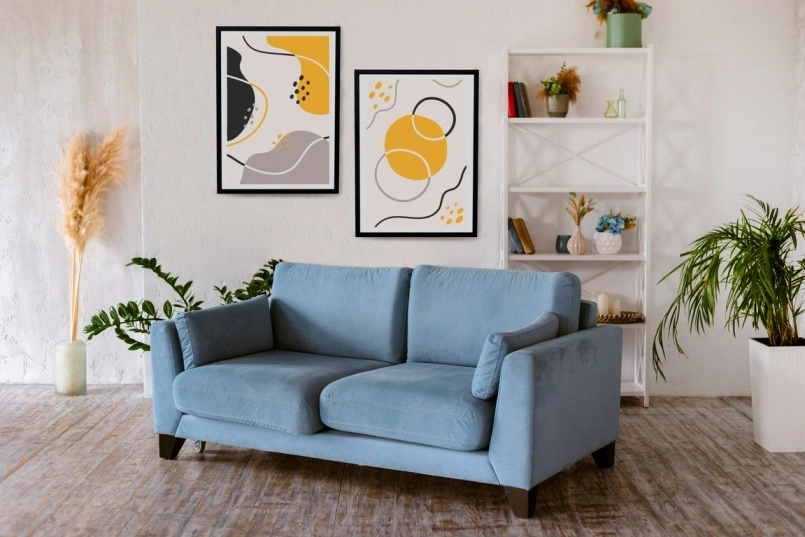
A gallery wall turns a blank stretch of drywall into the kind of detail a buyer remembers after a showing, and it does the same job for a homeowner who just wants a room that looks finished. Colorado's climate changes two parts of the plan most guides skip: the sun fades art faster at altitude, and the dry air affects how well adhesive hooks and frame joints hold over time.
Here is how to plan, hang and protect a gallery wall in a Front Range home, plus what to do with it before a listing goes live.
Decide on a color scheme, a subject, or a style, such as travel photos, black-and-white portraits, or Colorado landscape prints, before buying frames. A theme keeps a mixed collection of prints, photos and art feeling like one composition instead of a scattered collection of unrelated pieces on a wall.
Lay every print and frame out on the floor in the arrangement you're considering before a single nail goes in the wall. Photograph the layout from above, then use painter's tape on the wall to mark each frame's outline, adjusting the tape until the spacing and balance look right. A symmetrical grid reads more formal; an offset, salon-style mix reads more relaxed.
Measure the full wall before ordering frames, and leave 2 to 3 inches between frames for a cohesive, non-cluttered look. Over a sofa or console table, keep the bottom edge of the gallery 6 to 8 inches above the furniture. On a stairwell, follow the slope of the stairs with each frame's center roughly matching the sightline of a person walking down.
Colorado logs close to 300 days of sun a year, and the ultraviolet intensity at 5,280 feet fades ink and paper faster than the same wall would fade at sea level. UV-filtering glass or acrylic in the frame blocks most of that damage without changing how the print looks, and it is worth the upgrade cost on any wall that gets direct or indirect daylight for part of the day. Hang the most light-sensitive or valuable prints on an interior wall away from a west-facing window when a fully protected frame is not an option.
Low humidity on the Front Range dries out adhesive picture hooks faster than a more humid climate does, so a hook rated for the weight of the frame matters more here than the package label alone shows. Wood frame joints can loosen slightly as the wood dries and contracts; a light check of corner joints once a year keeps a gallery wall from sagging or shifting over time.
A renter in a Front Range apartment or condo checks the lease for a no-drilling clause before hanging anything with a nail; adhesive strips rated for the frame's weight are the standard workaround where drilling is not allowed. A homeowner in an HOA-governed townhome checks whether any exterior-facing wall, such as a covered patio or entry alcove, falls under the association's review before mounting art there. Renters ready to stop asking permission can start browsing the Colorado First-Time Home Buyer Guide to see what ownership changes.
Distribute color, shape and frame finish evenly across the collection so no single corner feels heavier than the rest. A consistent frame color, black, white or natural wood, ties a mixed set of photos and prints together even when the subjects vary widely. Canva and similar tools let a homeowner design and print custom art sized to fill a specific gap in the layout, which solves the problem of finding a piece that fits an odd-sized space.
Start with the largest or most central print at eye level, then work outward, checking each frame with a level as you go. Use a tape measure between frames to keep spacing consistent rather than eyeballing it, since small gaps in spacing become obvious once the full wall is hung.
A picture light or a pair of adjustable ceiling spots aimed at the gallery wall makes the collection the focal point of the room after sunset, which matters for evening showings during Colorado's shorter winter days. Warm-toned LED bulbs read closer to natural daylight than a cool white bulb does, and they keep colors in the prints looking accurate rather than washed out.
A well-composed gallery wall photographs well for listing photos and gives a buyer a sense of scale in a room that would otherwise look empty in photos. Before listing, a seller either removes personal photos and keeps neutral or landscape prints, or takes the gallery down entirely and patches the holes; a stager or listing agent gives a room-by-room read on which rooms benefit from keeping art up and which show better bare.
Fill nail holes with spackle, sand smooth, and touch up paint in matching sheen and color before photos are taken. A wall with a dozen small holes and mismatched touch-up paint reads as unfinished to a buyer even when the rest of the room shows well. See Prep Walls Right: Painting a Colorado Home the Right Way for the full prep and paint-matching process.
The Kenna Real Estate Group tells Front Range sellers which staging details, gallery walls included, help a listing photograph well and which ones to remove before showings start. Call or text 303-955-4220. A live person answers. Not a robot, not a phone tree. Ready to look now? Search every home for sale in Colorado.
Questions about any home in Colorado? Call or text 303-955-4220. A live person answers.
Yes, close to 300 days of sun a year and higher UV intensity at altitude fade ink and paper faster than at sea level; UV-filtering glass or acrylic in the frame slows the damage.
Leave 2 to 3 inches between frames for a cohesive look that still reads as one composition rather than scattered pieces.
Adhesive strips rated for the frame's weight work as a no-drill option where a lease restricts putting holes in the wall; check the lease first.
Low humidity dries out adhesive hooks faster than a more humid climate, so choose a hook rated for the frame's actual weight rather than the lightest option available.
It depends on the room; neutral or landscape prints stay up for staging in a lot of cases, while personal photos come down, and all nail holes get patched and touched up before photos.
A single consistent frame finish, black, white or natural wood, ties together prints and photos of different subjects and sizes.
Some Front Range HOAs review anything mounted on an exterior-facing wall, such as a covered patio; check the association's rules before mounting art there.