New - Just Now

.jpg)


More listings do not make a Denver payment smaller.
DMAR's May 2026 Denver metro report gives homebuyers more to compare, but it does not erase the monthly math. You may think more inventory means easy relief. Not quite. The local reality: a Denver metro home can look affordable on price and still feel different once principal, interest, taxes, insurance, HOA dues, and any metro-district fee are added.
Quick Read
The listing price is the loud number. The monthly payment is the one that moves in.
May gave Denver metro more choice, not cheaper math by default.
Use the numbers as a starting point, then verify the current listing, the payment quote, and the property-level costs before treating the median as your answer.
Denver metro got more homes for sale while closed prices still rose modestly.
A 6.24% one-month inventory increase gives homebuyers more to compare than they had in April. The $615,000 median still moved up 2.24% month over month and 2.5% year over year. Pending sales also edged up 1.17%, so the report does not show demand disappearing.
DMAR's own read matters: May's friction was higher mortgage rates, not prices alone. That changes the decision. A lower list price helps only if the full monthly payment works after principal, interest, taxes, insurance, HOA dues, and any metro-district fee.
Verify the full payment on the specific home, not just the direction of the headline number.
Homebuyers have more room to compare, not permission to ignore the payment.
Using Freddie Mac's 6.52% 30-year fixed average for the week of June 11, 2026, a $615,000 median-priced purchase with 20% down leaves a $492,000 loan. On standard 30-year principal-and-interest math, that is roughly $3,100 per month before property taxes, homeowners insurance, HOA dues, mortgage insurance if applicable, and any metro-district charge. A licensed lender should price actual loan terms.
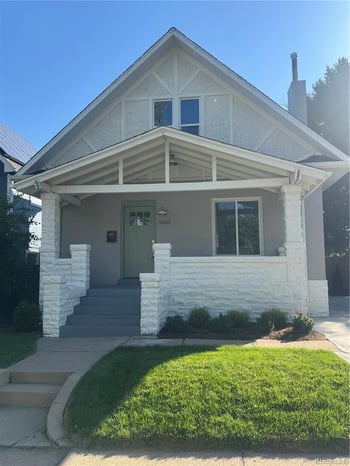
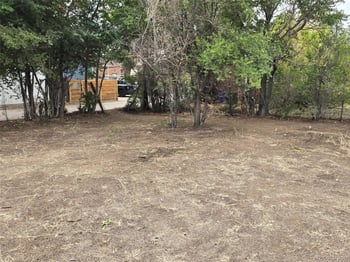
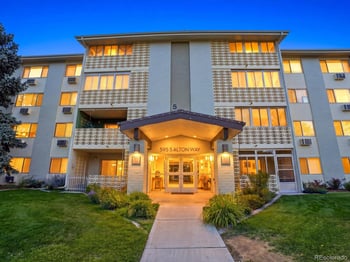
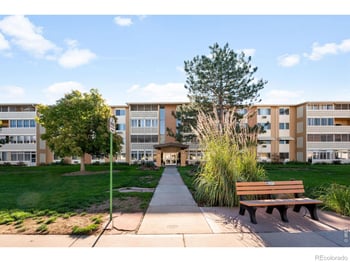
That is why the inventory build changes how to shop. Compare payments across homes, not only list prices. A home just below the median with high HOA dues or a metro-district cost can carry more monthly pressure than a higher-priced home with lower add-ons.
With 2,958 active residential listings in the $550,000 to $650,000 band pulled June 11, 2026, homebuyers have enough local options to compare concessions, condition, and total monthly cost inside the median bracket. Your lender does not price loans with extra inventory.
Before offering, verify the lender quote, tax estimate, insurance estimate, HOA dues, mortgage insurance if applicable, metro-district charge, concessions, and condition.
Sellers still have price support, but the competition is easier for homebuyers to see.
DMAR's May 2026 median sale price was up 2.5% from a year earlier, which does not support a blanket price-cut narrative. But 12,259 active homes and a 6.24% increase from April mean a seller is not only competing with old closed sales.
The sharper question is what the home competes against today at the same price, condition, location, and monthly-carry profile.
That monthly-carry profile matters in Denver metro. A listing with an HOA or metro-district cost can feel more expensive to a homebuyer than the list price suggests, especially with Freddie Mac's 30-year fixed average at 6.52% for the week of June 11, 2026.
If sellers want to defend a price, the listing needs to make condition, included improvements, fees, and near-term repair risk easy to compare against current active listings. Verify the active competition before leaning on last year's closed sales.
June's release should confirm the pattern before anyone turns May into a forecast.
The May 2026 report showed 12,259 active homes, a $615,000 median sale price, and pending sales up 1.17%. June's release in early July will show whether those signals kept moving together or split apart.
The watch list is simple: whether active inventory keeps building or flattens, whether pending sales keep edging higher, whether the median price still shows modest movement, and whether the Freddie Mac mortgage-rate backdrop still makes payment the main gate.
For local search behavior, also watch whether the $550,000 to $650,000 band remains crowded in live listing pulls or starts to thin out. Verify the next report against all three pieces: supply, pending sales, and payment math.
The useful signal next month will not be one headline number. It will be whether those pieces point in the same direction.
Denver metro has moved from a pure scarcity problem toward a comparison problem, while affordability still lives in the monthly payment.
Homebuyers should shop the full payment before stretching on price. Sellers should price against the homes shoppers can choose today.
More choice helps. The payment still gets the final word.
Start with DMAR's market trends page.
You can read the Denver Metro Association of Realtors Market Trends report there each month. The May 2026 report was published June 3, 2026, and it is the primary local release for median price, inventory, pending sales, and DMAR's market commentary.
Because the median is a middle point, not a price tag for one house.
The median sale price is the middle closed sale in the reported dataset; a listing price is the asking price for one specific home. Similar-looking homes can differ in condition, fees, location, lot, updates, and negotiation history. Use the May 2026 median as the market center, then compare current active listings that match the property type and monthly cost.
No. One month of rising inventory is not a price forecast.
DMAR's May 2026 data showed inventory up 6.24%, while the median sale price also rose 2.24% from April and 2.5% from a year earlier. That means choice and negotiating room shifted; it does not prove that prices will fall.
The Kenna Real Estate Group answers selling a Colorado home questions every day, from Fort Collins to Colorado Springs. Call or text 303-955-4220. A live person answers. Not a robot, not a phone tree. Or search every home for sale in Colorado right now.
Questions about any home in Colorado? Call or text 303-955-4220. A live person answers.