New - 2 Hours Ago

.jpg)


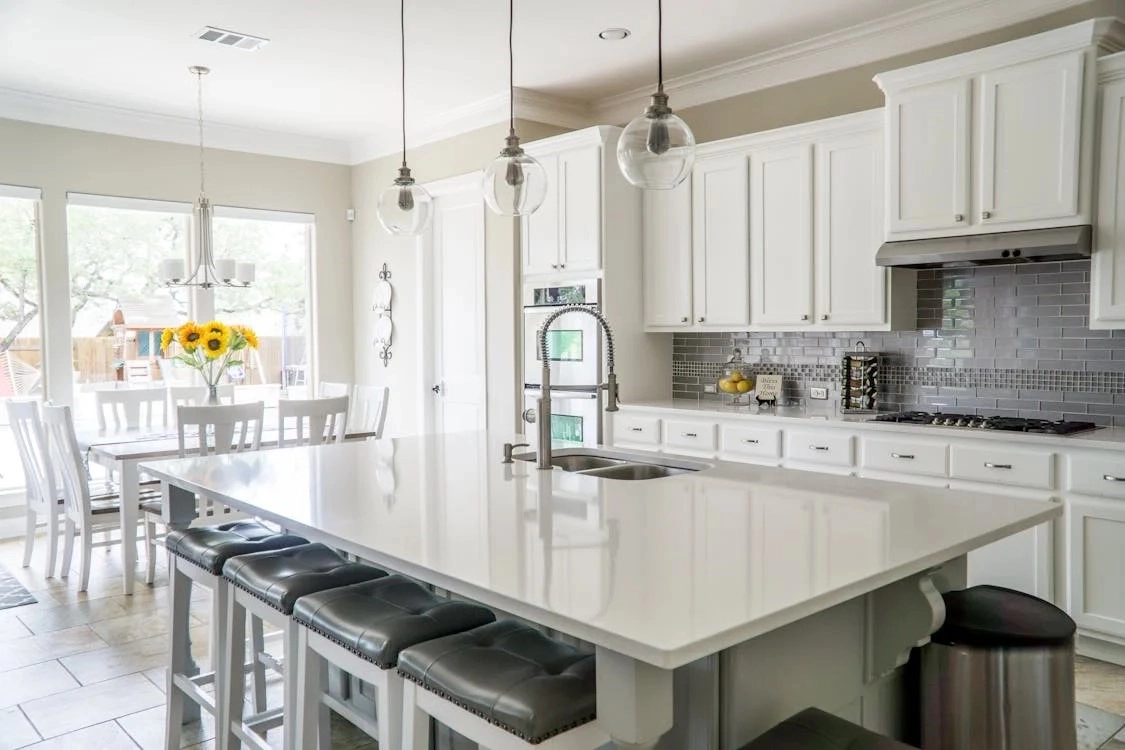
A new-construction kitchen on the Front Range needs countertops sized for real cooking, ventilation set up for Denver's thin air, and finishes that hold up against hard water and dry winters. Get the layout and material choices right before the builder pours a single countertop template, and the kitchen works for decades instead of needing a redo inside ten years.
Plan for at least 158 total inches of usable countertop, spread across prep space, landing space next to the range, and at least 24 inches of clear counter next to the sink, a benchmark from Better Homes & Gardens. An island adds to that total without crowding the main run, which matters in Front Range floor plans where the kitchen doubles as the entertaining space during a Broncos game or a Rockies watch party.
Yes. At 5,280 feet, thinner air changes combustion and baking times: gas burners need a smaller orifice to avoid a rich, sooty flame, and ovens run 15 to 25 degrees hotter than the dial reading unless a technician adjusts for elevation at install. Ask the builder in writing whether the range and oven were commissioned for altitude before closing.
Water boils at about 203°F in Denver instead of 212°F at sea level, so a pressure cooker needs 5% to 8% more cook time per 1,000 feet above 2,000 feet and builds more internal pressure to compensate. Follow the manufacturer's altitude chart and let the pressure release fully before opening the lid; product-liability filings tied to the Instant Pot explosion claims center on a lid forced open while the unit was still pressurized, not on elevation itself.
Porcelain tile and luxury vinyl plank hold up best against the mag chloride and sand tracked in on boots from October through April; both wipe clean and resist the staining that grout and natural stone pick up over a Colorado winter. A textured, slip-resistant finish matters most at the kitchen entry from a garage or mudroom, where snowmelt puddles first; the slip-resistant coatings market tracked by Market Research Future has grown alongside demand for exactly this kind of textured tile and sealant.
Front Range tap water runs 7 to 15 grains per gallon, hard enough to leave mineral spots on stainless faucets, glass tile backsplashes and everyday glass drinkware within weeks of a fresh install. Brushed or matte finishes hide hard-water spotting better than polished chrome, and a point-of-use filter or softener at the kitchen sink cuts the weekly wipe-down down to almost nothing.
Size the range hood's CFM for the cooktop's actual BTU output, then add capacity: thinner mountain air moves less mass per cubic foot, so a hood rated for sea level pulls less smoke and grease at 5,280 feet than the same CFM number would at the coast. A 600 to 900 CFM hood over a standard 30-inch gas range is a common Front Range spec, with makeup air required by most city codes once a hood exceeds 400 CFM.
Yes. Denver, Aurora, Lakewood, Colorado Springs and Fort Collins all require an electrical permit for new circuits and a mechanical or plumbing permit for gas line work, even inside a new-construction build where the builder pulls the master permit. Ask for the final inspection sign-off on the kitchen's electrical and gas rough-in as part of the closing walkthrough.
Colorado law (C.R.S. 38-45-101) requires a carbon monoxide alarm within 15 feet of every bedroom in a home with a fuel-burning appliance, which includes a gas range. A new-construction kitchen with a gas cooktop should already have this covered by the builder; confirm it during the pre-closing walkthrough rather than assuming.
Colorado's indoor humidity sits well below the 30% to 50% range wood cabinetry is built for, and solid wood doors shrink slightly over a home's first winter, showing as thin gaps at the rail and stile joints. Plywood-box cabinets with veneer or engineered doors hold their shape better than solid slab wood in this climate, and a whole-house humidifier set to 30% to 40% in winter slows the shrinkage on either option.
Quartz and porcelain slab resist the UV fading that comes with Colorado's 300 days of sun better than laminate, and neither needs the periodic sealing granite requires in a climate where sealant dries out faster than it would in a humid one. A kitchen with a south-facing window gets more UV exposure at 5,280 feet than the same window at sea level, worth weighing before picking a counter color that fades visibly near the sink.
| Kitchen finish | Colorado climate fit | Front Range cost range |
|---|---|---|
| Quartz countertop | No sealing, resists UV fading | $60 - $120 per sq ft installed |
| Granite countertop | Needs annual sealing in dry air | $50 - $100 per sq ft installed |
| Porcelain tile floor | Resists mag chloride staining | $8 - $18 per sq ft installed |
| Plywood-box cabinets | Holds shape better in low humidity | $150 - $400 per linear ft |
Most new-construction kitchen finishes sit inside the unit and outside HOA or metro district review, but any change that touches an exterior vent, like upsizing a range hood's exhaust termination, needs a look at the community's design guidelines before a builder or later owner modifies it. Highlands Ranch's HRCA and most Douglas County metro districts review exterior penetrations, not interior finish choices.
Layer task lighting under cabinets with ambient recessed lighting and a dimmer, since Colorado's bright daylight through south- and west-facing windows makes a kitchen with only overhead lighting feel dim by comparison once the sun drops. Warm-white LED in the 2700K to 3000K range keeps the space from feeling clinical once evening hits behind the foothills.
Builder upgrade packages for cabinets, countertops and flooring commonly run $8,000 to $25,000 above the base spec on a Front Range new build, depending on the cabinet line and countertop material chosen. Pricing the upgrade against resale value before signing the builder's change order, and browsing new construction homes by area for comparable finish packages, keeps the spend proportional to what the finish choice returns at sale.
Yes, the kitchen is consistently the room buyers weigh most heavily when comparing two similar Front Range homes, and a Smart Pricing Report factors finish quality into a recommended list price at sale time. Durable, climate-appropriate materials chosen at build time pay off twice: once in lower maintenance and again at resale.
The Kenna Real Estate Group walks new-construction buyers through builder upgrade packages and helps sellers price a well-finished kitchen correctly when it is time to list. Call or text 303-955-4220. A live person answers. Not a robot, not a phone tree. Or search every home for sale in Colorado.
Questions about any home in Colorado? Call or text 303-955-4220. A live person answers.
At least 158 total inches of usable countertop, including 24 inches clear next to the sink and adequate landing space beside the range.
Yes. Ovens run 15 to 25 degrees hotter than the dial reading and gas burners need a smaller orifice unless a technician adjusts for 5,280 feet at install.
Porcelain tile and luxury vinyl plank resist the mag chloride and sand tracked in from October through April better than grout or natural stone.
7 to 15 grains per gallon, hard enough to spot chrome and etch glass within weeks; brushed or matte finishes hide the spotting longer.
Yes, thinner air at altitude moves less mass through the same duct size, so a 600 to 900 CFM hood over a standard gas range is a common Front Range spec.
Yes, Denver, Aurora, Lakewood, Colorado Springs and Fort Collins all require permits, even inside a new-construction build.
Low indoor humidity shrinks solid wood doors over the first winter; plywood-box cabinets with engineered doors hold their shape better.
$8,000 to $25,000 above base spec, depending on the cabinet line and countertop material selected.