.jpg)


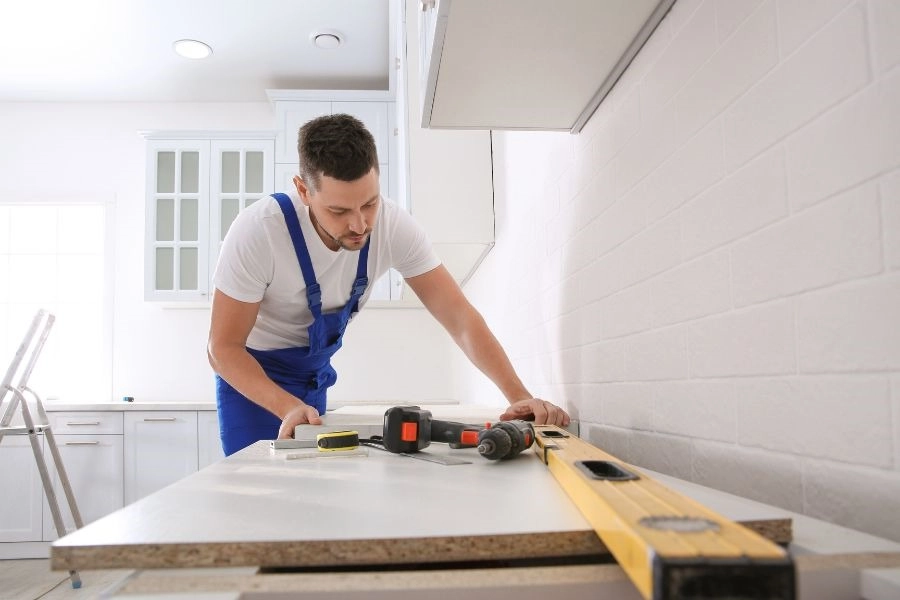
A countertop installation goes smoothly in a Colorado home when three things are handled up front: clearing and protecting the space, matching the material to the region's hard water and dry climate, and confirming whether the plumbing work involved needs a permit. Most straight countertop swaps do not need a permit; moving a sink, drain or gas line for a cooktop does.
Front Range kitchens see two climate factors most U.S. kitchens do not deal with together: water in the 7 to 15 grains-per-gallon hard-water range, and indoor air that runs dry for most of the heating season. Both change which countertop material makes sense and how it needs to be maintained.
Do You Need a Permit to Replace Kitchen Countertops in Colorado?
A straight countertop swap, where the sink, faucet and cooktop stay in the same location, does not need a permit in Denver, Aurora, Lakewood, Littleton, Colorado Springs or Fort Collins. The moment you relocate a sink, add a new gas line for a cooktop, or change the electrical for a range, the plumbing or electrical portion of the job needs a permit and a licensed contractor, reviewed by the city or county building department. The countertop fabrication itself is never the permit trigger; the plumbing and electrical behind it is.
How Do You Protect a Denver-Area Home During a Countertop Installation?
Clear cabinets and drawers below the work area first; dust and debris settle into open cabinetry during demolition and template cutting. Cover floors and adjacent furniture with plastic sheeting, and keep a clear path from the front door to the kitchen for installers carrying stone slabs, which can weigh several hundred pounds for a single piece.
- Shut off the water supply to the sink before demolition starts, not just the faucet.
- Confirm the template appointment happens after cabinets are set and level, not before.
- Ask about dust containment if the installer is cutting stone on site rather than in a shop.
Which Countertop Material Holds Up Best Against Colorado's Hard Water?
Denver-area water runs moderately to very hard, commonly 7 to 15 grains per gallon depending on the water provider. Hard water leaves mineral spots on any nonporous surface and etches acid-sensitive stone over time.
| Material | Hard water performance | Maintenance |
|---|---|---|
| Quartz (engineered stone) | Resists etching and staining; wipes clean | No sealing needed |
| Granite | Resists etching; mineral spots wipe off | Reseal every 1 to 3 years |
| Marble | Etches from hard water and acidic cleaners | Reseal yearly; avoid citrus and vinegar cleaners |
| Butcher block | Water spots and swells if left wet | Oil monthly; wipe dry after use |
| Laminate | Resists staining; seams can trap moisture | Reseal seams as needed |
Quartz and granite are the two most common choices on the Front Range for exactly this reason: both shrug off the region's hard water with the least upkeep. Our guide to Denver water use and fixtures covers more on how hard water affects fixtures and finishes throughout a kitchen, not just the countertop.
Does Dry Front Range Air Affect Wood and Butcher-Block Countertops?
Yes. Colorado's low humidity, especially during the winter heating season, pulls moisture out of wood, and butcher-block countertops that stay wet from sink splashes then dry out fast can crack and check faster than the same material in a humid climate. A properly oiled and sealed butcher-block surface, wiped dry after use, holds up; one left wet next to a sink does not.
What Does a Countertop Upgrade Return at Resale on the Front Range?
A countertop swap is one of the higher-return kitchen updates Front Range buyers respond to, especially replacing laminate or dated tile with quartz or granite. It reads immediately in listing photos and showings, which matters in a market where buyers decide whether to schedule a showing from photos alone. On its own it will not carry a full kitchen remodel's price tag or its return; paired with cabinet hardware and paint, it changes how a kitchen shows at a fraction of a full remodel's cost.
Granite, Quartz or Solid Surface: Which Fits a Colorado Kitchen?
Quartz is the most common choice in new Front Range listings because it needs no sealing and holds a consistent pattern buyers recognize from new construction. Granite remains a strong choice for buyers who want a natural-stone look and are comfortable with periodic resealing. Solid surface material forms a smooth, integrated sink look with no visible seam, but scratches more easily than either stone option.
What Should You Check Before Moving a Sink or Cooktop Location?
Relocating a sink or cooktop changes drain, supply line and, for a gas cooktop, gas line routing, and every Front Range jurisdiction requires a licensed plumber or electrician and an inspection for that work. Get the permit before the template appointment; a fabricator cannot template around plumbing that has not been roughed in yet.
How Do You Choose an Edge Profile and Overhang for a Colorado Kitchen?
A simple eased or bullnose edge costs less to fabricate than an ogee or waterfall detail, and it's easier to keep clean along the hard-water splash zone near the sink. Overhang on an island or peninsula used for seating needs enough support, either a corbel or a steel bracket, to carry the weight of a quartz or granite slab without cracking at the unsupported edge; a fabricator sizes this to the specific slab material and span.
What Does the Countertop Fabrication and Installation Timeline Look Like?
After a template appointment, most Front Range fabricators need one to three weeks to cut and finish a stone or quartz slab before the installation date. Laminate and some solid-surface products install faster, sometimes within a few days of template. Plan the kitchen's downtime around that lead time if the sink is out of commission during the swap, and confirm whether the fabricator disconnects and reconnects the existing plumbing or whether you need a plumber on install day.
Do You Need to Disclose a Countertop Remodel When Selling in Colorado?
Colorado's seller disclosure form asks about known plumbing and electrical work in the home, not about cosmetic finish changes. A countertop swap that didn't touch plumbing does not need its own disclosure line in most cases; a project that relocated a sink or added a new circuit for a cooktop does, along with whether that work was permitted. Keep the permit and inspection paperwork with your home's records so it's ready when you sell.
What Should You Ask a Fabricator Before Signing a Countertop Contract?
- Ask who pulls the plumbing permit if the sink or cooktop is moving, and confirm it's a licensed contractor, not the fabricator working outside their license.
- Ask about seam placement on a large kitchen where more than one slab is needed, since seam location affects both appearance and durability.
- Ask what happens to the old countertop, including removal and disposal, so it's not a surprise on installation day.
- Get the warranty in writing, including what's covered for cracking, staining and seam separation.
Where to go next
- Preparing and adding value before selling
- Get a Smart Pricing Report for your Colorado home
- Shaker cabinets for Colorado homes: style, cost, materials and care
- A homeowner's guide to remodeling in Highlands Ranch
- Denver plumbing inspection tips for buyers
- Search every home for sale in Colorado
Talk to the Kenna Real Estate Group
Whether you are updating a kitchen before listing or buying a Front Range home that needs new countertops, the Kenna Real Estate Group can tell you which updates a specific buyer pool actually pays for. Call or text 303-955-4220. A live person answers. Not a robot, not a phone tree. Or search every home for sale in Colorado.
Homes for sale that match this post
- Homes with Gourmet Kitchen in Colorado Springs
- New construction: guide
- Relocating: guide
- Pool: guide
- All homes for sale in Colorado Springs
Guides
Questions about any home in Colorado? Call or text 303-955-4220. A live person answers.