New - 21 Hours Ago


.jpg)


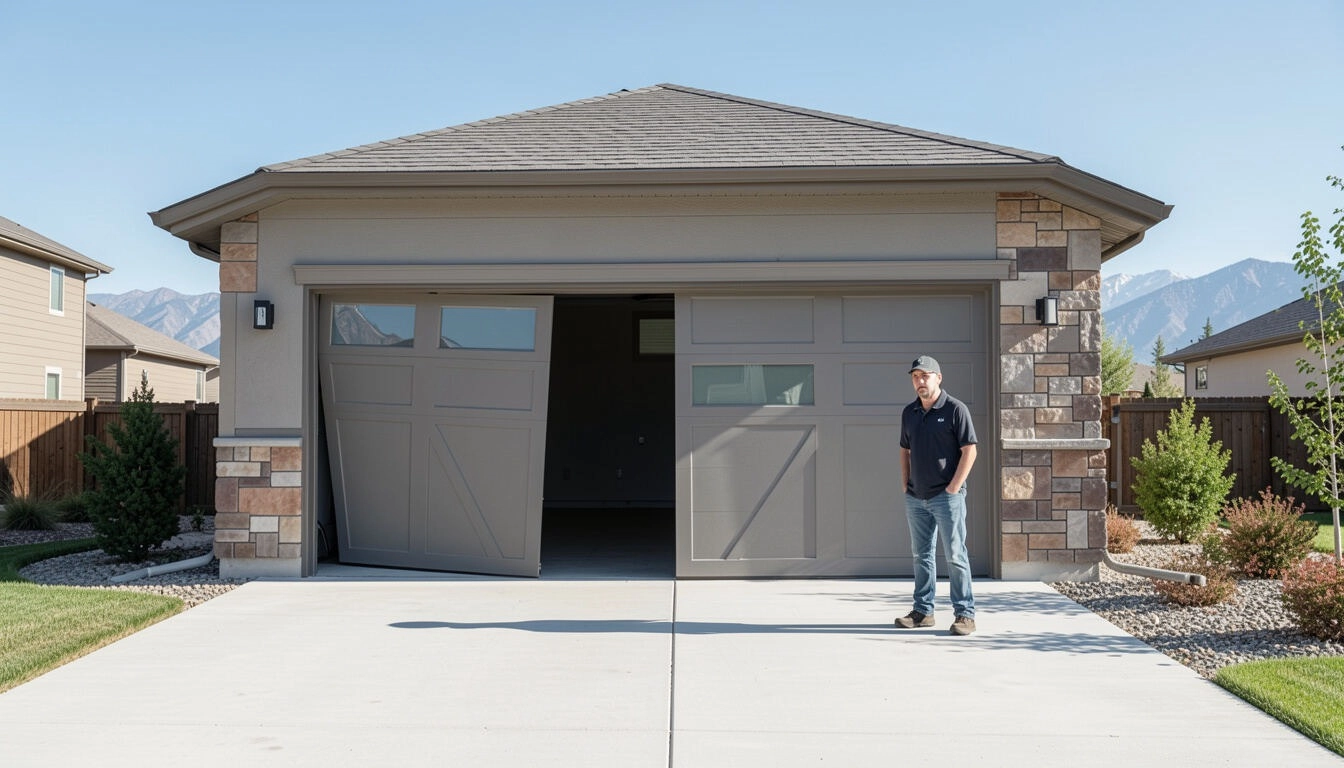
A garage door stuck halfway in Colorado is almost always one of four things: a misaligned track, a worn or broken spring, dirty sensors, or an opener struggling with cold. Front Range weather makes all four more common than in a milder climate, so the fix starts with figuring out which one it is before reaching for a wrench.
According to technicians at Apple Door Systems, a stuck door almost always traces back to one of a handful of failure points. On a Front Range home, three local factors make these failures show up sooner than in a mild climate:
The tracks guide the door as it opens and closes. Bent, dirty, or misaligned tracks cause uneven movement, grinding noise, or a door that binds partway up. Look for visible gaps or bends where the track meets the wall bracket, and check whether the two vertical tracks are the same distance apart at the top and bottom.
The springs carry the weight of the door. A door that stops halfway and won't budge, or one that suddenly feels much heavier to lift by hand, points to a spring that's lost tension or snapped. This is the most serious cause on this list and the one that requires a trained technician, not a DIY fix. The springs store enough tension to cause a serious injury if they release under load.
Dirt, leaves, or a small object in the track stops a door cold. Clear the track by hand and wipe it down with a damp cloth; avoid harsh chemicals that can strip the track's finish.
Dry rollers and hinges increase friction until the opener can't push the door past a certain point. A silicone-based lubricant applied to rollers, hinges, and the track twice a year, once as the weather warms and once before winter, prevents most of this.
A struggling motor, worn gears, or a loose chain or belt connection can stall a door mid-travel. Cold makes this worse: opener lubricant thickens below freezing, and an older motor works harder in an unheated garage on a single-digit morning.
The photo-eye sensors near the floor stop the door if the beam between them is broken, blocked, or misaligned. A door that stops halfway while closing, then reverses, is almost always a sensor issue rather than a mechanical one. Check that both sensor lights glow solid, not flickering, and that nothing sits in the beam's path.
No. Forcing a door past a bend in the track or a failing spring turns a $100 to $250 repair into a $400-plus replacement, and it puts whoever is standing nearby at risk if a cable or spring gives way. Stop, run the checklist above, and call a technician if the door doesn't move freely after that.
| Repair | Denver metro cost |
|---|---|
| Diagnostic service call | $75 to $100 |
| Track realignment | $100 to $250 |
| Spring replacement (pair) | $200 to $400 |
| Cable replacement (pair) | $150 to $300 |
| Sensor replacement or alignment | $75 to $150 |
| Opener motor repair | $150 to $350 |
Call a technician if any of these apply:
Garage door systems carry high-tension parts that require the right tools and training to handle. A misjudged repair here causes more damage, and more cost, than the original problem.
Yes. A garage door that hangs unevenly or won't fully close is one of the items Colorado inspectors flag on the report during the Inspection Objection Deadline window, and it reads as neglected maintenance to a buyer even when the fix is simple. Sellers who clear this up before listing avoid a credit request later; see what Colorado home inspectors check on garage doors for the full list.
A large share of Denver metro homes have an attached garage that shares a wall with a laundry room, mudroom, or finished basement. That shared wall means an uninsulated door swings the garage temperature by 40 degrees or more on a clear day, and every one of those swings works on the same springs and gears day after day. A garage that backs up to living space also gets more daily use on average, which shortens the interval between tune-ups compared to a detached garage used mainly for storage.
Whether you're fixing a garage door before listing or buying a home and want a second opinion on what an inspector flagged, the Kenna Real Estate Group walks Front Range buyers and sellers through it. Call or text 303-955-4220. A live person answers. Not a robot, not a phone tree. Ready to look? Search every home for sale in Colorado.
Questions about any home in Colorado? Call or text 303-955-4220. A live person answers.
The four most common causes are a misaligned track, a worn or broken spring, sensor problems, or opener strain in cold weather. Colorado's freeze-thaw cycle and expansive soil make track and spring issues show up sooner than in a mild climate.
Yes. Opener lubricant thickens below freezing, torsion springs lose tension faster under repeated 40-degree daily swings, and an unheated garage puts extra load on an older motor on cold mornings.
No. Forcing it past a bent track or a failing spring turns an inexpensive repair into a full replacement and risks injury from a cable or spring giving way. Stop and run through the basic checks first.
A diagnostic visit runs $75 to $100. Track realignment is $100 to $250, spring replacement $200 to $400, and sensor issues are the cheapest fix in most cases, at $75 to $150.
Clearing debris, cleaning sensors, and lubricating hardware are reasonable DIY tasks. Spring and cable work should go to a trained technician because of the tension stored in the system.
Yes. Bentonite clay under many Front Range slabs swells and shrinks with moisture, and that movement can shift a garage frame enough to throw a track out of alignment over time.
Yes. Inspectors test door balance and the reversal sensors on every listing, and an uneven or sticking door commonly appears as a line item during the Inspection Objection Deadline window.
Lubricate moving parts twice a year, clean the tracks after storms, check rust near the bottom of the tracks after winter, and book an annual tune-up instead of waiting for a failure.